Trump Reclassifies Medical Marijuana, Sparks Policy Debate
Left says
- •This historic shift finally recognizes that cannabis should never have been classified alongside heroin and other dangerous drugs with no medical value
- •The reclassification will expand access to medical treatments for patients suffering from serious conditions like cancer, seizures, and chronic pain
- •Removing barriers to cannabis research will enable scientists to study the drug's safety and efficacy more rigorously, leading to better-informed medical decisions
- •The policy change provides important tax relief for state-licensed medical marijuana operators who have faced unfair federal penalties
Right says
- •Trump is delivering on his promise to improve American healthcare by taking decisive action where previous administrations failed to act
- •The measured approach maintains strict federal controls against illicit drug trafficking while recognizing legitimate medical uses
- •The reclassification respects state sovereignty by acknowledging the reality that 40 states have already established medical marijuana programs
- •The expedited hearing process provides a legally compliant pathway to evaluate broader changes while ensuring proper oversight and consistency
Common Take
High Consensus- The reclassification moves FDA-approved and state-licensed medical marijuana from Schedule I to Schedule III under federal law
- The change does not legalize marijuana for recreational use and maintains federal prohibition on non-medical cannabis
- The policy will facilitate medical research by removing barriers that have limited scientific study of cannabis
- A hearing scheduled for June 29, 2026 will consider broader rescheduling of all marijuana products
The Arguments
Left argues
This reclassification finally corrects a decades-old injustice by removing cannabis from the same category as heroin, acknowledging its legitimate medical value for patients suffering from cancer, seizures, and chronic pain. The policy change will eliminate unfair tax penalties on state-licensed medical marijuana operators and remove barriers that have hindered crucial research into cannabis safety and efficacy.
Right counters
The measured approach maintains necessary federal oversight while respecting the reality that 40 states have already established medical programs, providing a legally compliant pathway that balances patient access with proper controls against illicit trafficking.
Right argues
Trump is delivering decisive leadership where previous administrations failed, taking concrete action to improve American healthcare while maintaining strict federal controls against drug cartels and illicit trafficking. The expedited hearing process ensures proper legal compliance and oversight while acknowledging state sovereignty in medical marijuana regulation.
Left counters
While the action is welcome, it only addresses FDA-approved and state-licensed products, leaving the broader criminalization intact and maintaining the failed war on drugs approach that has disproportionately harmed communities for decades.
Left argues
Reclassifying medical marijuana will enable rigorous scientific research that has been blocked for years, allowing doctors to make evidence-based decisions and potentially discovering new treatments for serious medical conditions. This policy removes artificial barriers that have prevented proper study of a substance used medicinally in most states.
Right counters
The administration's approach ensures research proceeds under proper federal oversight and safety protocols, preventing the chaos that could result from immediate wholesale legalization while still expanding legitimate medical access.
Right argues
The reclassification provides important tax relief and regulatory clarity for legitimate medical marijuana businesses operating under state licenses, supporting economic growth while maintaining clear distinctions between legal medical use and illegal trafficking. This targeted approach respects both federal authority and state-level medical programs.
Left counters
The limited scope of this reclassification perpetuates a two-tiered system that continues to criminalize cannabis use outside narrow medical contexts, failing to address the broader injustices of prohibition and leaving many patients and operators in legal limbo.
Challenge Questions
These questions target genuine internal contradictions — meant to provoke honest reflection.
Right asks Left
“If cannabis prohibition has been such a clear injustice for decades as you claim, why did Democratic administrations, including Obama and most of Biden's term, fail to take the decisive action that Trump has now implemented?”
Left asks Right
“How do you reconcile celebrating Trump's 'decisive leadership' on this issue when he previously opposed marijuana legalization and his administration could have taken this action years earlier in his first term?”
Outlier Report
Left Fringe
Progressive activists like those from Drug Policy Alliance and some Squad members like Alexandria Ocasio-Cortez who argue this doesn't go far enough and demand full recreational legalization and criminal justice reform. Represents about 15-20% of the left.
Right Fringe
Social conservatives like Family Research Council's Tony Perkins and some evangelical leaders who oppose any marijuana reclassification as undermining traditional values and drug enforcement. Represents about 10-15% of the right.
Noise Assessment
Moderate noise level. Most discourse reflects genuine policy debate rather than performative positioning, though some progressive activists are amplifying 'not enough' messaging and some conservative commentators are emphasizing law enforcement concerns beyond mainstream opinion.
Sources (10)
President Donald Trump's acting attorney general on Thursday signed an order reclassifying state-licensed medical marijuana as a less-dangerous drug, a major policy shift long sought by advocates who said cannabis should never have been treated like heroin by the federal government.
President Donald Trump on Thursday moved to reclassify marijuana under federal law, one of the most significant shifts in U.S. drug policy in decades.
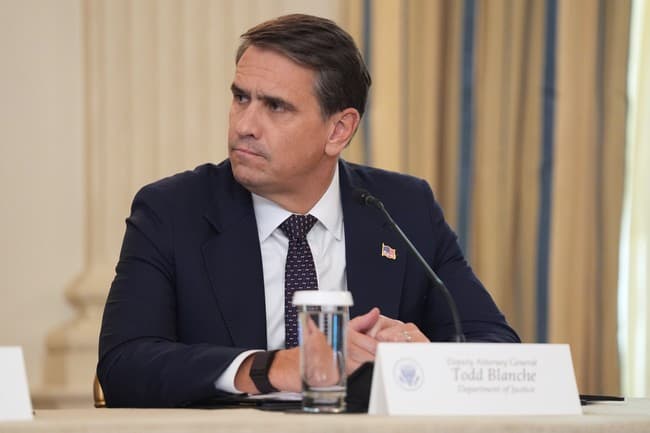
The US Department of Justice has officially reclassified cannabis as less dangerous, marking a major shift in the country's drug policy. Acting Attorney General Todd Blanche on Thursday changed the classifications of products containing marijuana that are covered by the Food and Drug Administration or that have received a state medical-marijuana licence. They will move from a Schedule I narcotic like heroin to a Schedule III drug - on par with Tylenol with codeine. He also called a hearing to consider reclassifying all marijuana. President Donald Trump directed his administration last year to begin the reclassification process, in order to increase access and research of the drug.
<p><a href="https://www.axios.com/politics-policy/donald-trump" target="_blank">President Trump's</a> acting attorney general <a href="https://x.com/DAGToddBlanche/status/2047291538653241488" target="_blank">ordered</a> the immediate reclassification of FDA-approved and state-licensed marijuana as a less dangerous drug Thursday.</p><p><strong>Why it matters: </strong>The move will make it easier to study medicinal applications of marijuana and could shore up support from <a href="https://www.axios.com/2026/04/20/trump-woos-rogan-after-split" target="_blank">influencers</a> who support the research.</p><hr /><ul><li>Axios first reported Wednesday that the Trump administration was expected to move to <a href="https://www.axios.com/2025/12/18/trump-reclassify-marijuana-weed-schedule-drugs" target="_blank">reclassify</a> marijuana, per an administration official familiar with the matter.</li></ul><p><strong>The latest: </strong>Acting Attorney General Todd Blanche wrote in a Thursday post that on top of rescheduling state- and FDA-approved marijuana from Schedule I to III, the Justice Department would also order a new, expedited hearing to reschedule all marijuana.</p><ul><li>The DOJ said in a news <a href="https://www.justice.gov/opa/pr/justice-department-places-fda-approved-marijuana-products-and-products-containing-marijuana" target="_blank">release</a> that hearing would begin June 29 to provide a "pathway to evaluate broader changes" to the drug's status under federal law.</li><li>"These actions will enable more targeted, rigorous research into marijuana's safety and efficacy, expanding patients' access to treatments and empowering doctors to make better-informed healthcare decisions," Blanche's post <a href="https://x.com/DAGToddBlanche/status/2047291538653241488" target="_blank">read</a>.</li></ul><p><strong>How it works: </strong><a href="https://www.axios.com/2025/12/12/trump-marijuana-federal-restrictions-reclassify" target="_blank">Reclassifying</a> marijuana eases U.S. Drug Enforcement Administration barriers to researching the drug's potential use cases. </p><ul><li>It would not immediately legalize marijuana, nor would it affect the sentences of those incarcerated for possession. </li></ul><p><strong>Catch up quick: </strong>Trump signed an <a href="https://www.whitehouse.gov/fact-sheets/2026/04/fact-sheet-president-donald-j-trump-is-accelerating-medical-treatments-for-serious-mental-illness/" target="_blank">executive order</a> to reclassify the drug last December, directing the attorney general to pick up President Biden's push to change the federal restrictions prior to leaving office.</p><ul><li>At the time, Trump said the move "has been requested by American patients suffering from extreme pain, incurable diseases, aggressive cancers, seizure disorders, neurological problems, and more."</li></ul><p><strong>Zoom in: </strong>The government previously classified marijuana as a Schedule I drug, the same category as heroin, LSD and ecstasy.</p><ul><li>The new categorization would put it in line with ketamine and steroids.</li><li>A drug's schedule is decided "based upon the substance's medical use, potential for abuse, and safety or dependence liability," according to the <a href="https://www.dea.gov/drug-information/csa" target="_blank">DEA</a>.</li></ul><p><strong>Go deeper: </strong><a href="https://www.axios.com/2025/12/18/trump-reclassify-marijuana-weed-schedule-drugs" target="_blank">Trump wants to reclassify weed. Here's when to expect the marijuana rule change</a></p><p><strong><em>Editor's note: This is a breaking news story and will be updated with more information.</em></strong></p>
The order reclassifies FDA-approved and state-licensed medical marijuana from Schedule I to the less strictly regulated Schedule III.
The order signed by Todd Blanche does not legalize marijuana for medical or recreational use under U.S. law.
<p>"These actions will enable more targeted, rigorous research into marijuana's safety and efficacy, expanding patients' access to treatments and empowering doctors to make better-informed healthcare decisions."</p> The post <a href="https://legalinsurrection.com/2026/04/trump-doj-reclassifying-fda-approved-marijuana-as-less-dangerous-drug/">Trump DOJ Reclassifying FDA-Approved Marijuana as ‘Less-Dangerous’ Drug</a> first appeared on <a href="https://legalinsurrection.com">Le·gal In·sur·rec·tion</a>.
Acting Attorney General Todd Blanche signed an order under President Trump’s direction on Thursday to reclassify state-licensed medical marijuana as a less-dangerous drug — a major change in U.S. policy. While the move does not legalize marijuana under federal law, it does impact the way it is regulated in the dozens of states that permit…
The Justice Department said the drug will now be listed on Schedule III, similar to some common prescription painkillers. The order does not decriminalize marijuana for recreational use.