Trump Says Talks With Iran Are On; Iran Says They're Not
Left says
- •Trump's contradictory public statements about the state of negotiations raise questions about whether his diplomatic claims are reliable or based on wishful thinking rather than confirmed agreements.
- •Iran's careful distinction between talks with Oman and direct negotiations with the U.S. suggests Tehran is wary of appearing to capitulate to Washington, reflecting the deep distrust built up over months of conflict since February.
- •The confusion over whether talks exist highlights the risks of Trump making major military decisions, like canceling strikes, based on claims of diplomatic progress that the other party disputes.
- •Iran's insistence on dealing only with Oman as an intermediary reflects a broader regional effort, including from Gulf states, to de-escalate the conflict and restore shipping through the Strait of Hormuz.
Right says
- •Trump's account that negotiations are underway is consistent with his broader strategy of using the threat of overwhelming military force to bring Iran to the table.
- •Iran's public denial of talks with the U.S. while privately acknowledging progress fits a pattern of the regime saving face domestically while still engaging diplomatically through intermediaries like Oman.
- •Trump's frustration with Iran's "duplicitous" behavior reflects legitimate skepticism about a regime that has a long history of stalling and misrepresenting its diplomatic posture.
- •The president's focus on denuclearization as the core goal shows a clear, consistent objective behind the negotiations, regardless of how Iran characterizes the talks publicly.
Common Take
High Consensus- Iran and the U.S. have been in an active military conflict since February that has included American strikes and Iranian attacks on shipping in the Strait of Hormuz.
- Iran confirms it is negotiating with Oman over a temporary route to allow commercial shipping through the Strait of Hormuz to resume.
- Trump canceled a planned major military strike on Iran over the weekend, citing progress toward a deal.
- Both the reopening of the Strait of Hormuz and preventing further regional escalation are shared immediate priorities in the current diplomatic efforts.
The Arguments
Left argues
Trump's decision to cancel major military strikes based on his own claim of an 'imminent' deal—one Iran directly disputes—raises serious concerns about whether high-stakes military decisions are being made on wishful thinking rather than confirmed diplomatic reality.
Right counters
Trump has consistently paired diplomatic overtures with credible threats of overwhelming force, and the strikes remain on the table if talks fail, so holding off to test Iran's sincerity is a calculated pressure tactic, not naivety.
Right argues
Iran's pattern of publicly denying talks while privately negotiating through Oman fits its long history of saving face domestically while still engaging diplomatically, meaning Trump's claim of progress may be substantively accurate even if Iran won't admit it.
Left counters
If Iran's denials are merely face-saving theater, that itself underscores the fragility and unreliability of any 'agreement,' since a deal that one side won't even acknowledge exists is not a stable basis for de-escalation.
Left argues
Iran's insistence on dealing only through Oman, alongside similar appeals from Gulf states to pause strikes, suggests a genuine regional push toward de-escalation rooted in economic self-interest around the Strait of Hormuz—not evidence that Iran is bowing to Trump's pressure campaign.
Right counters
The fact that Iran is negotiating shipping access at all after months of refusing to do so shows the pressure campaign is working, regardless of which intermediary carries the message.
Right argues
Trump's stated focus on denuclearization as the ultimate goal provides a clear and consistent objective underlying the negotiations, suggesting a coherent strategy rather than erratic messaging, even as the process itself looks messy.
Left counters
A consistent long-term goal doesn't resolve the immediate problem that Trump and Iran can't even agree on the basic fact of whether talks are happening, which is a troubling sign for any near-term deal on denuclearization.
Left argues
Trump's furious reaction—calling Iran 'unbelievably duplicitous'—after previously claiming a deal's 'perimeters' were agreed suggests his own confidence in the negotiations was overstated, not that Iran suddenly reversed course.
Right counters
Trump's anger is consistent with legitimate frustration at a regime known for stalling tactics and misrepresentation, and doesn't undermine the reality that substantive discussions—via Oman—are indeed occurring.
Challenge Questions
These questions target genuine internal contradictions — meant to provoke honest reflection.
Right asks Left
“If the left argues Trump's claims of progress are unreliable because Iran disputes them, does the left apply the same skepticism to Iran's own public statements, which have an even longer track record of strategic misdirection?”
Left asks Right
“If Iran's private engagement through Oman is really just face-saving cover for talks with the U.S., why should Trump's public claims of a near-complete deal be trusted when the other party won't even confirm the negotiations are happening?”
Outlier Report
Left Fringe
Figures like Code Pink activists or Rep. Rashida Tlaib who oppose any U.S. military posturing against Iran and view Trump's entire framing as pretext for war represent maybe 10-15% of the left, pushing a more anti-war, anti-Trump-motives framing than the mainstream synopsis.
Right Fringe
Hawkish commentators like Mark Levin or Sen. Tom Cotton who want more aggressive military action rather than negotiations at all represent maybe 15% of the right, viewing any talks as premature capitulation to Iran.
Noise Assessment
High noise ratio; most Americans have only passing attention to the granular details of who said what about talks with Oman versus the U.S., and cable news/X amplification of Trump's tweets and Iran's statements likely overstates how closely the public is tracking this specific diplomatic back-and-forth.
Sources (6)
<p>The Iranian Foreign Ministry claimed during its regular briefing on Monday that its officials were not engaged in any direct negotiations with the administration of President Donald Trump, but rather working out a plan for the Strait of Hormuz with the government of Oman.</p> <p>The post <a href="https://www.breitbart.com/middle-east/2026/08/03/iran-denies-reports-of-peace-talks-with-u-s-only-talking-to-oman/" rel="nofollow">Iran Denies Reports of Peace Talks with U.S.: Only Talking to Oman</a> appeared first on <a href="https://www.breitbart.com" rel="nofollow">Breitbart</a>.</p>
"For some reason when they're talking, they don't like saying that they're talking," he said.
Iran's remarks that there were no talks with the US prompts Donald Trump to issue a strong condemnation of its leadership.
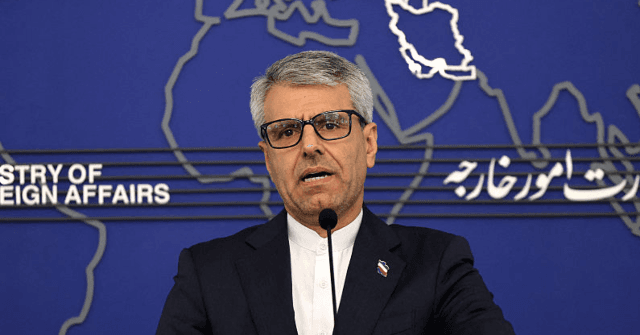
Foreign Ministry spokesperson Esmaeil Baghaei told reporters that Iran has no plans to host foreign delegations or send negotiators abroad.
President Trump cited progress in the negotiations when canceling a threatened attack on Iran over the weekend. Iran said there were no current talks with the United States.
Iran on Monday pushed back on President Trump’s claims that Tehran is negotiating with the administration regarding a longer-term end to the months-long conflict.  “We are not currently holding negotiations with the United States. Our talks are with Oman and are focused on reaching an understanding on a route that would allow shipping traffic to…