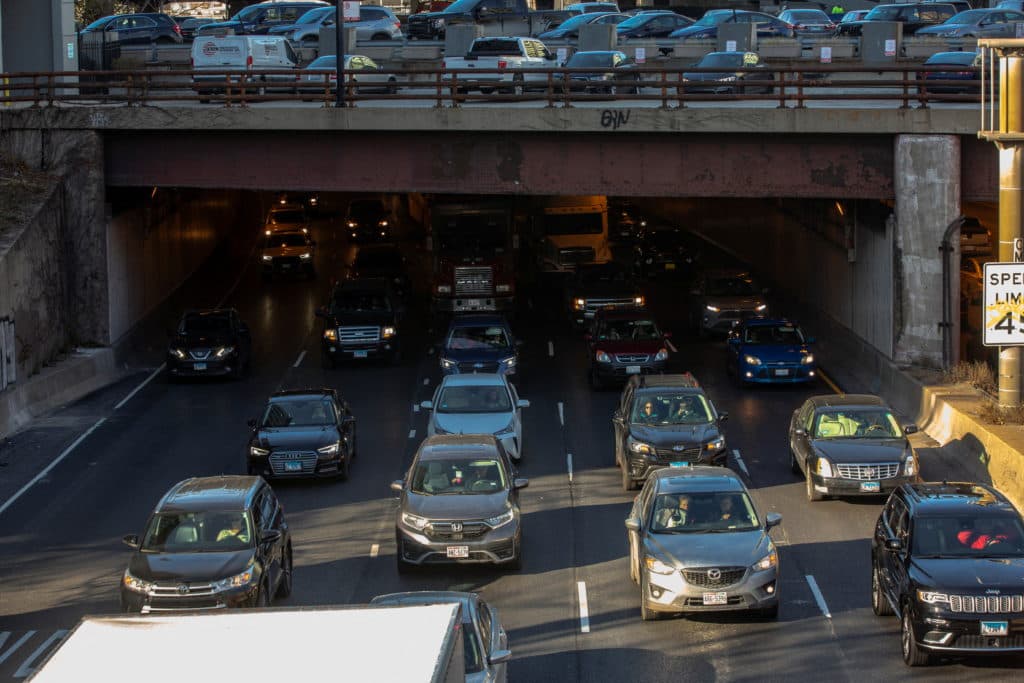
 Highway traffic congestion illustrates the vehicles affected by fuel efficiency rule changes.
Trump Slashes Fuel Economy Rules, Ditching EV Push
Left says
- •Rolling back the standards removes a key federal tool for cutting greenhouse gas emissions from transportation, which accounts for about 28% of total U.S. climate pollution.
- •The rule weakens incentives for automakers to keep investing in electric vehicle production, slowing a transition many environmental advocates see as urgent given worsening climate impacts.
- •Officials describe this as ending an 'EV mandate,' but no federal policy ever required automakers to sell electric vehicles, making that framing misleading.
- •Environmental groups argue the rule ignores feasible, achievable efficiency technology that could cut pollution without significantly raising costs.
Right says
- •Lowering fuel economy mandates removes costly technology requirements that administration officials say inflate new car prices by around $1,300 per vehicle.
- •Giving automakers more flexibility to design vehicles without EV-related compliance costs supports consumer choice and American manufacturing jobs.
- •The administration frames this as ending government overreach that forced automakers to produce electric vehicles many American families did not want or could not afford.
- •Officials argue newer, more affordable cars are safer cars, since easing price pressure allows more families to replace older, less safe vehicles.
Common Take
High Consensus- The new rule sets a fleet-wide average of 34.9 miles per gallon by 2031, down from the Biden-era target of 50.4 miles per gallon.
- The change is expected to reduce the average price of new vehicles by roughly $1,300 and save consumers an estimated $138 billion over five years.
- Both sides recognize the rule reverses Biden-administration policies designed to accelerate the shift toward electric vehicles.
- Vehicle affordability is a shared concern, even though there is disagreement over the best way to achieve it.
The Arguments
Left argues
Transportation accounts for roughly 28% of U.S. greenhouse gas emissions, and rolling back CAFE standards removes one of the federal government's most effective tools for driving down that pollution over time.
Right counters
Fuel economy mandates are a blunt instrument that raises upfront vehicle costs for all buyers, and administration officials argue that pricing families out of newer, safer cars does more near-term harm than the incremental emissions reductions are worth.
Right argues
Administration officials estimate the stricter Biden-era standards added about $1,300 to the cost of a new vehicle, and easing those requirements gives automakers flexibility to build cars people actually want at prices they can afford.
Left counters
Environmental advocates counter that achievable efficiency technology exists that could have delivered savings on fuel costs over a vehicle's lifetime without abandoning pollution goals, meaning the $1,300 figure overstates the true tradeoff.
Left argues
The administration's framing of an 'illegal EV mandate' is misleading, since no federal rule ever required automakers to sell electric vehicles — the prior standards were fuel-economy targets that could be met through various technologies, including but not limited to EVs.
Right counters
Regardless of the precise legal mechanism, the practical effect of the Biden-era targets was to push automakers toward heavy EV investment to hit near-impossible mileage averages, so critics say 'mandate' fairly describes the coercive pressure even if it wasn't a literal sales quota.
Right argues
Newer vehicles have more advanced safety features, so lowering prices through eased standards allows more families to trade in older, less safe cars for newer ones, producing a genuine safety benefit on top of cost savings.
Left counters
This safety argument ignores that weaker standards also mean higher gasoline consumption and pollution levels that carry their own public health costs, particularly for communities near highways and refineries.
Left argues
Weakening these standards during a period of oil price volatility tied to the Iran conflict leaves American drivers more exposed to fuel cost swings, undermining the administration's own affordability argument in the long run.
Right counters
Supporters argue that affordability should be measured at the point of purchase, since many buyers are more constrained by sticker price than by long-term fuel costs, and giving consumers the choice of gas-powered vehicles better reflects actual market demand.
Challenge Questions
These questions target genuine internal contradictions — meant to provoke honest reflection.
Right asks Left
“If achievable efficiency technology could have met the Biden-era targets without significantly raising costs, why did automakers and administration economists conclude that compliance was adding roughly $1,300 per vehicle?”
Left asks Right
“If the goal is genuinely to lower costs and expand consumer choice rather than to protect gasoline-vehicle production, why does the rule specifically eliminate incentives for EV investment rather than simply loosening the efficiency targets while remaining technology-neutral?”
Outlier Report
Left Fringe
Groups like the Center for Biological Diversity (Dan Becker) and Sunrise Movement activists who frame any rollback as a climate emergency requiring aggressive EV mandates represent roughly 15-20% of the left, more absolutist than the median Democratic voter who cares about climate but also affordability.
Right Fringe
Figures like some Freedom Caucus members and commentators who deny climate change entirely or push for eliminating fuel economy standards altogether represent about 15-20% of the right, more extreme than mainstream Republican voters who mostly just oppose EV mandates rather than all environmental regulation.
Noise Assessment
High noise ratio: much of the loudest discourse comes from climate advocacy groups and free-market think tanks with institutional incentives to frame this as existential, while most ordinary Americans view it through a pragmatic lens of car prices and choice rather than ideological battle lines.
Sources (8)
The government claims the change could save Americans $138B over the next five years.
The Trump administration has rolled back car fuel efficiency standards requiring automakers to ensure their products were using less fuel. While the Biden-era standards would have been expected to get the nation's car fleet to average 50.4 miles per gallon by 2031, the Trump administration on Monday brought that number down to 34.9 miles per gallon.
Also, Republicans plan a major ad blitz. Here’s the latest at the end of Monday.
The move marked the final step in the administration’s efforts to dismantle policies aimed at speeding the shift to electric vehicles.
The Trump administration says easing these standards will make cars more affordable. Critics say it's not so simple and could be costly for the environment.
The Trump administration is rolling back federal fuel economy standards for new vehicles. The move reverses policies meant to increase fuel efficiency to encourage greater use of electric vehicles. The boost for gasoline-powered vehicles comes as the war in Iran continues to drive up oil prices. Amna Nawaz discussed the changes with David Shepardson of Reuters.
<p>Environmentalists decry move that relaxes requirements on automakers to control pollution from gas-powered cars</p><p>The Trump administration on Monday announced it was slashing clean car rules that had been aimed at reducing planet-heating emissions and boosting electric vehicles.</p><p>The move, which was criticized by environmentalists, relaxes requirements on automakers to control pollution from gasoline-powered cars and light trucks for model years 2022 through 2031.</p> <a href="https://www.theguardian.com/us-news/2026/sep/28/trump-administration-slashes-clean-car-rules">Continue reading...</a>
The Trump administration has rolled back car fuel efficiency standards requiring automakers to ensure their cars and light trucks were using less fuel. While the Biden-era standards would have been expected to get the nation’s car fleet to average 50.4 miles per gallon by 2031, the Trump administration on Monday brought that number down to…