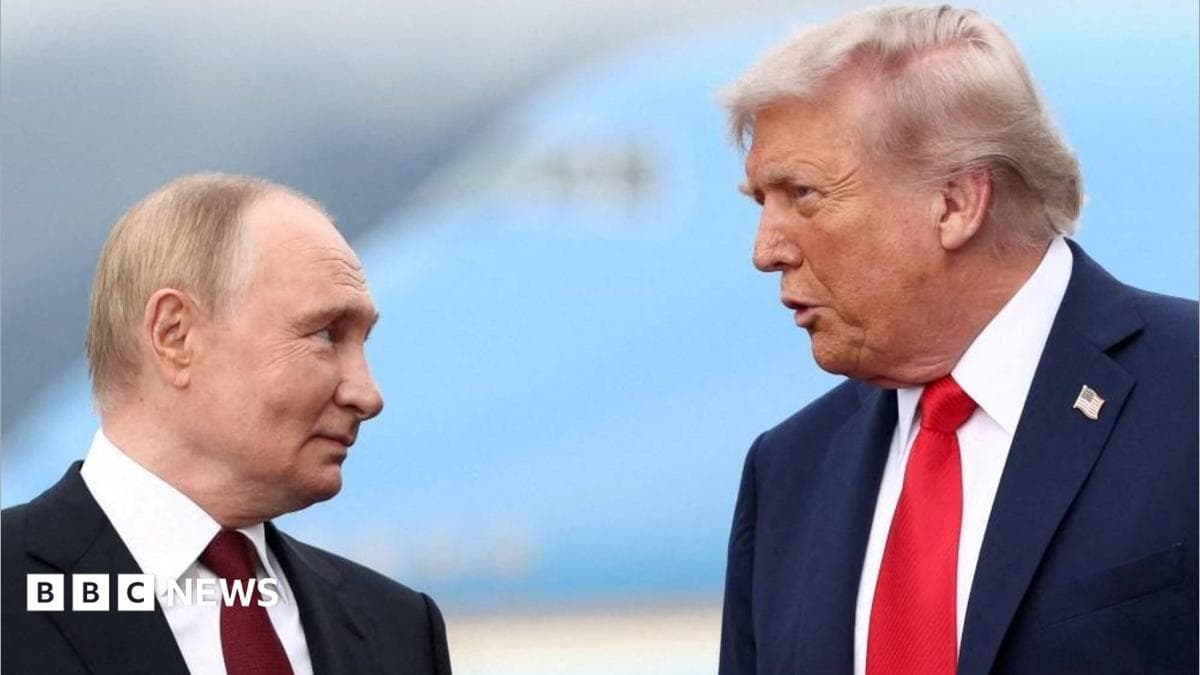
Trump Suspends Bipartisan Russia Sanctions Law He Just Signed
Intra-Party Split Detected
Some Republicans, including Rep. Don Bacon and senators who co-signed a bipartisan letter urging Trump to enforce sanctions, broke with Trump's decision to waive the Russia sanctions and criticized the diesel deal with Moscow, while most GOP leadership did not publicly oppose the move.
Left says
- •The move is widely seen as a direct favor to Putin, coming just days after Trump's controversial agreement to purchase Russian diesel and amid his increasingly hostile rhetoric toward Zelensky, including suggestions Ukraine needs new leadership.
- •Overriding sanctions that passed Congress with overwhelming bipartisan support and were specifically designed to cut off financing for Russia's war machine undermines the legislative branch's clear intent to punish Moscow.
- •Suspending the law named for the late Senator Lindsey Graham, who championed it as part of his legacy after advocating for Ukraine until his death, is seen as a betrayal of that bipartisan commitment.
- •Democratic lawmakers like Blumenthal and Beyer characterize the waiver as prolonging the war and capitulating to the Kremlin rather than pressuring it toward peace, calling it 'craven' and a 'surrender.'
Right says
- •The sanctions law itself explicitly grants the president authority to waive provisions when he certifies to Congress that doing so serves the national interest, so Trump is exercising a legal mechanism built into the bill he signed.
- •The administration frames the pause as tied to broader national interest considerations, including efforts to manage global energy prices that have been affected by the conflict and related disruptions.
- •Trump has emphasized that the waiver is narrowly limited to sanctions under the Graham Act and does not touch other executive-order sanctions already in place against Russia.
- •Some Republicans, including Rep. Don Bacon, have also voiced concern that the move could prolong the war rather than end it, showing this isn't a simple partisan divide even on the right.
Common Take
High Consensus- The sanctions package, formally the Lindsey O. Graham Sanctioning Russia and Iran Act of 2026, passed Congress with broad bipartisan support and was signed into law by Trump just last month.
- The waiver came two days before the sanctions were set to take effect and followed closely on the heels of Trump's announced US-Russia diesel deal.
- Lawmakers across the political spectrum, including some Republicans, have publicly criticized the decision as potentially prolonging the war in Ukraine.
- The legislation targeted Russian officials, banks, the shadow fleet of oil tankers, and included authority for tariffs up to 100% on top buyers of Russian oil and gas, such as China and India.
The Arguments
Left argues
Overriding sanctions that passed Congress with overwhelming bipartisan support, specifically designed to cut off financing for Russia's war machine, undermines the legislature's clear intent to punish Moscow just as the law was about to take effect.
Right counters
The law itself explicitly built in a presidential waiver mechanism contingent on a national interest certification, so Congress anticipated and authorized exactly this kind of executive discretion.
Right argues
Trump is exercising a legal authority Congress itself wrote into the bill, certifying to Congress that the waiver serves the national interest, which is a lawful and anticipated check rather than a unilateral override of legislative intent.
Left counters
A waiver clause meant for genuine national-security flexibility is being used instead to benefit Russia directly after a diesel purchase deal and amid hostile rhetoric toward Zelensky, which looks like exploiting a loophole rather than fulfilling the law's purpose.
Left argues
Suspending a law named for the late Senator Lindsey Graham, who championed sanctions as a dying commitment to Ukraine's cause, represents a symbolic and substantive betrayal of bipartisan consensus reached specifically to pressure Russia toward ending the war.
Right counters
The administration argues the pause is about managing immediate national interests like global energy prices, and that honoring a colleague's memory doesn't require rigid adherence to timing that may not reflect current strategic realities.
Right argues
Trump has stressed the waiver only touches Graham Act provisions and leaves other existing executive-order sanctions on Russia intact, meaning this is a narrow, targeted pause rather than a wholesale abandonment of pressure on Moscow.
Left counters
Even a narrow waiver removes the newest and most significant financial leverage—tariffs up to 100% on Russia's oil and gas buyers—at the precise moment it was designed to bite, which blunts the law's core purpose regardless of what other sanctions remain.
Left argues
Democratic lawmakers like Blumenthal and Beyer argue the waiver, paired with the Russian diesel deal, functions as capitulation to the Kremlin that prolongs the war rather than pressuring Russia toward peace.
Right counters
Republican Rep. Don Bacon's similar concern that this could prolong the war shows skepticism of the move crosses party lines, suggesting the criticism reflects genuine policy disagreement rather than a purely partisan attack on Trump.
Challenge Questions
These questions target genuine internal contradictions — meant to provoke honest reflection.
Right asks Left
“If the waiver authority was written into the bipartisan bill by Congress itself, on what basis can critics claim Trump is defying 'clear congressional intent' when the law explicitly intended for such presidential discretion to exist?”
Left asks Right
“If the waiver is genuinely about managing national interest and energy prices rather than favoring Russia, why did it arrive within days of a Russian diesel purchase deal and amid Trump's public suggestions that Ukraine needs new leadership?”
Outlier Report
Left Fringe
Some progressive anti-interventionist voices (e.g., parts of the DSA-aligned left, commentators like Jimmy Dore or Glenn Greenwald-adjacent figures) who are skeptical of continued Ukraine funding generally and might not frame this as pro-Putin so much as reducing US entanglement; this represents roughly 10-15% of the left.
Right Fringe
Pro-Trump isolationist commentators like Tucker Carlson and some America First figures who fully endorse warming relations with Russia and view sanctions relief as strategically sound, representing a vocal but not majority faction, roughly 20-25% of the right, while establishment Republicans like Bacon and some senators remain hawkish on Russia.
Noise Assessment
High noise ratio; much of the loudest reaction (both 'craven surrender' framing and 'legal national interest' framing) comes from political elites and partisan media rather than grassroots public sentiment, which is more passively skeptical of Russia across party lines but not highly engaged with this specific sanctions waiver story.
Sources (9)
The US president temporarily ends many restrictions on Moscow recently passed by Congress over "national security" concerns.
Trump signed an executive order that puts on hold a sweeping new sanctions package targeting the Russian economy.
The president said the order only impacts sanctions under the Graham Act, and not sanctions imposed by other executive orders.
President Donald Trump waived sweeping new sanctions against Russia passed by Congress, arguing in an executive order Friday that the move “is in the national interests of the United States.”
President Donald Trump said on Friday that he is waiving many sanctions, restrictions and duties days before they were to take effect under a bill that he signed into law last month.Trump's executive order comes as he has been warming toward Russia and publicly...
President Trump paused a congressional Russia sanctions package in the national interest, shortly after announcing a deal for Russian diesel.
The sanctions were part of a measure that was named after Senator Lindsey Graham, the South Carolina Republican who died in July.
<p>President signed the legislation championed by late senator Lindsey Graham last month but has waived the restrictions as they were due to come into effect</p><p>Donald Trump has put on hold a sweeping new sanctions package targeting the Russian economy, telling Congress the pause on the legislation passed by both chambers was in the national interest.</p><p>In an executive order on Friday, the US president said he was waiving many sanctions, restrictions and duties on Russia, in a move that comes as he has been publicly criticising Ukrainian president Volodymyr Zelenskyy, including suggesting that Ukraine needs a new leader.</p> <a href="https://www.theguardian.com/us-news/2026/oct/17/trump-puts-new-russia-sanctions-passed-by-congress-on-hold-amid-deepening-row-with-ukraine">Continue reading...</a>
President Trump signed an executive order Friday evening to waive sanctions against Russia set to take effect soon under a recently signed legislative package. The president officially signed the sanctions package into law last month, which was posthumously dedicated to the late Sen. Lindsay Graham (R-S.C.). The legislation sought to put pressure on the Kremlin…