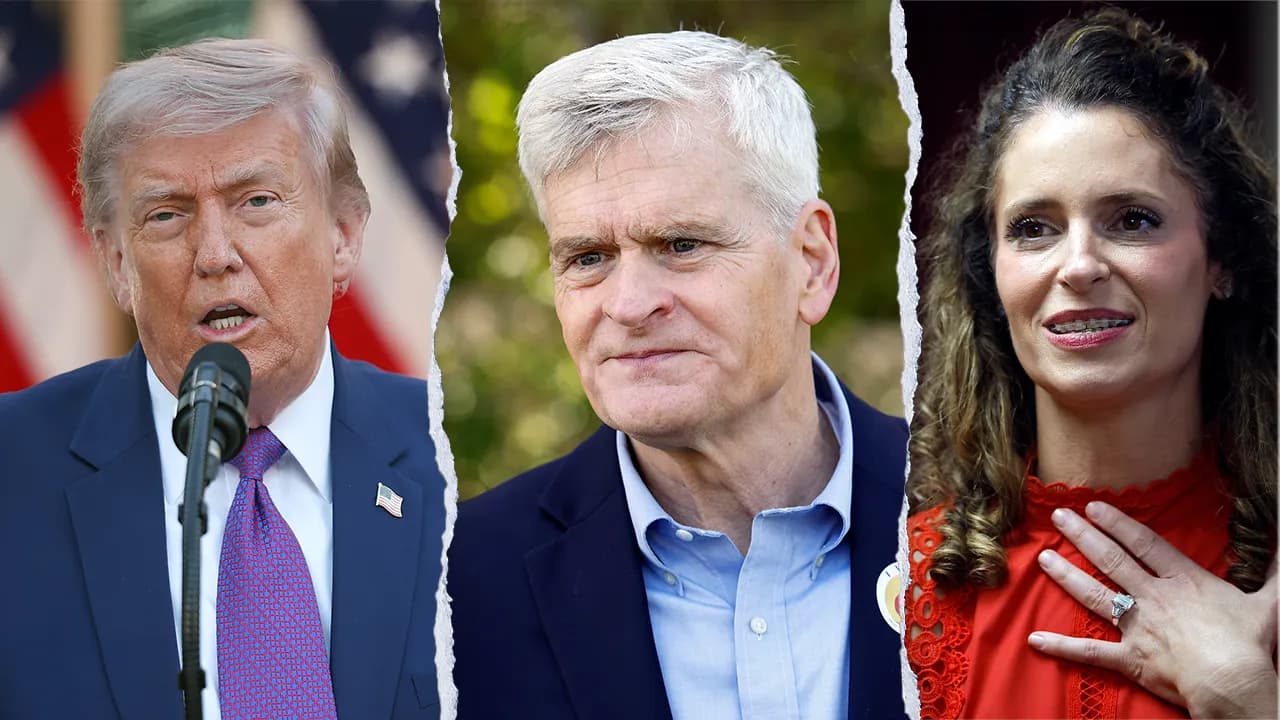
Trump Targets GOP Senator Who Voted to Convict Him in Impeachment
Intra-Party Split Detected
Republican senators split on Trump impeachment vote, with Cassidy among handful who voted to convict
Left says
- •Trump's attack on Cassidy demonstrates his continued effort to punish Republicans who prioritized constitutional principles over party loyalty during the impeachment proceedings
- •Cassidy's vote to convict was based on his assessment that Trump was guilty of inciting insurrection, placing constitutional duty above political considerations
- •The primary challenge represents Trump's broader campaign to purge the Republican Party of members who have shown independence from his leadership
Right says
- •Cassidy betrayed the voters who elected him by campaigning as a Trump supporter then voting to impeach the president on charges that have been discredited
- •Trump's endorsement of Julia Letlow reflects his commitment to supporting loyal Republicans who will consistently advance conservative priorities
- •Cassidy's disloyalty extends beyond impeachment to his obstruction of Trump's nominees like RFK Jr. and his criticism of administration health policies
Common Take
High Consensus- Cassidy was one of seven Republican senators who voted to convict Trump in the 2021 impeachment trial
- Trump endorsed Rep. Julia Letlow as Cassidy's primary challenger in an unusual move against an incumbent senator
- The Louisiana primary requires a candidate to receive over 50% of votes to avoid a runoff election
- Cassidy played a key role in the confirmation process for Trump's Health Secretary Robert F. Kennedy Jr.
The Arguments
Right argues
Cassidy campaigned as a Trump supporter to win election, then immediately betrayed those voters by voting to convict Trump on impeachment charges that lacked merit. This represents a fundamental breach of the electoral contract between representative and constituents.
Left counters
Senators take an oath to the Constitution, not to any individual politician, and Cassidy explicitly stated he voted to convict because Trump was guilty of inciting insurrection. Principled governance sometimes requires difficult decisions that transcend campaign promises.
Left argues
Trump's targeting of Cassidy exemplifies his authoritarian approach to party leadership, where loyalty to him personally takes precedence over constitutional principles and independent judgment. This undermines the separation of powers and democratic governance.
Right counters
Political parties naturally expect loyalty from their members, and Trump is simply supporting candidates who will advance conservative priorities consistently. Cassidy's obstruction of Trump's agenda, including his criticism of RFK Jr., shows he's not aligned with the party's direction.
Left argues
Cassidy's vote was based on his constitutional duty and assessment of evidence regarding January 6th, demonstrating the kind of independent judgment the founders intended senators to exercise. His medical expertise also makes him qualified to scrutinize health policy nominees.
Right counters
The impeachment charges have been discredited, and Cassidy knew this at the time but voted to convict anyway for political reasons. His obstruction of Trump's health nominees contradicts the electoral mandate for change in federal health policy.
Right argues
Julia Letlow represents the kind of loyal conservative leadership that Louisiana voters actually want, as evidenced by Trump's overwhelming support in the state. Cassidy's pattern of disloyalty extends beyond impeachment to active obstruction of the Trump agenda.
Left counters
Effective governance requires senators who can think independently and provide oversight, not rubber stamps for any administration. Cassidy's willingness to extract concessions from nominees like RFK Jr. demonstrates responsible legislative oversight.
Challenge Questions
These questions target genuine internal contradictions — meant to provoke honest reflection.
Right asks Left
“If constitutional principles truly override electoral promises, how do you reconcile democratic accountability with the idea that representatives can ignore the clear preferences of voters who elected them based on specific campaign commitments?”
Left asks Right
“If Trump's influence over the Republican Party is inherently problematic, why shouldn't voters have the right to choose representatives who will consistently support the agenda they voted for, rather than senators who campaign on one platform then govern on another?”
Outlier Report
Left Fringe
Progressive activists like Alexandria Ocasio-Cortez and groups like MoveOn who view any Republican criticism of Trump as insufficient and want more aggressive accountability measures represent about 15% of the left.
Right Fringe
MAGA hardliners like Steve Bannon and Laura Loomer who demand complete purging of all Republicans who ever criticized Trump, viewing any cooperation as betrayal, represent about 20% of the right.
Noise Assessment
High performative element - Trump's social media attacks generate disproportionate coverage compared to actual voter engagement in Louisiana primaries, amplifying what is essentially routine political score-settling.
Sources (4)
President Donald Trump attacked Sen. Bill Cassidy, R-LA, in a scathing social media attack while endorsing his primary challenger Rep. Julia Letlow, R-LA., on the day of the Louisiana GOP primary
"Senator Bill Cassidy of Louisiana is a disloyal disaster," began a post by President Donald Trump on the day that the senator faced two challengers in his state primary.
Trump endorsed U.S. Rep. Julia Letlow over Cassidy, in an unusual attempt to dislodge an incumbent senator. Cassidy voted to convict Trump in his second impeachment trial.
President Trump took another swing at Sen. Bill Cassidy (R-La.) on Saturday, calling the incumbent a “disloyal disaster” ahead of Louisiana’s high stakes primary election. “Bill Cassidy is a sleazebag, a terrible guy, who is BAD FOR LOUISIANA,” Trump wrote in a post on Truth Social. “Now he’s going to get CLOBBERED, hopefully, in today’s…