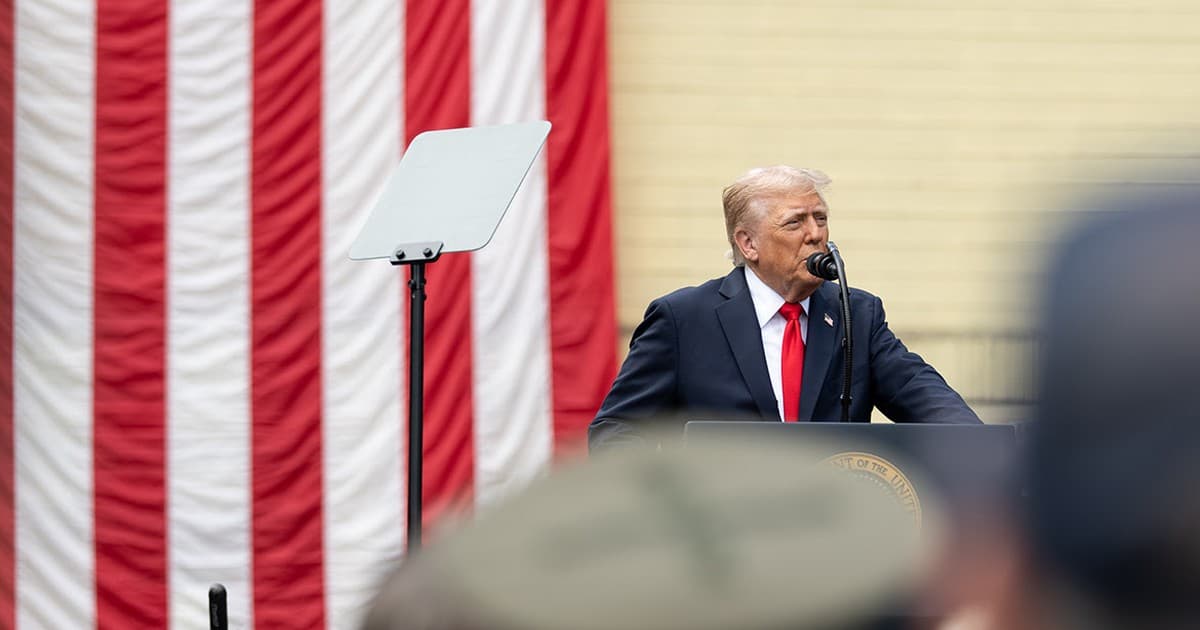
 Trump speaking at podium with American flag backdrop
Trump Threatens 50% Tariffs on Countries Arming Iran
Left says
- •Broad economic sanctions targeting entire countries could harm innocent civilians and disrupt global supply chains that affect American consumers and businesses
- •The tariff policy lacks diplomatic nuance and could strain relationships with key allies who may have legitimate defense partnerships or historical ties with Iran
- •Unilateral trade measures risk escalating tensions and undermining multilateral diplomatic efforts to achieve lasting peace in the Middle East
Right says
- •Strong economic deterrence prevents Iran from rebuilding its military capabilities and threatening regional stability after the ceasefire
- •The policy demonstrates decisive leadership by using America's economic leverage to enforce peace agreements without prolonged military engagement
- •Clear consequences for weapons suppliers will discourage nations from undermining diplomatic progress and help secure long-term peace in the region
Common Take
High Consensus- A ceasefire between the United States and Iran was reached Tuesday night with negotiations planned for Friday in Pakistan
- Preventing Iran from rebuilding its military capabilities and nuclear program serves regional stability interests
- Economic tools can be effective alternatives to military action in foreign policy
- The United States has significant economic leverage through its large consumer market
The Arguments
Right argues
Economic deterrence through tariffs provides a powerful, non-military tool to prevent Iran from rebuilding its military capabilities and threatening regional stability, demonstrating decisive leadership that uses America's economic leverage to enforce peace agreements.
Left counters
Broad economic sanctions targeting entire countries could harm innocent civilians and disrupt global supply chains, while potentially straining relationships with key allies who may have legitimate defense partnerships or historical ties with Iran.
Left argues
Unilateral trade measures risk escalating tensions and undermining multilateral diplomatic efforts, as the tariff policy lacks diplomatic nuance and could damage cooperation with allies needed for lasting Middle East peace.
Right counters
Clear consequences for weapons suppliers will discourage nations from undermining diplomatic progress and help secure long-term peace, while swift action prevents Iran from exploiting diplomatic openings to regroup militarily.
Right argues
The 50% tariff threat sends an immediate, unambiguous message that prevents adversaries from exploiting ceasefire periods to rebuild military strength, using economic pressure to achieve national security objectives without prolonged military engagement.
Left counters
Such broad tariffs could introduce volatility into global markets and affect American consumers and businesses through disrupted supply chains, while potentially pushing targeted countries toward closer cooperation with Iran rather than compliance.
Left argues
The policy's lack of exclusions or exemptions fails to account for complex international relationships and could inadvertently punish countries for legitimate defense cooperation or historical agreements that predate current tensions.
Right counters
The absence of exemptions ensures the policy cannot be exploited through loopholes and demonstrates serious commitment to preventing any military support that could destabilize the region or threaten American interests.
Challenge Questions
These questions target genuine internal contradictions — meant to provoke honest reflection.
Right asks Left
“If diplomatic nuance and multilateral cooperation are essential for lasting peace, how do you reconcile supporting continued weapons sales to Iran by any nation during a fragile ceasefire period when such sales directly undermine the diplomatic process you claim to prioritize?”
Left asks Right
“If the goal is to prevent Iran from rebuilding military capabilities through economic deterrence, how do you address the contradiction that broad tariffs on entire economies may push targeted nations toward deeper strategic partnerships with Iran rather than compliance with American demands?”
Outlier Report
Left Fringe
Progressive isolationists like Ro Khanna and some DSA-aligned activists who oppose all economic sanctions as 'economic warfare' represent about 15-20% of the left coalition.
Right Fringe
Hardline hawks like Tom Cotton or John Bolton who might prefer immediate military action over economic measures represent about 10-15% of the right coalition.
Noise Assessment
Moderate noise level - most discourse reflects genuine policy preferences rather than performative positioning, though some amplification occurs around tariff impacts on specific industries.
Sources (7)
<p>President Donald Trump announced Wednesday morning the United States will work with Iran to remove enriched uranium from the destroyed sites bombed in Operation Midnight Hammer last June.</p> <p>The post <a href="https://www.breitbart.com/politics/2026/04/08/trump-u-s-will-work-with-iran-to-remove-enriched-uranium-charge-tolls-on-strait-of-hormuz/" rel="nofollow">Trump: U.S. Will Work with Iran to Remove Enriched Uranium, Charge Tolls on Strait of Hormuz</a> appeared first on <a href="https://www.breitbart.com" rel="nofollow">Breitbart</a>.</p>
<p>President Donald Trump is placing a 50 percent tariff on all goods from countries that sell weapons to Iran on the heels of the two-week ceasefire announced Tuesday night.</p> <p>The post <a href="https://www.breitbart.com/politics/2026/04/08/trump-announces-50-percent-tariff-on-countries-that-sell-weapons-to-iran/" rel="nofollow">Trump Announces 50 Percent Tariff on Countries that Sell Weapons to Iran</a> appeared first on <a href="https://www.breitbart.com" rel="nofollow">Breitbart</a>.</p>
The U.S. and Iran agreed to a two-week ceasefire on Tuesday evening and plan to hold negotiations to end the war in Islamabad, Pakistan on Friday.
President Donald Trump on Wednesday morning said any country found to be rearming Iran will "immediately" be subject to a 50% tariff on "any and all goods sold" to the United States.
President Trump sent a warning Wednesday that any country that supplies Iran with military weapons will face a 50 percent tariff on goods sold to the United States. “A Country supplying Military Weapons to Iran will be immediately tariffed, on any and all goods sold to the United States of America, 50%, effective immediately,” Trump…