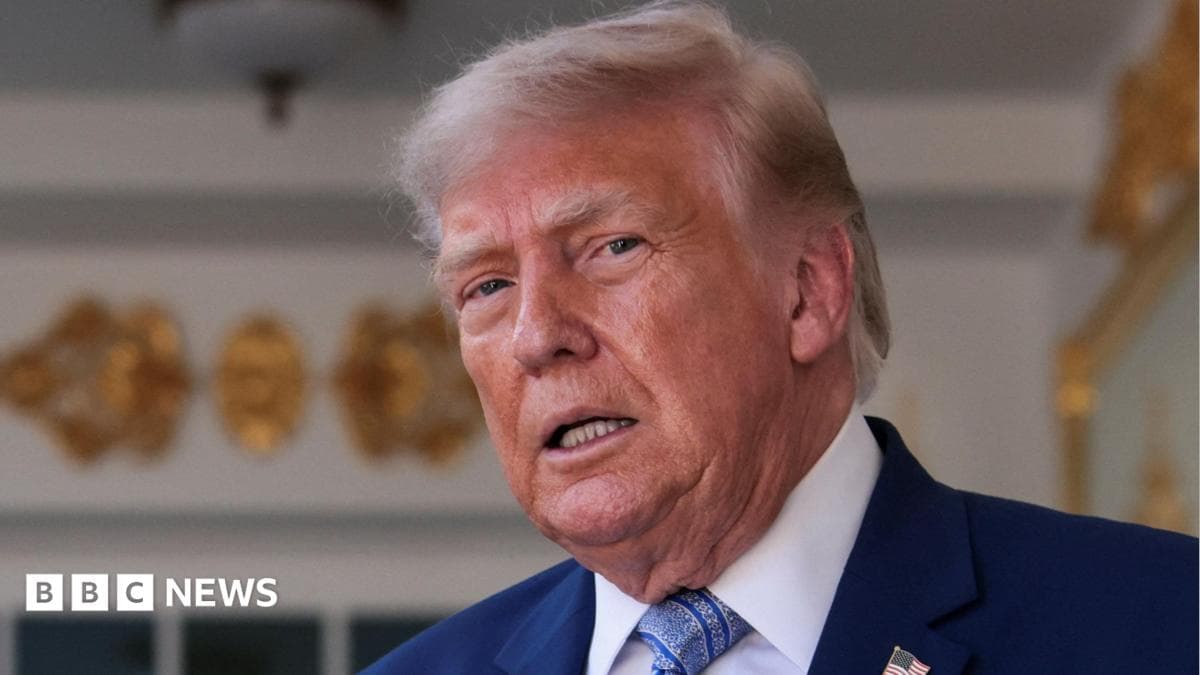
Trump Threatens EU Tariffs Over Google, Apple, Meta Fines
Left says
- •The EU's fines stem from its Digital Markets Act and antitrust rules designed to curb monopolistic behavior by dominant tech platforms, a regulatory approach the EU has applied consistently since before Trump's presidency.
- •Trump's threat to reverse foreign sovereign nations' legal penalties on companies represents unusual pressure on another government's independent regulatory and judicial processes.
- •The tech companies involved have donated heavily to Trump's campaign and presidency, raising questions about whether the intervention is motivated by protecting corporate allies rather than genuine trade policy concerns.
- •Using tariffs as leverage over a country's domestic regulatory decisions, rather than strictly trade-related disputes, extends a pattern of using tariff threats as a general-purpose foreign policy tool.
Right says
- •American tech companies have been repeatedly and disproportionately targeted by EU regulators, with fines against Google alone totaling more than $18 billion, suggesting a pattern of discriminatory treatment rather than neutral enforcement.
- •The EU's fines function as a de facto tax on successful American businesses and ultimately harm American taxpayers and consumers who bear the costs.
- •Section 301 gives the president established legal authority to investigate and respond to unfair foreign trade practices, and this action follows that lawful process.
- •The EU has had years to pursue digital services taxes and antitrust actions against American companies while facing little consequence, and it's reasonable for the U.S. to finally push back forcefully.
Common Take
High Consensus- The EU fined Google €890 million ($1 billion) for antitrust violations related to its search engine and app store.
- Google, Apple, Meta, and Amazon have all faced EU fines or investigations under European competition and digital market rules.
- Trump announced the fines would be investigated under Section 301 of the Trade Act and threatened a substantial new tariff on the EU.
- The announcement came one day after the Trump administration imposed new tariffs of 10-12.5% on more than 60 trading partners, including the EU.
The Arguments
Right argues
American tech companies have faced a disproportionate and escalating pattern of EU fines—Google alone now totals over $18 billion—suggesting the enforcement is aimed specifically at successful U.S. firms rather than applied as neutral, evenly-distributed competition policy.
Left counters
The EU's Digital Markets Act and antitrust framework apply the same rules to all large platforms regardless of nationality, and the fact that American companies dominate the relevant markets—search, app stores, cloud, social media—naturally means they draw the most enforcement, not that they're being singled out for being American.
Left argues
The EU's fines stem from a consistent, pre-existing regulatory and antitrust framework applied through independent judicial and administrative processes, and a foreign head of state demanding those penalties be 'entirely reversed' is an extraordinary intrusion into another government's sovereign legal system.
Right counters
Section 301 exists precisely to let the U.S. government respond when it judges that a trading partner's practices unfairly burden American commerce, and using that lawful tool to push back against fines that hit only U.S. companies is a legitimate exercise of trade policy, not an attack on EU sovereignty.
Right argues
EU fines and digital services taxes function as a de facto levy on American businesses that ultimately raises costs passed on to U.S. consumers and shareholders, so pushing back protects American economic interests that have been squeezed for years without resistance.
Left counters
Antitrust fines are designed to be paid by the offending company for its own anticompetitive conduct, not passed on as a tax on all Americans, and treating enforcement against monopolistic behavior as an attack on the U.S. economy conflates legitimate regulation with economic warfare.
Left argues
The companies benefiting from this intervention—Google, Apple, Meta, and Amazon—have all donated heavily to Trump's campaign and presidency, raising legitimate questions about whether this is genuine trade policy or a reward for political allies.
Right counters
The size and pattern of the fines against these specific companies predates any donations and reflects years of EU regulatory targeting; the administration would have grounds to challenge these fines under Section 301 regardless of who is contributing to campaigns.
Left argues
Using tariff threats to try to force a foreign government to reverse specific court-adjacent regulatory penalties—rather than addressing trade barriers or tariffs directly—extends a troubling pattern of using tariffs as a general coercive tool for any policy grievance, unmoored from traditional trade disputes.
Right counters
Section 301 was specifically written to cover 'unreasonable' or 'discriminatory' foreign practices that burden U.S. commerce, not just tariffs, so using it against discriminatory fines is squarely within its intended legal scope rather than a novel expansion of executive power.
Challenge Questions
These questions target genuine internal contradictions — meant to provoke honest reflection.
Right asks Left
“If the EU's Digital Markets Act and antitrust enforcement is applied neutrally as claimed, why have the overwhelming majority of major fines under this regime landed on American companies rather than European or Chinese competitors in similar market positions?”
Left asks Right
“If Section 301 investigations are meant to address genuinely unfair trade practices rather than to protect specific favored companies, how do you account for the fact that the administration is intervening on behalf of firms that have directly and heavily funded Trump's political operation?”
Outlier Report
Left Fringe
Progressive tech critics like Elizabeth Warren and antitrust advocates (e.g., writers at The American Prospect) who might actually agree the EU fines are justified given their own criticism of Big Tech monopolies, representing maybe 15% of the left who diverge from the anti-Trump-intervention framing to instead support strong antitrust action generally.
Right Fringe
Libertarian-leaning conservatives and free-trade purists (e.g., some Cato Institute analysts, certain National Review writers) who oppose using tariffs as a political tool even to defend American companies, representing roughly 10-15% of the right skeptical of Trump's tariff-as-leverage approach.
Noise Assessment
High noise ratio; Trump's Truth Social rhetoric ('PIGGYBANK', 'ROBBING') dominates coverage and is amplified by both praise and mockery on social media, but most Americans likely have only passing awareness of this specific EU regulatory dispute compared to broader tariff and Big Tech narratives.
Sources (7)
The US president says fines against Google, as well as Apple, Meta and Amazon, should be "entirely reversed."
President Trump accused the European Union of "robbing" American companies and taxpayers.
WASHINGTON— President Donald Trump threatened the European Union with “substantial” tariffs on Friday after regulators hit Google with another $1 billion antitrust fine, accusing Europe of treating the United States like its own “PIGGYBANK.” Trump accused the EU of “taking direct aim at GREAT American Companies!” “After having fined Apple, for no reason at all, ...
"The European Union will pay a very big price for this illegal and highly unethical conduct, which I have consistently warned them about," Trump went on.
President Donald Trump on Friday blasted the European Union over what he called its illegal decision to fine Alphabet's Google, saying Washington would launch a probe into the bloc's "robbing" of American companies.
<p>After Google fined €890m by EU, US president said Europe was ‘robbing’ American companies and taxpayers</p><ul><li><p><a href="https://www.theguardian.com/us-news/2026/jul/23/trump-tariffs-what-to-know">What to know about Trump’s new tariffs on more than 80 countries</a></p></li></ul><p><a href="https://www.theguardian.com/us-news/donaldtrump">Donald Trump</a> has threatened the European Union with “substantial” tariffs after Brussels imposed a series of <a href="https://www.theguardian.com/technology/2026/jul/23/eu-fines-google-for-competition-breaches-over-search-and-apps">steep fines</a> on US tech giants.</p><p>In a post on his Truth Social platform, the US president wrote: “The United States of America is not a ‘PIGGYBANK’ for Europe, nor will we allow it to be!”</p> <a href="https://www.theguardian.com/us-news/2026/jul/24/trump-european-union-tariffs">Continue reading...</a>
President Trump on Friday slammed the European Union for fining Google over allegedly violating its digital competition law, stating the “illegal and highly discriminatory practice” will be probed in a trade investigation. “The European Union is at it again and, as usual, taking direct aim at GREAT American Companies!” Trump wrote on Truth Social. “This…