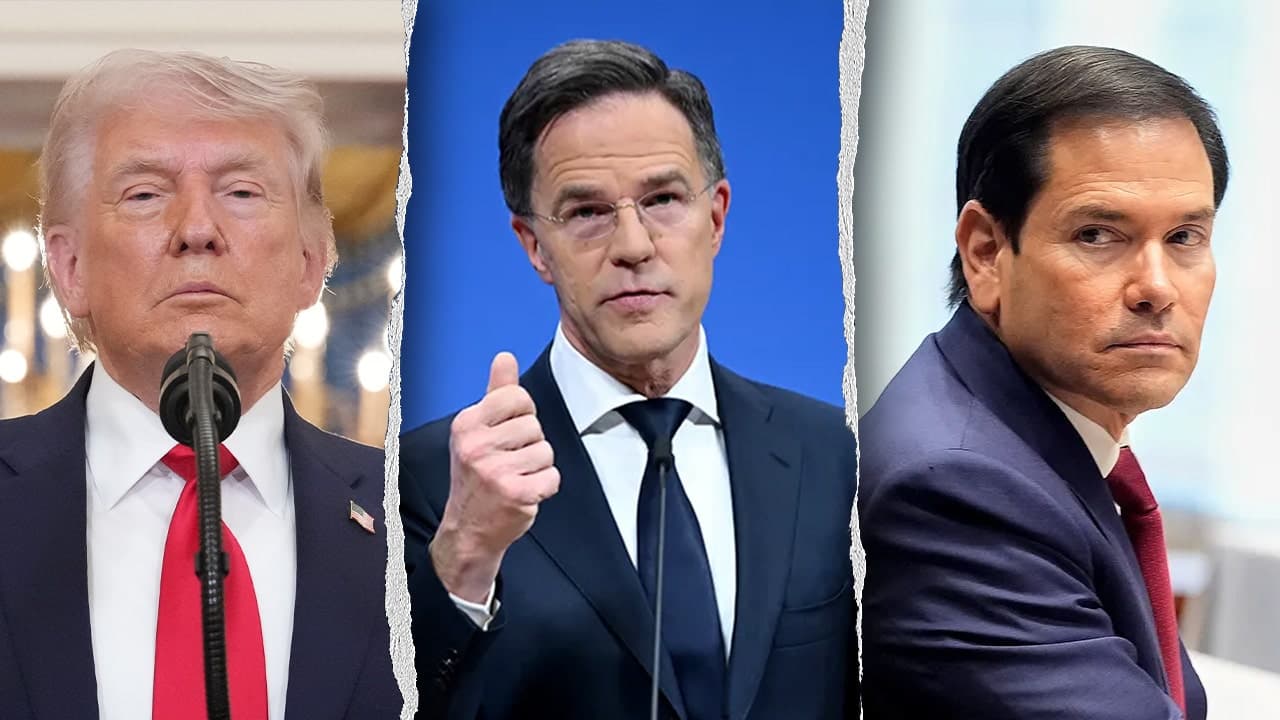
Trump threatens NATO withdrawal over Iran war support failures
Left says
- •Trump's threats to abandon NATO undermine decades of collective security that has prevented major wars and protected democratic values worldwide
- •European allies have legitimate sovereignty concerns about being dragged into conflicts they didn't initiate, especially given the catastrophic consequences of past Middle East interventions
- •Withdrawing from NATO would isolate America, weaken its global influence, and embolden authoritarian regimes like Russia and China
- •The alliance has consistently supported the U.S. in previous conflicts, including invoking Article 5 after 9/11 for the first and only time in NATO history
Right says
- •NATO allies failed a critical test by refusing to support America and Israel when Iran shut down vital shipping lanes that hurt the global economy
- •European nations have freeloaded on American defense spending for decades while blocking U.S. military operations when their help was most needed
- •America cannot continue funding the defense of allies who turn their backs during crises, making NATO a one-way relationship that disadvantages U.S. taxpayers
- •The alliance's reluctance to help reopen the Strait of Hormuz demonstrates that NATO members prioritize their own interests over collective security
Common Take
High Consensus- Trump is meeting with NATO Secretary-General Mark Rutte at the White House on Wednesday to discuss alliance tensions
- Iran's closure of the Strait of Hormuz caused global energy prices to spike significantly
- A two-week ceasefire between the U.S./Israel and Iran was agreed to on Tuesday
- Several European NATO members denied the U.S. access to bases and airspace during the Iran conflict
The Arguments
Right argues
NATO allies demonstrated their unreliability when they refused to help reopen the Strait of Hormuz during a crisis that caused global energy prices to spike, with countries like Spain actively blocking U.S. military operations by denying base access and airspace. This proves NATO has become a one-way relationship where America provides defense guarantees but receives no meaningful support when it needs help most.
Left counters
European allies have legitimate concerns about being automatically drawn into conflicts they didn't initiate, especially given the catastrophic consequences of past Middle East interventions. NATO's Article 5 mutual defense commitment was designed for defensive purposes, not to compel allies to support offensive operations in regions where they have different strategic interests.
Left argues
Abandoning NATO would fundamentally weaken America's global influence and embolden authoritarian regimes like Russia and China, who would exploit the fracturing of the Western alliance. The alliance has consistently supported the U.S. when it mattered most, including invoking Article 5 after 9/11 for the first and only time in NATO history.
Right counters
America's global influence shouldn't depend on subsidizing the defense of wealthy European nations who have freeloaded for decades while contributing minimal defense spending. When the U.S. needed NATO's help to address Iran's disruption of vital shipping lanes, these same allies turned their backs, proving the alliance's limitations when American interests are at stake.
Left argues
NATO has prevented major wars in Europe for over 75 years and represents the cornerstone of collective security that protects democratic values worldwide. Threatening withdrawal undermines decades of successful deterrence and could trigger the very conflicts the alliance was designed to prevent.
Right counters
The alliance's reluctance to help during the Iran crisis demonstrates that NATO members prioritize their own narrow interests over collective security when it truly matters. If NATO won't act when Iran shuts down critical shipping lanes that hurt the global economy, what value does this 'collective security' actually provide to American taxpayers?
Right argues
European nations have consistently failed to meet their defense spending commitments while expecting American protection, creating an unsustainable burden on U.S. taxpayers. The Iran crisis exposed this fundamental imbalance when allies who benefit from American security guarantees refused to reciprocate support during a genuine emergency.
Left counters
Many NATO allies have significantly increased their defense spending in recent years and have provided substantial support in Afghanistan, Iraq, and other conflicts alongside the United States. The alliance's value extends far beyond financial contributions to include intelligence sharing, strategic positioning, and diplomatic coordination that enhances American security.
Challenge Questions
These questions target genuine internal contradictions — meant to provoke honest reflection.
Right asks Left
“If NATO's collective security framework is truly about mutual defense and shared values, why shouldn't allies be expected to help when Iran's actions threaten global economic stability and maritime freedom - principles that supposedly underpin the Western alliance?”
Left asks Right
“If NATO allies are unreliable partners who won't support America in crises, how does maintaining the alliance actually enhance U.S. security compared to pursuing bilateral relationships with countries that demonstrate genuine commitment to shared interests?”
Outlier Report
Left Fringe
Progressive isolationists like some Squad members (AOC, Ilhan Omar) who oppose military interventions entirely and view NATO skeptically from an anti-war perspective represent about 15% of the left.
Right Fringe
Hard isolationists like Tucker Carlson and some America First figures who want complete NATO withdrawal regardless of circumstances represent about 20% of the right.
Noise Assessment
Moderate noise level - most discourse reflects genuine policy disagreements about alliance obligations, though some amplification occurs around Trump's more dramatic withdrawal threats.
Sources (5)
President Donald Trump to meet NATO Secretary-General Mark Rutte at the White House as transatlantic tensions escalate over the U.S. military operation in Iran.
Trump dating back to his first term has been critical of NATO, complaining that some member nations are not paying their fair share of the alliance's defense spending guidelines.
Trump is expected to raise the prospect of the U.S. leaving NATO in talks with the alliance’s leader amid tensions over Iran.
President Donald Trump has suggested the U.S. may consider leaving the trans-Atlantic alliance after NATO member countries ignored his call to help reopen the Strait of Hormuz, a vital shipping waterway, as Iran effectively shut it and sent gas prices soaring.
Correction: A previous version of this article misidentified the chancellor of Germany. It is Friedrich Merz. NATO Secretary-General Mark Rutte’s planned meeting with President Trump at the White House on Wednesday comes at a potentially explosive moment for both the U.S.-Israeli conflict with Iran and the future of the trans-Atlantic alliance. Trump on Tuesday threatened…