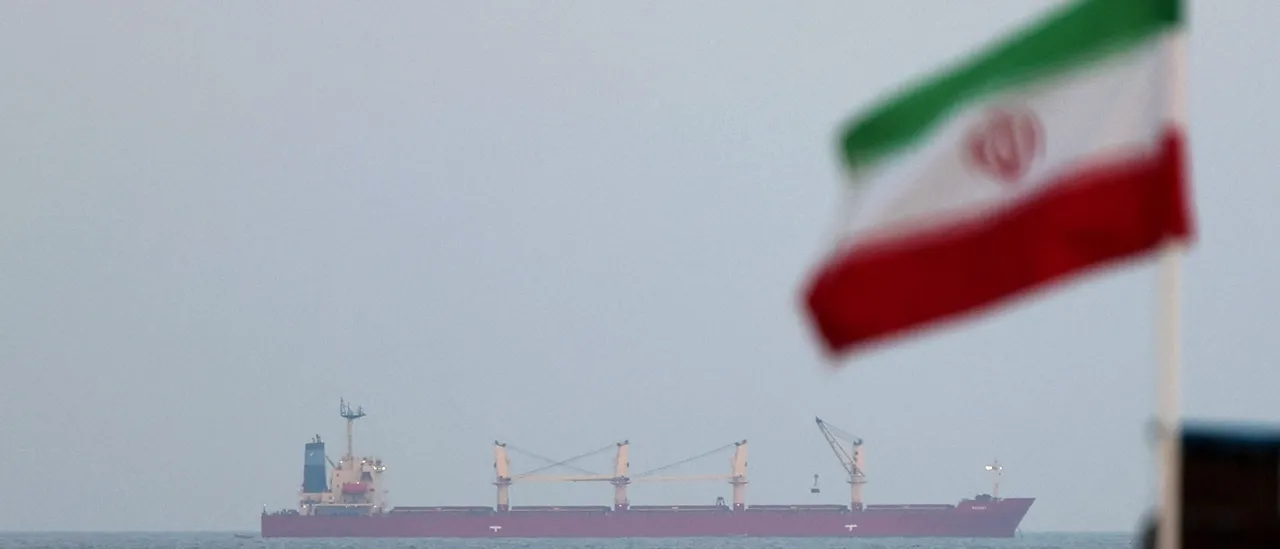
Trump Threatens Renewed Iran Strikes While Ceasefire Negotiations Continue
Left says
- •Trump's threat of escalated military action undermines delicate diplomatic negotiations and could derail progress toward a peaceful resolution
- •The administration is prioritizing military solutions over sustained diplomatic engagement, risking broader regional conflict
- •Recent U.S. strikes during ceasefire talks send mixed signals that could provoke Iranian hardliners and weaken moderate voices seeking compromise
Right says
- •Trump's firm stance demonstrates necessary strength to force Iran back to serious negotiations after decades of aggression
- •Iran's continued attacks on U.S. naval forces and commercial shipping during ceasefire talks prove the regime cannot be trusted without credible deterrence
- •The limited retaliatory strikes show measured restraint while maintaining pressure on Iran to accept reasonable terms for ending the conflict
Common Take
High Consensus- Both sides are engaged in active negotiations involving a 14-point framework proposal from Iran
- The current ceasefire remains fragile with ongoing incidents between U.S. and Iranian forces
- Reopening the Strait of Hormuz to commercial shipping is a critical objective for regional stability
- Iran's nuclear program remains a central concern requiring resolution through any comprehensive agreement
The Arguments
Right argues
Iran's continued attacks on U.S. naval forces during ceasefire negotiations—firing 15 missiles at UAE ports and attacking three Navy destroyers—proves the regime cannot be trusted without credible military deterrence backing diplomatic efforts.
Left counters
These limited retaliatory strikes during delicate negotiations send contradictory signals that undermine diplomatic progress and risk empowering Iranian hardliners who oppose any compromise with the United States.
Left argues
Trump's threat of escalated military action at 'a much higher level and intensity' while Iran has submitted a 14-point proposal demonstrates prioritizing military solutions over sustained diplomatic engagement that could achieve lasting peace.
Right counters
Iran's proposal includes unrealistic demands like a one-month deadline and separating nuclear negotiations from other issues, showing they're not negotiating in good faith without pressure from credible military threats.
Right argues
The measured U.S. response—calling the strikes a 'love tap' while maintaining the ceasefire—shows appropriate restraint that maintains pressure on Iran to accept reasonable terms without escalating to full warfare.
Left counters
Conducting military strikes while simultaneously claiming a ceasefire remains in effect creates dangerous ambiguity that could lead to miscalculation and unintended escalation by either side.
Left argues
Military strikes during active negotiations risk derailing progress toward reopening the Strait of Hormuz and addressing nuclear concerns through diplomatic channels that have shown recent momentum.
Right counters
Forty-seven years of Iranian aggression and their continued attacks during negotiations prove that diplomacy alone is insufficient—credible deterrence is necessary to force Iran to negotiate seriously.
Right argues
Iran's attacks on commercial shipping and U.S. forces demonstrate that the regime views diplomatic negotiations as cover for continued aggression, requiring firm military responses to establish clear boundaries.
Left counters
U.S. military actions during ceasefire talks provide Iranian hardliners with justification to abandon negotiations entirely and resume full-scale conflict, potentially destroying months of diplomatic progress.
Challenge Questions
These questions target genuine internal contradictions — meant to provoke honest reflection.
Right asks Left
“If Iran continues attacking U.S. forces and commercial shipping during ceasefire negotiations, how can meaningful diplomatic progress occur without credible deterrence, and what alternative do you propose when diplomacy alone has failed for decades?”
Left asks Right
“How can you simultaneously claim that military strikes during active negotiations demonstrate 'measured restraint' while also arguing that such strikes are necessary because Iran cannot be trusted—doesn't this create a self-fulfilling prophecy that undermines the very negotiations you claim to support?”
Outlier Report
Left Fringe
Progressive anti-war activists like CodePink's Medea Benjamin and some Squad members like Rep. Rashida Tlaib who oppose any military action regardless of provocation. Represents roughly 15-20% of the left.
Right Fringe
Hardline hawks like Sen. Tom Cotton and former Trump advisor John Bolton who advocate for maximum military pressure and regime change rather than negotiated settlements. Represents about 25-30% of the right.
Noise Assessment
Moderate noise level - most discourse reflects genuine policy differences rather than performative positioning, though some amplification occurs around Trump's specific rhetoric and timing.
Sources (8)
<p>President Trump told reporters on Saturday that he could order renewed military action against <a href="https://www.axios.com/world/iran" target="_blank">Iran</a> if it "misbehaves."</p><p><strong>Why it matters:</strong> While the U.S. and Iran are still exchanging drafts of a framework agreement to end the war, Trump is also seriously considering ordering new military action against Iran to try and break the current stalemate. </p><hr /><p><strong>What he is saying:</strong> "If they misbehave, if they do something bad — but right now, we'll see. It's a possibility that could happen, certainly," Trump said when asked whether he could order fresh strikes. </p><p><strong>Driving the news: </strong>Iran on Thursday gave the U.S. a 14-point updated proposal for a framework agreement.</p><ul><li>According to two sources briefed of the proposal, it set a one-month deadline for negotiations on a deal to reopen the Strait of Hormuz, end the U.S. naval blockade and permanently end the war in Iran and in Lebanon.</li><li>Per the Iranian proposal, only after such a deal is reached, another month of negotiations would be launched to try and reach a deal on the nuclear program, the two sources said.</li><li>Trump was also briefed on Thursday by CENTCOM commander Adm. Brad Cooper about new plans for military strikes against Iran. Cooper then left for the region, and on Saturday met soldiers on the USS Tripoli in the Arabian Sea.</li></ul><p><strong>What to watch:</strong> While Trump said Friday that he wasn't satisfied with the Iranian proposal, on Saturday before leaving Palm Beach to Miami he told reporters he was going to review it on the plane.</p><ul><li>"I'm looking at it. I'll let you know about it later... They told me about the concept of the deal. They're going to give me the exact wording now," he said.</li><li>Shortly after, Trump <a href="https://truthsocial.com/%40realDonaldTrump/posts/116507414650995614" target="_blank">wrote</a> on Truth Social that he "can't imagine that it would be acceptable" and stressed Iran "has not yet paid a big enough price for what they have done to Humanity, and the World, over the last 47 years."</li></ul>
<p>President Trump is slated to receive a briefing on new plans for potential military action in <a href="https://www.axios.com/world/iran" target="_blank">Iran</a> on Thursday from CENTCOM Commander Adm. Brad Cooper, two sources with knowledge tell Axios.</p><p><strong>Why it matters:</strong> The briefing signals that Trump is seriously considering resuming major combat operations either to try to <a href="https://www.axios.com/2026/04/28/iran-war-peace-talks-stalemate" target="_blank">break the logjam</a> in negotiations or to deliver a final blow before ending the war.</p><hr /><p><strong>Behind the scenes:</strong> CENTCOM has prepared a plan for a "short and powerful" wave of strikes on Iran — likely including infrastructure targets — in hopes of breaking the negotiating deadlock, three sources with knowledge said.</p><ul><li>The hope would be that Iran would then return to the negotiating table showing more flexibility on the nuclear issue.</li><li>Another plan expected to be shared with Trump is focused on taking over part of the Strait of Hormuz to reopen it to commercial shipping. Such an operation could include ground forces, one source said.</li><li>Another option that has been discussed in the past and might come up in the briefing is a special forces operation to secure Iran's stockpile of highly enriched uranium.</li></ul><p><strong>State of play:</strong> <a href="https://www.axios.com/2026/04/29/trump-iran-nuclear-deal-blockade" target="_blank">Trump told Axios</a> on Wednesday that he saw the naval blockade on Iran as "somewhat more effective than the bombing."</p><ul><li>Two sources told Axios that Trump currently sees the blockade as his primary source of leverage, but he would consider military action if Iran still won't cave.</li><li>U.S. military planners are also considering the possibility Iran will take military action against U.S. forces in the region in retaliation for the blockade.</li></ul><p><strong>Driving the news: </strong>Joint Chiefs Chairman Gen. Dan Caine is also expected to attend Thursday's briefing, the sources said. </p><ul><li>The White House did not respond to requests for comment.</li></ul><p><strong>Flashback: </strong>Cooper gave Trump a <a href="https://www.axios.com/2026/02/27/trump-iran-middle-east-military-options" target="_blank">similar briefing on Feb. 26</a>, two days before the U.S. and Israel launched the war against Iran. </p><ul><li>One source close to Trump said that briefing contributed to Trump's decision to go to war.</li></ul>
The strike comes after Iran fired 15 ballistic and cruise missiles at the United Arab Emirates' Fujairah Port on Tuesday, which angered countries in the Persian Gulf.
<p>Amid infighting, Tehran sends mixed signals.</p> The post <a href="https://legalinsurrection.com/2026/05/trump-warns-strikes-to-resume-at-higher-level-than-before-if-iran-rejects-14-point-deal/">Trump Warns Strikes to Resume at ‘Higher Level Than Before’ if Iran Rejects 14-Point Deal</a> first appeared on <a href="https://legalinsurrection.com">Le·gal In·sur·rec·tion</a>.
President Donald Trump said Thursday that retaliatory strikes by American forces against Iran were just a "love tap" and that the ceasefire in effect since April 7 remains intact. The U.S. military said it carried out retaliatory strikes on Iran earlier Thursday.
<p>U.S. Central Command says it carried out the strikes in retaliation to Iranian attacks on its forces. </p> <p>The post <a href="https://www.twz.com/news-features/iranian-island-port-in-strait-of-hormuz-attacked-state-media-claims">U.S. Just Struck Iranian Targets Around The Strait Of Hormuz (Updated)</a> appeared first on <a href="https://www.twz.com">The War Zone</a>.</p>