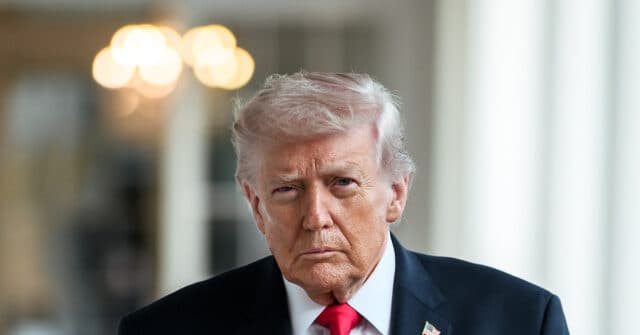
Trump Threatens to Block All Legislation Until Voting Bill Passes
Intra-Party Split Detected
Senate GOP veterans like McConnell oppose forcing talking filibuster, citing time constraints, while Trump and activists demand immediate action
Left says
- •The threat to block all legislation creates a dangerous precedent of holding essential government functions hostage to advance partisan priorities
- •The SAVE Act would effectively disenfranchise eligible voters by creating bureaucratic barriers that disproportionately impact low-income Americans, minorities, and elderly citizens who may lack easy access to required documentation
- •Requiring in-person registration and eliminating most mail-in voting would reduce voter participation and make it harder for working families, disabled individuals, and rural voters to exercise their constitutional rights
- •The legislation conflates multiple unrelated issues like transgender policies with voting rights, suggesting the real goal is advancing a broader conservative agenda rather than election security
Right says
- •The SAVE Act addresses fundamental election integrity by ensuring only American citizens can vote in federal elections, a basic principle that enjoys overwhelming bipartisan public support at 88% according to polling
- •Requiring proof of citizenship and voter ID are common-sense measures that most democracies already implement to prevent fraud and maintain public confidence in election results
- •Trump's legislative strategy demonstrates strong leadership by prioritizing election security over other agenda items, showing voters that protecting democracy comes first
- •The current voter registration system has significant vulnerabilities that allow non-citizens to potentially vote illegally, undermining the fundamental principle of one citizen, one vote
Common Take
High Consensus- The SAVE Act has already passed the House and requires Senate action to become law
- Polling shows significant public support for voter ID requirements across party lines
- Both parties agree that election integrity and public confidence in voting systems are important democratic principles
- The legislation faces procedural hurdles in the Senate due to the 60-vote filibuster threshold
The Arguments
Right argues
The SAVE Act addresses a fundamental democratic principle that enjoys 88% public support across party lines - ensuring only American citizens vote in federal elections through basic proof of citizenship and voter ID requirements that most democracies already implement.
Left counters
These requirements create bureaucratic barriers that disproportionately disenfranchise eligible voters, particularly low-income Americans, minorities, and elderly citizens who may lack easy access to required documentation, effectively undermining the very democratic participation the policy claims to protect.
Left argues
Using the threat to block all legislation as leverage creates a dangerous precedent of holding essential government functions hostage to advance partisan priorities, potentially disrupting critical services and governance.
Right counters
This demonstrates principled leadership by prioritizing election integrity above all other concerns, showing voters that protecting the fundamental right to fair elections takes precedence over routine legislative business.
Right argues
Current voter registration systems have significant vulnerabilities that allow potential illegal voting by non-citizens, undermining public confidence in election results and the principle of one citizen, one vote.
Left counters
Documented cases of non-citizen voting are extremely rare, while the proposed restrictions would eliminate mail-in voting and require in-person registration for millions of eligible voters, creating far greater barriers to legitimate participation than the problems they claim to solve.
Left argues
The legislation conflates unrelated issues like transgender policies with voting rights, suggesting the real goal is advancing a broader conservative social agenda rather than addressing genuine election security concerns.
Right counters
These provisions represent a comprehensive approach to protecting fundamental American values and institutions, addressing multiple areas where the public supports common-sense reforms that have been blocked by partisan opposition.
Left argues
Eliminating most mail-in voting and requiring in-person registration would significantly reduce voter participation among working families, disabled individuals, and rural voters who rely on these accessible voting methods to exercise their constitutional rights.
Right counters
The bill maintains necessary exceptions for military personnel, illness, disability, and travel while ensuring that the vast majority of voting occurs through secure, verifiable methods that prevent fraud and maintain election integrity.
Challenge Questions
These questions target genuine internal contradictions — meant to provoke honest reflection.
Right asks Left
“If voter fraud is as rare as you claim, why do you oppose basic verification measures that other democracies use routinely - doesn't your resistance to even minimal safeguards actually undermine public confidence in elections more than the safeguards themselves would?”
Left asks Right
“How can you claim to be protecting democracy while simultaneously threatening to shut down all government functions until you get your way - isn't this exactly the kind of authoritarian tactic that undermines democratic norms and governance?”
Outlier Report
Left Fringe
Progressive activists like those from Fair Fight Action and voting rights groups who view any voter ID requirements as voter suppression represent approximately 15-20% of the left, taking a more absolutist position against the legislation than mainstream Democrats.
Right Fringe
Scott Presler and activists pushing for immediate talking filibuster tactics, along with figures like Ken Paxton linking this to primary politics, represent about 25-30% of the right taking maximalist procedural positions beyond typical legislative strategy.
Noise Assessment
Moderate noise level - Trump's all-caps social media style and linking to unrelated culture war issues (transgender policies, sports) amplifies rhetoric beyond the core voting legislation, but underlying polling support appears genuine.
Sources (5)
<p>President Donald Trump said Sunday he will not sign other bills until the SAVE America Act is passed and election integrity is secured.</p> <p>The post <a href="https://www.breitbart.com/politics/2026/03/08/president-trump-vows-not-sign-any-bills-until-lawmakers-pass-save-america-act-do-not-fail/" rel="nofollow">President Trump Vows Not to Sign Any Bills Until Lawmakers Pass the Save America Act: ‘Do Not Fail!’</a> appeared first on <a href="https://www.breitbart.com" rel="nofollow">Breitbart</a>.</p>
President Donald Trump announced on Sunday that he would not sign any other legislation until he sees the Safeguard American Voter Eligibility (SAVE) Act on his desk, passed by both chambers and ready for his signature. Trump laid out his thoughts in a Truth Social post on Sunday morning, noting that the key issue addressed ...
Trump threatens to block all new legislation until Senate passes SAVE America Act requiring voter ID and citizenship proof, setting up a major showdown.
President Trump on Sunday threatened to not sign any bills into law until the Safeguard American Voter Eligibility (SAVE) America Act is approved by the Senate, doubling down on his push to change voting requirements ahead of the midterm elections. “I, as President, will not sign other Bills until this is passed, AND NOT THE…