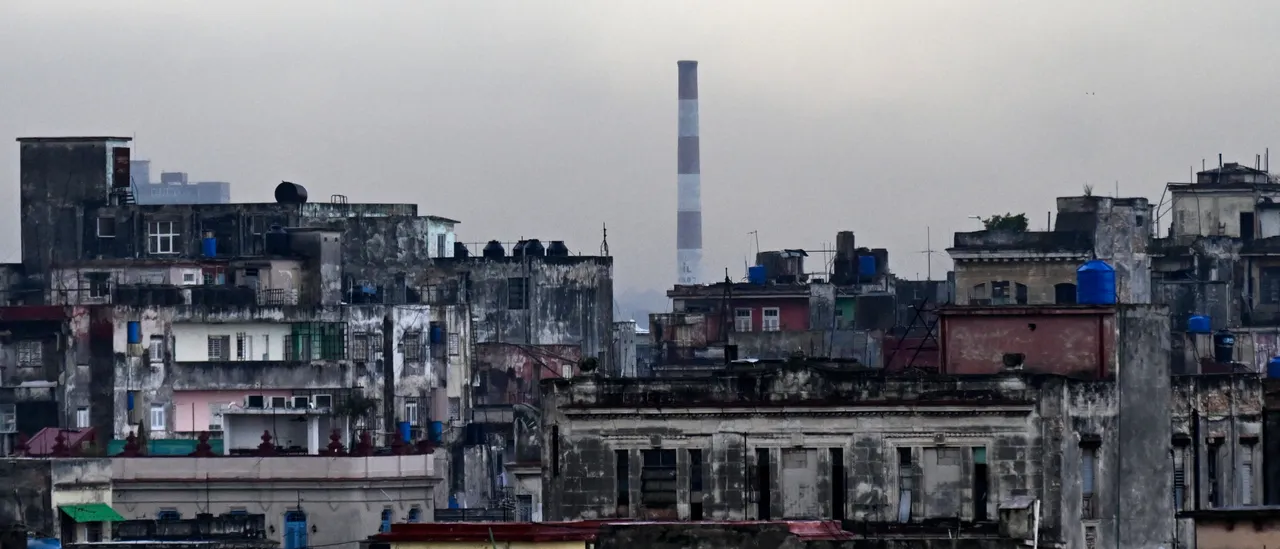
Trump Threatens to 'Take Cuba' as Island's Power Grid Collapses
Left says
- •The U.S. embargo and oil blockade are causing humanitarian suffering for 11 million Cuban civilians who have no control over their government's policies
- •Trump's threats to 'take Cuba' represent dangerous military aggression that violates international law and Cuban sovereignty
- •The power grid collapse demonstrates how economic sanctions harm ordinary people rather than effectively pressuring authoritarian regimes
- •Diplomatic engagement and humanitarian aid would be more effective than coercive measures that worsen the crisis for Cuban families
Right says
- •Cuba's communist regime has failed its people through decades of mismanagement and oppression, creating the conditions for this crisis
- •The U.S. oil blockade is legitimate pressure on a hostile regime that has long threatened American interests and supported anti-American activities
- •Trump's strong stance offers an opportunity to finally liberate the Cuban people from communist rule after 65 years of dictatorship
- •The regime's desperation for negotiations shows that firm pressure works better than decades of failed diplomatic appeasement
Common Take
High Consensus- Cuba's entire electrical grid has collapsed, leaving approximately 11 million people without power
- The Cuban people are suffering from power outages, food shortages, and economic hardship
- Cuba has not received oil shipments for approximately three months due to U.S. pressure
- Protests and civil unrest have erupted across Cuba in response to the deteriorating conditions
The Arguments
Left argues
The U.S. oil embargo is causing a humanitarian catastrophe for 11 million innocent Cuban civilians who have no power over their authoritarian government's policies, leaving hospitals without electricity and families without basic necessities.
Right counters
The Cuban regime has had 65 years to build a functioning infrastructure and economy but instead chose to maintain a repressive communist system that has failed its people—the current crisis exposes the regime's fundamental incompetence, not just U.S. pressure.
Right argues
Trump's firm pressure strategy is finally working after decades of failed diplomatic engagement, as evidenced by the Cuban government's desperate attempts to negotiate and the regime's acknowledgment that it cannot survive without making a deal.
Left counters
Coercive measures that primarily harm civilians while strengthening authoritarian control violate international law and humanitarian principles—effective change comes through diplomatic engagement and civil society support, not economic warfare against entire populations.
Left argues
Trump's threats to 'take Cuba' represent dangerous military aggression that violates Cuban sovereignty and international law, potentially destabilizing the entire Caribbean region and setting a precedent for unilateral interventions.
Right counters
The Cuban communist regime has been a destabilizing force in Latin America for decades, supporting anti-American activities and oppressing its own people—Trump's strong stance offers the first real opportunity in generations to liberate 11 million people from tyranny.
Right argues
The power grid collapse demonstrates that Cuba's communist system is fundamentally unsustainable and collapsing under its own weight, with widespread protests showing that the Cuban people themselves want regime change and American intervention.
Left counters
The infrastructure crisis is directly caused by decades of U.S. sanctions that have prevented Cuba from accessing spare parts, technology, and fuel needed to maintain basic services—the protests reflect desperation from economic hardship, not necessarily support for military intervention.
Left argues
Economic sanctions have proven ineffective at promoting democratic change in Cuba over six decades while causing immense suffering for ordinary families—humanitarian aid and gradual diplomatic engagement would better serve both Cuban people and U.S. interests.
Right counters
Previous diplomatic engagement and economic concessions under Obama only strengthened the regime without producing meaningful reforms—the current crisis shows that sustained pressure is the only language authoritarian governments understand.
Challenge Questions
These questions target genuine internal contradictions — meant to provoke honest reflection.
Right asks Left
“If diplomatic engagement and humanitarian aid are more effective than sanctions, why did decades of international diplomatic efforts and economic assistance fail to produce democratic reforms in Cuba, and how would removing pressure now lead to different results than the failed Obama-era normalization?”
Left asks Right
“If the goal is truly to help the Cuban people rather than pursue geopolitical objectives, how do you reconcile supporting policies that may liberate Cubans from authoritarianism with the reality that military intervention or regime change often leads to prolonged instability and civilian casualties, as seen in Iraq and Libya?”
Outlier Report
Left Fringe
Squad members like Alexandria Ocasio-Cortez and Rashida Tlaib who have historically opposed Cuba sanctions entirely, representing approximately 15% of the Democratic left wing based on their typical foreign policy coalition size.
Right Fringe
Neo-isolationist figures like Tucker Carlson or parts of the America First movement who might oppose military intervention in Cuba despite supporting economic pressure, representing roughly 10% of the Trump coalition based on their typical foreign policy dissent patterns.
Noise Assessment
Moderate - Trump's dramatic 'taking Cuba' rhetoric generates significant social media amplification, but the underlying Cuba policy has broad bipartisan historical precedent, suggesting real policy consensus beneath performative language.
Sources (8)
<img src="https://www.theblaze.com/media-library/cuba-s-entire-power-grid-has-collapsed-after-us-blocked-oil-shipments-for-3-months-cuban-president-says.jpg?id=65298987&width=1200&height=400&coordinates=0%2C333%2C0%2C334" /><br /><br /><p>About 11 million people on the island nation of Cuba have lost power after the country's electrical grid completely <a href="https://www.cnn.com/2026/03/16/americas/cuba-power-grid-collapse-intl-latam?Date=20260316&Profile=CNN&utm_content=1773686784&utm_medium=social&utm_source=twitter" target="_blank">collapsed</a> on Monday.</p><p>Cuba relies on oil to run the power grid, and a U.S. embargo has worsened the energy crisis it was already suffering under. The U.S. ended oil deliveries to Cuba from Venezuela and threatened other countries with steep tariffs if they provided oil to the nation.</p><p class="pull-quote">'Taking Cuba in some form, yeah, taking Cuba. I mean, whether I free it, take it, I think I can do anything I want with it.'</p><p>The state-owned power operator said efforts were under way to restore power to the island. In the meantime, energy has been rationed and many services have shut down. </p><p>"The impact [of the blockade] is tremendous. It is most brutally manifested in these energy issues," Cuban President Miguel Díaz-Canel said on Friday. "This causes anguish among the population."</p><p>Díaz-Canel said Cuba had not received oil in about three months.</p><p>"Officials in the U.S. [government] must be feeling very happy by the harm caused to every Cuban family," said Cuban Deputy Foreign Minister Carlos Fernández de Cossío in a statement about the blackout.</p><p>Electricity generation is <a href="https://www.theblaze.com/news/cuba-blackout-grid-blames-us" target="_blank">plagued</a> by aged power infrastructure and a lack of spare parts that are also blocked by the embargo.</p><p>President Donald Trump said he had designs for a takeover of the island.</p><p>"I do believe I'll be ... having the honor of taking Cuba. That's a big honor," the president <a href="https://x.com/Acyn/status/2033649730300080291" target="_blank">said to reporters</a> at the White House. "Taking Cuba in some form, yeah, taking Cuba. I mean, whether I free it, take it, I think I can do anything I want with it, you want to know the truth."</p><p><strong>RELATED: </strong><a href="https://www.theblaze.com/news/cuba-blackout-grid-blames-us" target="_blank"><strong>Massive blackout hits Cuba after entire power grid fails; communist government blames the US</strong></a></p><p class="shortcode-media shortcode-media-youtube"> <span class="rm-shortcode" style="display: block; padding-top: 56.25%;"></span> </p><p>He added, "They're a very weakened nation right now. They were for a long time. Very violent leaders."</p><p>Protesters have <a href="https://www.theblaze.com/news/cubans-torch-communist-headquarters-moron" target="_blank">also risen up</a> against the communist government in anger over the blackouts and a shortage of food.</p><p>Díaz-Canel <a href="https://thehill.com/homenews/administration/5785528-trump-cuba-talks-potential/" target="_blank">said</a> he's having talks with Trump in order to find "areas of cooperation." Some anticipate there will be a deal soon to allow some private businesses to operate on the communist island. </p><p><em>Like Blaze News? Bypass the censors, sign up for our newsletters, and get stories like this direct to your inbox. </em><em><a href="https://www.theblaze.com/newsletters/theblaze-articlelink" target="_self">Sign up here</a></em><em>! </em></p>
Grip on Havana's Energy Lifeline
On Monday Cuba was plunged into an island-wide blackout affecting 11 million people after a "complete disconnection" of its electrical system, officials said, amid a worsening fuel shortage.
<p>HAVANA, March 16 (Reuters)—Cuba’s national electric grid collapsed on Monday, the country’s grid operator said, leaving around 10 million people without power amid a U.S.-imposed... <a class="call-to-action" href="https://www.dailysignal.com/2026/03/16/cubas-national-electric-grid-collapses-leaving-millions-without-power/">Read More</a></p> <p>The post <a href="https://www.dailysignal.com/2026/03/16/cubas-national-electric-grid-collapses-leaving-millions-without-power/">Cuba’s National Electric Grid Collapses, Leaving Millions Without Power</a> appeared first on <a href="https://www.dailysignal.com/">The Daily Signal</a>.</p>
Cuban officials on Monday said that a blackout affecting the whole island had occurred, according to The Associated Press. The incident follows recent pressure on the island country’s energy resources from the U.S. According to the Cuban Ministry of Energy and Mines, a “complete disconnection” had affected the Cuban electrical system, the AP reported. On…