Trump Touts Xi Summit as Success; Critics See Symbolism, No Substance
Left says
- •The summit produced no concrete breakthroughs on major flashpoints like AI competition, trade imbalances, Taiwan, or the Iran conflict, despite hours of talks and lavish ceremony.
- •The visit was heavy on optics — a state dinner, military flyovers, ballroom tours, and helipad showcases — while substantive disagreements between the two powers remain unresolved.
- •Protesters outside the White House raised human rights concerns, including Hong Kong autonomy, that went unaddressed in the public statements from either leader.
- •Vague language from both leaders about 'common understanding' and 'strategic guidance' suggests genuine policy differences were papered over rather than resolved.
Right says
- •Trump and Xi described the visit as productive and friendly, framing it as a step toward stronger, more stable relations between the two largest economies.
- •Concrete deliverables emerged, including plans for two more leader meetings this year and a commitment from China to send additional pandas to the Atlanta zoo as a goodwill gesture.
- •The historic nature of the visit — Xi's first meeting with Trump at the White House and his second formal U.S. visit as Chinese leader — signals a meaningful diplomatic opening.
- •Trump highlighted benefits for American farmers and touted discussions on emerging technology policy, including his push to reframe AI as 'super intelligence.'
Common Take
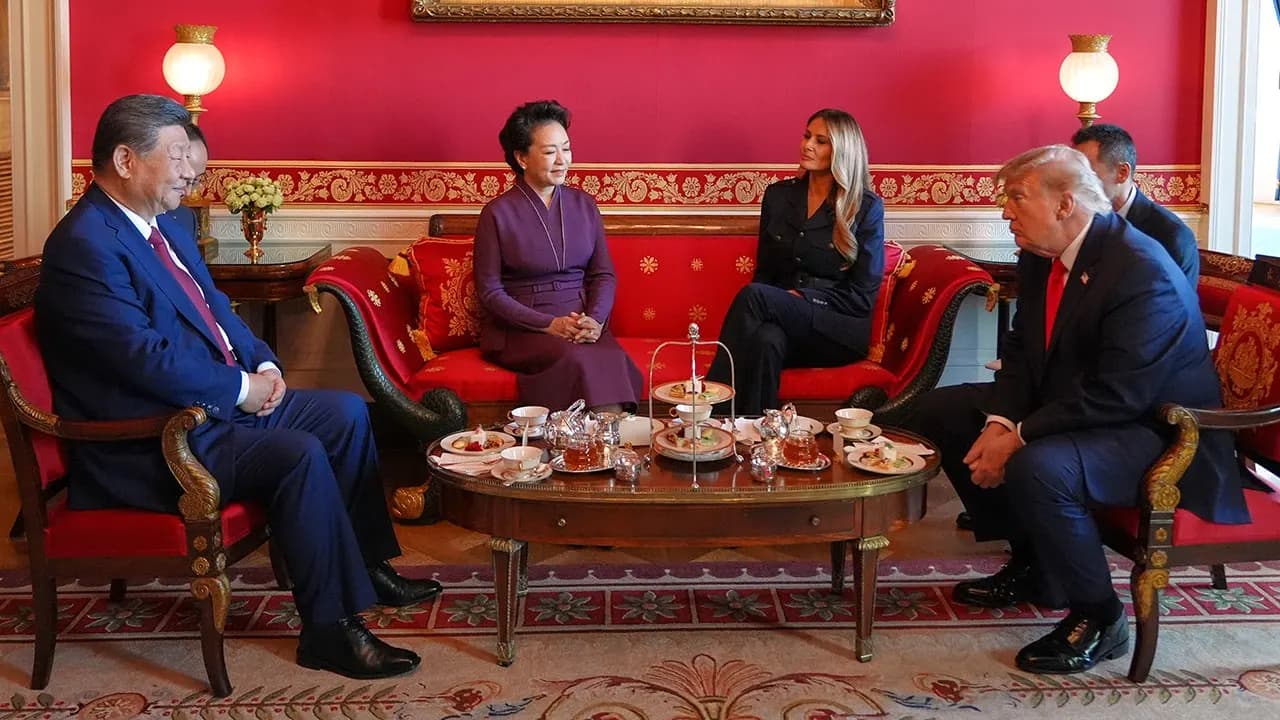
High Consensus- Xi's visit lasted three days and included a state dinner, tea at the White House, and a stop at the National Archives.
- Both leaders publicly characterized the summit in positive terms and announced plans to meet again in November in China and in December at the G20 in Miami.
- Neither leader provided detailed public disclosures about what specific agreements, if any, were reached on trade, AI, Taiwan, or Iran.
- China announced it will send two more giant pandas to the Atlanta zoo as part of its ongoing panda diplomacy.
The Arguments
Left argues
The summit produced no verifiable breakthroughs on the hardest issues — AI competition, trade imbalances, Taiwan, and the Iran-related oil purchases — despite hours of bilateral talks, suggesting the pageantry masked a lack of substantive progress.
Right counters
Diplomacy often works incrementally, and securing two additional leader meetings this year (November in China, December at G20) is itself a concrete deliverable that keeps channels open and prevents escalation, which is valuable even without immediate policy resolution.
Right argues
Xi's visit was historic — his first meeting with Trump at the White House and his second formal U.S. visit as Chinese head of state — and the warmth of the exchange, including Xi's praise of 'perfection' and talk of 'strategic stability,' signals a genuine diplomatic opening after years of tension.
Left counters
Symbolic firsts and diplomatic pleasantries are not the same as resolved disputes; vague phrases like 'common understanding' and 'new strategic guidance' were never elaborated on, which is consistent with papering over unresolved disagreements rather than solving them.
Right argues
Trump touted tangible benefits for American farmers and discussed emerging technology policy, including reframing AI as 'super intelligence,' showing the summit had real economic and policy content beyond ceremony.
Left counters
Neither leader offered specifics on what farmers would actually gain or what technology commitments were made, and unelaborated claims of future benefit are not the same as verified agreements — this is exactly the kind of light-on-substance messaging critics point to.
Left argues
Protesters outside the White House raised serious human rights concerns, particularly about Hong Kong autonomy, that were entirely absent from the public statements of both leaders, revealing whose priorities the summit actually served.
Right counters
State visits are primarily vehicles for high-level strategic and economic coordination between governments, not platforms for airing every activist grievance, and raising such issues publicly could have derailed more consequential discussions on stability and trade.
Right argues
China's commitment to send more pandas to the Atlanta zoo, while symbolic, reflects a broader pattern of goodwill gestures that historically precede and accompany substantive diplomatic thaws between the two countries.
Left counters
Panda diplomacy is a low-cost, low-risk gesture that costs China nothing strategically and has repeatedly been used to generate positive press coverage while deflecting attention from the absence of progress on Taiwan, trade, or Iran-related sanctions.
Challenge Questions
These questions target genuine internal contradictions — meant to provoke honest reflection.
Right asks Left
“If the summit truly produced no substance, why does the left's own synopsis acknowledge that both leaders described reaching 'common understanding' on issues — is the criticism really about lack of content, or about not being told the content?”
Left asks Right
“If concrete deliverables were the measure of success, why do the right's own highlighted outcomes consist mainly of future meetings and pandas rather than any resolved policy on trade, Taiwan, or AI — and how is that different from symbolism dressed up as substance?”
Outlier Report
Left Fringe
China hawks on the left like some members of the Congressional Progressive Caucus and human rights activists (e.g., groups aligned with Hong Kong Democracy Council) view the summit as a moral failure for ignoring human rights entirely, representing maybe 15-20% of the left who see this as more than just 'no substance' but an active betrayal of values.
Right Fringe
China hawks on the right such as Sen. Tom Cotton or commentators like Gordon Chang who favor confrontation over engagement represent a fringe (~15-20% of the right) skeptical that any friendly optics with Xi are good, seeing the summit's warmth itself as naive or dangerous rather than celebrating it as success.
Noise Assessment
Moderate noise: cable news and partisan Twitter/X accounts amplify both the 'historic diplomatic win' and 'embarrassing photo-op' framings far more than average Americans, who likely have limited attention on this story compared to domestic economic concerns.
Sources (8)
President Donald Trump said Friday that the U.S. and China have "made great strides" after meeting with Chinese President Xi Jinping at the White House.
Trump and Xi Jinping cap their United States summit with a National Archives visit to view historic documents before the Chinese leader departs.
The lavish summit was heavy on symbolism but light on substance.
Xi spent three days in Washington, D.C., this week, which included a formal state dinner at the White House on Thursday night, a visit to the National Archives and tea with the president and first lady.
Both heads of state remained vague on the substance of their discussions, though Trump indicated he had discussed his plan to rebrand AI from "artificial intelligence" to "super intelligence."
The pair have been relatively mum on their discussions, though Trump sounded an optimistic tone during a morning tea event at the White House.
Video footage showed the quartet and their translators having tea in the presidential residence.
AI executives and some of the country’s most prominent CEOs were on the list for the state dinner honoring Xi Jinping, which showcased the complex ties between the world’s two largest economies.