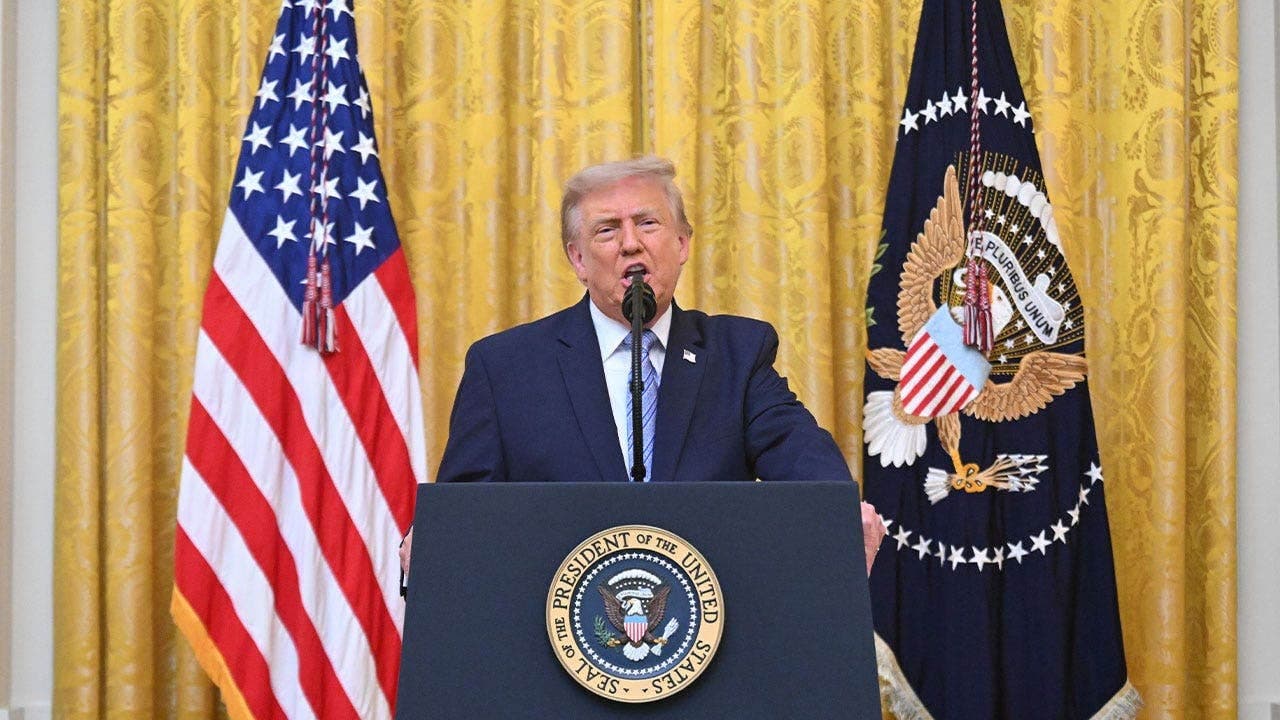
Trump Wants Canada to Pay Tariffs Over Wildfire Smoke
Left says
- •Climate change, driven by rising global temperatures, is a major factor behind the increasing frequency and severity of Canadian wildfires, according to scientists, complicating the narrative that poor forest management alone is to blame.
- •Prime Minister Mark Carney has framed the wildfire crisis as a shared climate responsibility between the U.S. and Canada rather than something one country can simply be blamed for or fined over.
- •Legal experts note the Supreme Court has already limited the president's ability to unilaterally impose tariffs under emergency economic powers, raising doubts about whether this threat is legally or practically feasible.
- •Ontario's premier Doug Ford has asked the U.S. to send firefighting support instead of complaints, highlighting a request for cooperation and aid rather than punitive trade measures during an active humanitarian crisis involving evacuations.
Right says
- •Trump and Republican lawmakers argue Canada has repeatedly failed to invest in basic forest management and debris removal, allowing wildfires to become an increasingly damaging annual event.
- •The economic and health toll on Americans is substantial, with air quality alerts affecting more than 100 million people across 18-20+ states, disrupted sports events, and potential long-term respiratory health risks.
- •Sen. Bernie Moreno and other Republicans call for a compensation fund for Americans harmed by the smoke, framing this as accountability for a foreign government's negligence rather than an unprovoked trade dispute.
- •Trump's approach fits a broader pattern of using tariffs as leverage to force other nations, including Canada, to address issues the administration views as directly harming American citizens.
Common Take
High Consensus- Nearly 900 wildfires are actively burning across Canada, with Ontario among the hardest-hit regions, forcing thousands to evacuate their homes.
- Smoke has caused hazardous air quality across more than 20 U.S. states, prompting health warnings, event postponements, and concerns for vulnerable populations.
- Trump has stated he will call Prime Minister Carney directly to discuss the situation and possible next steps.
- It remains legally and practically unclear how the administration would calculate or implement additional tariffs tied to wildfire pollution costs.
The Arguments
Right argues
Canada has experienced record-breaking wildfires for four consecutive years, and Republicans argue this reflects a persistent failure to invest in forest management and debris removal that has imposed enormous, quantifiable health and economic costs on Americans, from postponed sporting events to respiratory risks for 100+ million people.
Left counters
Scientists attribute the increasing frequency and severity of wildfires primarily to climate change—hotter, drier conditions—not simply neglect, and Canada has already launched a national wildfire prevention strategy, undermining the claim that this is pure negligence rather than a shared, worsening climate reality.
Left argues
Prime Minister Carney has framed the crisis as a shared climate responsibility requiring cooperation, not blame, especially while thousands of Canadians are actively being evacuated from their homes amid an ongoing humanitarian emergency.
Right counters
Acknowledging climate change as a contributing factor doesn't excuse Canada from the basic forestry and debris-management practices that could reduce fire severity, and Americans bearing the health and economic costs are entitled to accountability regardless of the underlying cause.
Left argues
Legal experts and even the Washington Times note the Supreme Court already curtailed Trump's unilateral tariff powers under emergency economic authority, making the threat likely unenforceable and potentially just political theater rather than serious policy.
Right counters
Trump has other legal avenues, including national-security and unfair-trade-practice investigations, to justify targeted tariffs, and the legal uncertainty doesn't diminish the legitimacy of demanding Canada address a recurring, costly problem.
Left argues
Ontario Premier Doug Ford's request for U.S. firefighting assistance instead of tariff threats highlights that a cooperative, resource-sharing response would more directly address the crisis than a punitive trade measure aimed at a neighboring country during a disaster.
Right counters
Offering aid doesn't preclude also demanding structural changes and accountability; Republicans argue that without consequences tied to trade, Canada has little incentive to change the forest-management practices contributing to the annual crisis.
Right argues
Sen. Bernie Moreno and other Republicans argue a compensation fund for smoke-affected Americans is a reasonable accountability measure, akin to holding any actor responsible for cross-border harms, rather than an unprovoked trade dispute.
Left counters
Treating a climate-driven natural disaster as a matter of foreign negligence deserving of fines sets a troubling precedent, especially when the U.S. itself contributes to the global warming that scientists say is intensifying these very wildfires.
Challenge Questions
These questions target genuine internal contradictions — meant to provoke honest reflection.
Right asks Left
“If climate change is acknowledged as a major driver of these wildfires, why should Canada be shielded from any accountability for forest management practices that could still mitigate fire severity, even within a warming climate?”
Left asks Right
“If the administration insists this is about accountability for 'willful negligence,' why hasn't it proposed reciprocal U.S. investment in cross-border wildfire prevention or firefighting aid, as Ontario's premier requested, rather than only threatening tariffs?”
Outlier Report
Left Fringe
Figures like Bernie Sanders-aligned climate activists and some Canadian commentators who frame this purely as U.S. bullying of an ally represent maybe 15% of the left, arguing Trump is exploiting a humanitarian crisis for trade leverage.
Right Fringe
Commentators like Sen. Bernie Moreno calling for a 'compensation fund' and some Trump-aligned voices reviving the 'Canada as 51st state' rhetoric represent roughly 15-20% of the right, pushing beyond mainstream Republican views into more extreme nationalist framing.
Noise Assessment
High noise ratio; much of the intense rhetoric (both Trump's 'invasion' language and left-wing claims of illegal overreach) is performative political theater not reflective of how most Americans, who simply want cleaner air and practical solutions, actually feel about the dispute.
Sources (14)
Trump accused Canada of "willful negligence" in forest management and suggested pollution costs should be added to tariffs on Canadian imports.
President Trump threatened on Friday to charge Canada tariffs to pay for harms caused by the wildfire smoke affecting American cities, joining a handful of Republican lawmakers who have criticized the Canadian government for what they claimed was poor forest management.
President Trump threatened on Friday to impose additional tariffs on Canada, accusing the country's government of "willful negligence" in its handling of massive wildfires that have wafted heavy smoke and worsened air quality in parts of the Midwest and East Coast.
<p>President Trump is threatening to raise tariffs on Canada over <a href="https://www.axios.com/2026/07/16/air-quality-wildfire-smoke-side-effects-risk-safety" target="_blank">wildfire smoke</a> that drifted from the country into the U.S., <a href="https://www.axios.com/2026/07/17/summer-smoke-season-wildfires" target="_blank">triggering health warnings</a> and disrupting outdoor activities.</p><p><strong>Why it matters:</strong> Dealing with Canadian wildfire smoke is becoming a semi-regular occurrence in the Midwest and Northeast.</p><hr /><ul><li>It degrades air quality, exposing millions to short- and long-term health risks, <em>Axios' Herb Scribner <a href="https://www.axios.com/2026/07/16/air-quality-wildfire-smoke-side-effects-risk-safety" target="_blank">reports</a>.</em></li></ul><p><strong>Driving the news: </strong>Trump <a href="https://truthsocial.com/%40realDonaldTrump/posts/116936952365066409" target="_blank">said</a> Friday on Truth Social that the "cost of this pollution must of necessity be added to the TARIFFS Canada is currently paying."</p><ul><li>He blamed the wildfire smoke on Canadian officials for "not properly maintaining their Forests, and Brush therein," causing the U.S. to be "unnecessarily invaded by filthy, polluted, and unhealthy air, the quality of which is dangerous, and totally unacceptable!"</li><li>He said he would call Canadian Prime Minister Mark Carney "to find out what they are going to do about it," blaming the country for "Willful Negligence."</li></ul><p><strong>The other side: </strong>Canadian officials did not immediately respond to a request for comment on Trump's threat.</p><p><strong>Zoom in: </strong>The Canadian government has <a href="https://natural-resources.canada.ca/forests-forestry/wildland-fires/climate-change-wildland-fire?utm_source=chatgpt.com" target="_blank">acknowledged</a> that its wildfire crisis is worsening, due in part to a hotter and drier climate.</p><ul><li>In 2024, the Canadian Council of Forest Ministers <a href="https://ostrnrcan-dostrncan.canada.ca/bitstreams/ec4c7df7-2060-4034-afa8-479a0bf0b14b/download" target="_blank">launched</a> its Canadian Wildland Fire Prevention and Mitigation Strategy, aiming "to provide a cohesive vision of wildland fire prevention and mitigation to mobilize collective action and reduce the negative impacts of wildland fire."</li></ul>
Canadian leader Mark Carney says both the US and Canada have an equal responsibility to fight climate change, which experts say are worsening wildfire conditions.
<p>President Donald Trump called the smoke pollution from Canada's wildfires affecting the United States from the Great Lakes to the mid-Atlantic "totally unacceptable."</p> <p>The post <a href="https://www.breitbart.com/politics/2026/07/17/trump-says-costs-incurred-canadian-smoke-pollution-blanketing-u-s-will-be-added-tariffs/" rel="nofollow">Trump Says Costs Incurred from Canadian Smoke Pollution Blanketing the U.S. Will Be Added to Tariffs</a> appeared first on <a href="https://www.breitbart.com" rel="nofollow">Breitbart</a>.</p>
President Donald Trump on Friday blamed Canada for sending wildfire smoke into the United States and said the costs associated with the pollution “must of necessity be added” to tariffs on Canadian imports. In a Truth Social post, Trump accused Canada of “willful negligence,” saying America is “being unnecessarily invaded by filthy, polluted, and unhealthy ...
Trump has struggled to secure a lasting trade agreement with Canada and Mexico, despite clinching agreements with many major trading partners abroad.
The president said on Friday in a social media post that Canada was failing to manage its wildfire response as smoke has blanketed U.S. cities including New York and Chicago.
President Trump threatened on Friday to impose additional tariffs on Canada, accusing the country’s government of “willful negligence” in its handling of massive wildfires that have wafted heavy smoke and worsened air quality in parts of the Midwest and East Coast. “We are holding Canada responsible for the fact that they are not properly maintaining…
The White House did not respond to questions about what legal mechanism he would use to impose the tariffs or how the administration would calculate the rate of the levies.
President Trump is threatening to raise the tariff level on Canadian goods due to the burden of smoky air that is wafting into the U.S. from wildfires in Ontario.