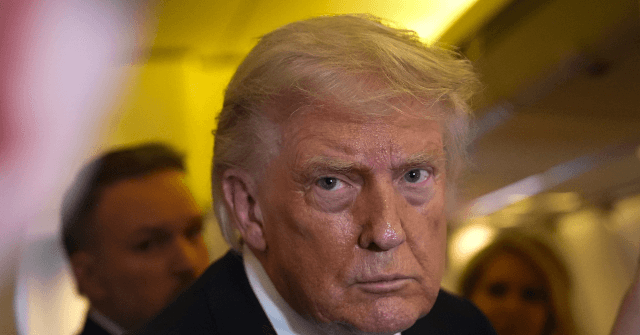
Trump wavers on Taiwan arms deal after Xi warnings
Intra-Party Split Detected
Hawks on Capitol Hill favor stronger Taiwan support while Trump prioritizes avoiding conflict with China
Left says
- •Trump's willingness to discuss arms sales with Xi violates the 1982 Six Assurances that explicitly committed the U.S. not to consult with China on Taiwan weapons deals
- •Delaying critical defensive weapons to Taiwan signals weakness that could embolden Chinese aggression and undermine deterrence when Beijing is already threatening invasion
- •Trump's dismissive attitude toward longstanding commitments alarms key allies Japan and South Korea who depend on consistent U.S. security guarantees in the region
- •Strategic ambiguity requires maintaining Taiwan's defensive capabilities while avoiding provocative statements, not abandoning weapons sales that help preserve the status quo
Right says
- •Trump's strategic ambiguity prevents escalation by keeping China guessing about U.S. intentions while avoiding unnecessary provocations that could trigger conflict
- •Prioritizing dialogue with Xi over rigid adherence to outdated 1982 agreements demonstrates pragmatic diplomacy that could prevent a catastrophic war 9,500 miles away
- •Maintaining flexibility on arms sales gives Trump leverage in broader negotiations with China on trade and other critical issues affecting American interests
- •Taiwan's own parliament took months to fund the weapons packages, showing even Taipei has mixed feelings about the pace and scale of military buildup
Common Take
High Consensus- Both Trump and Xi stated they want to avoid military conflict over Taiwan
- Taiwan remains a central point of tension that could destabilize U.S.-China relations
- The $14 billion arms package has been delayed for months regardless of the recent summit
- Strategic ambiguity has been longstanding U.S. policy on whether America would defend Taiwan militarily
The Arguments
Left argues
Trump's willingness to discuss arms sales with Xi directly violates the 1982 Six Assurances that explicitly committed the U.S. not to consult with China on Taiwan weapons deals, undermining decades of carefully crafted policy that has maintained regional stability.
Right counters
Rigid adherence to 40-year-old agreements prevents the kind of direct dialogue that could prevent catastrophic miscalculation, and Trump's pragmatic approach of discussing sensitive issues openly with Xi demonstrates responsible leadership in avoiding unnecessary escalation.
Right argues
Strategic ambiguity requires maintaining flexibility and keeping China guessing about U.S. intentions, which Trump achieves by refusing to publicly commit to defending Taiwan while privately discussing arms sales to prevent misunderstandings that could trigger conflict.
Left counters
True strategic ambiguity means maintaining Taiwan's defensive capabilities while avoiding provocative statements, not abandoning the weapons sales that actually preserve the status quo and deter Chinese aggression through credible defense.
Left argues
Delaying critical defensive weapons to Taiwan when Beijing is already threatening invasion signals weakness that could embolden Chinese aggression and undermines deterrence precisely when Taiwan needs the strongest possible defensive posture.
Right counters
Rushing weapons deliveries during heightened tensions could be seen as provocative escalation that pushes Xi toward military action, while measured deliberation gives Trump leverage in broader negotiations that could resolve the Taiwan issue peacefully.
Right argues
Taiwan's own parliament took months to fund the weapons packages, demonstrating that even Taipei has mixed feelings about the pace and scale of military buildup, suggesting Trump's cautious approach aligns with Taiwan's own measured response.
Left counters
Taiwan's deliberative funding process reflects normal democratic procedures and fiscal responsibility, not ambivalence about defense needs, while Trump's hesitation after Xi's warnings suggests he's prioritizing Chinese concerns over Taiwan's legitimate security requirements.
Left argues
Trump's dismissive attitude toward longstanding commitments alarms key allies Japan and South Korea who depend on consistent U.S. security guarantees, potentially destabilizing the entire regional security architecture that has prevented conflict for decades.
Right counters
Allies understand that preventing a war between nuclear powers requires diplomatic flexibility, and Trump's willingness to engage directly with Xi while maintaining core commitments demonstrates strength through dialogue rather than rigid posturing that could lead to miscalculation.
Challenge Questions
These questions target genuine internal contradictions — meant to provoke honest reflection.
Right asks Left
“If maintaining Taiwan's defensive capabilities is truly essential for deterrence, how do you reconcile this with the fact that Taiwan itself delayed funding these weapons for months, and why should the U.S. be more urgent about Taiwan's defense than Taiwan appears to be?”
Left asks Right
“If strategic ambiguity and dialogue are meant to prevent conflict, how do you explain why Xi felt comfortable enough to directly warn Trump about 'conflicts' over Taiwan during their summit, suggesting that current U.S. flexibility may actually be emboldening rather than deterring Chinese assertiveness?”
Outlier Report
Left Fringe
Hawks like Senator Tom Cotton and Representative Mike Gallagher who advocate for maximum military support to Taiwan regardless of escalation risks represent about 25% of the left coalition on this issue.
Right Fringe
Isolationists like Tucker Carlson and some America First voices who would completely abandon Taiwan represent roughly 15% of the right, while most Republicans support strategic ambiguity rather than total withdrawal.
Noise Assessment
Moderate noise level - foreign policy elites and defense contractors amplify pro-arms sales messaging, while anti-war activists amplify anti-escalation themes, but most public discourse reflects genuine concern about avoiding conflict with China.
Sources (7)
<p>President Trump said Friday he's unsure whether he would greenlight a planned $14 billion weapons package for <a href="https://www.axios.com/2025/12/30/taiwan-2027-china-invade-trump-response" target="_blank">Taiwan</a> after discussing arms sales in "great detail" with Chinese President Xi Jinping.</p><p><strong>Why it matters: </strong>The <a href="https://www.axios.com/2026/05/15/trump-xi-china-summit" target="_blank">trip began</a> with a warning from Xi about the potential for "conflicts" over Taiwan, and Trump made clear during the visit that he did not want to provoke one.</p><hr /><ul><li>"The last thing we need right now is a war that's 9,500 miles away," Trump told reporters on the plane back to D.C.</li><li>He made that remark while discussing a $14 billion arms package<strong>, </strong>which includes missiles and air defense interceptors, that his administration has held up for months.</li><li>Hawks on Capitol Hill think the way to deter a Chinese move on the self-governing island is to offer Taiwan more muscular support, though some analysts argue that U.S. pledges of weapons and political support for Taiwan will only make Beijing more likely to use force.</li></ul><p><strong>Zoom in: </strong>Trump acknowledged that the U.S. had pledged under the1982 "six assurances" policy not to consult with <a href="https://www.axios.com/world/china" target="_blank">China</a> about arms sales to Taiwan, but seemingly dismissed that promise as outdated. </p><ul><li>"What am I going to do, say I don't want to talk to you about it because I have an agreement wrote in 1982? No, we discussed arms sales." </li><li>"I'll be making decisions," Trump said, before noting that his priority was to avoid a war.</li></ul><p><strong>Between the lines:</strong> Such statements from Trump have alarmed the U.S.-friendly government in Taipei as well as allies in Japan and South Korea.</p><ul><li>Japanese Prime Minister Sanae Takaichi has found her hawkish line on Taiwan increasingly out of step with the U.S. posture. Takaichi said Trump called from Air Force One to give her a "detailed" briefing on his talks with Xi.</li><li>Trump also said on the plane that he'd have to talk to "the person who... is running Taiwan" about the arms sales issue, though Trump would infuriate Beijing if he actually did speak with President Lai Ching-te.</li></ul><p><strong>The arms sales issue</strong> is also sensitive in Taipei, even with the pro-autonomy Democratic Progressive Party in power.</p><ul><li>It took months for parliament to appropriate $25 billion to actually proceed with the pending $14 billion package and an $11 billion tranche Trump approved late last year. </li><li>That earlier deal reportedly led Xi to warn Trump against further arms deliveries to Taiwan in a February call.</li><li>Taiwan finally approved the funding earlier this month.</li></ul><p><strong>Zoom in: </strong>The biggest fear for Taiwan and its supporters heading into the summit was that Trump would agree to change official U.S. policy on Taiwan, perhaps to express explicit opposition to Taiwanese independence.</p><ul><li>Secretary of State Marco Rubio affirmed that U.S. policy was unchanged.</li><li>Instead, Trump reinforced the idea that Taiwan is a much higher priority for Xi than it is for him.</li></ul>
<p>President Donald Trump told reporters he refused to reveal to Chinese President Xi Jinping whether he would defend Taiwan from China.</p> <p>The post <a href="https://www.breitbart.com/asia/2026/05/15/trump-refuses-to-reveal-whether-he-would-defend-taiwan-im-the-only-person-who-knows-that/" rel="nofollow">Trump Refuses to Reveal Whether He Would Defend Taiwan: ‘I’m the Only Person’ Who Knows That</a> appeared first on <a href="https://www.breitbart.com" rel="nofollow">Breitbart</a>.</p>
President Donald Trump told reporters Friday that he will "make a determination over the next fairly short period of time" on whether to proceed with an arms deal with Taiwan, and refused to say whether the U.S. would defend the island against China.
U.S. President Donald Trump said Friday that he has not made a decision on whether to move forward with a major arms package for Taiwan after hearing concerns about it from Chinese President Xi Jinping.
President Trump in an interview that aired Friday said he wants China and Taiwan to “cool down,” while saying Taiwan should feel neither more nor less secure following his visit to China.  Trump suggested nothing fundamental has changed in the U.S. relationship with Taiwan or with its security in the interview with Fox News’s Bret…
Taiwan responded to President Trump’s hesitation Friday to back a U.S. arms sale to the island following two days of meetings with Chinese President Xi Jinping.  The island’s foreign affairs ministry emphasized the U.S.’s “long-standing and consistent policy toward Taiwan” in a statement released Friday morning.  “Regarding arms sales to Taiwan, this is not only…
China’s leader made clear his top priority is the fate of the contested island and its U.S. military support, a striking move given President Donald Trump’s effort to mend ties and deliver trade deals.