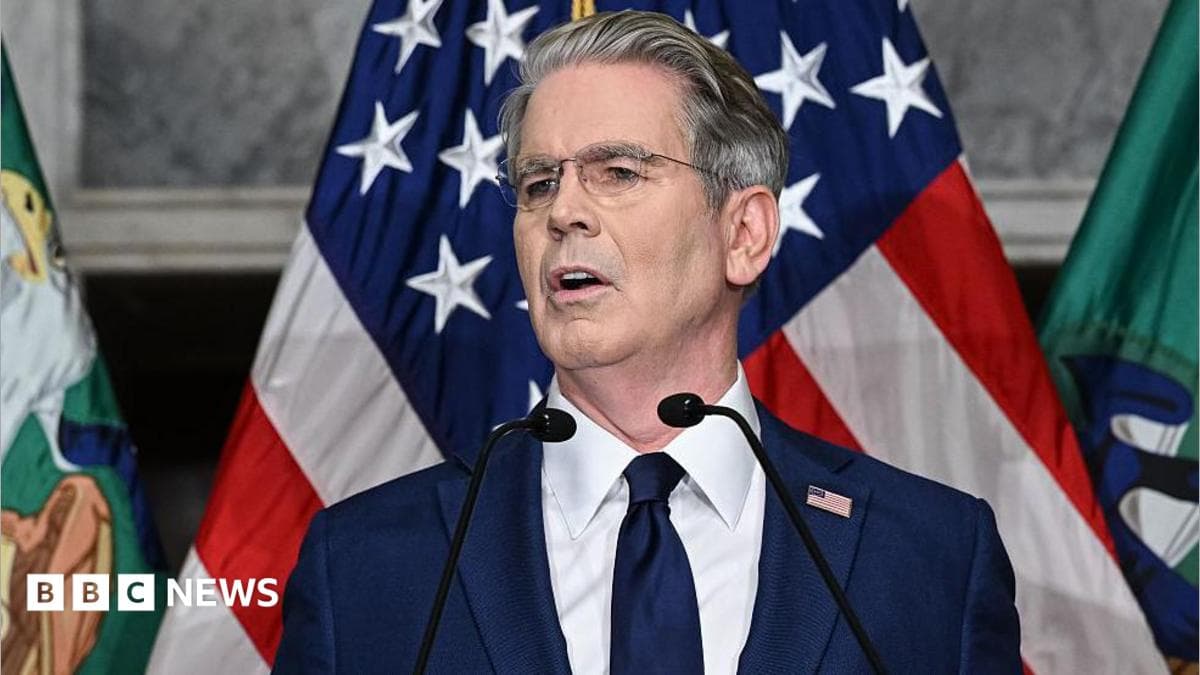
Trump's 'Economic D-Day' on Iran: Bold Strategy or Empty Threat?
Left says
- •Skeptical analysts point out the U.S. has already exhausted the 'low-hanging, mid-hanging and high-hanging fruit' of sanctions over decades, questioning whether new measures can meaningfully change Iran's behavior.
- •Ordinary Iranians, not just regime leaders, bear the brunt of sanctions, with insulin and basic food becoming unaffordable amid inflation approaching 70%.
- •Sanctions campaigns can strengthen hardliners within Iran's government rather than weaken the regime, undercutting the stated goal of forcing concessions.
- •The administration's history of walking back deadlines and threats raises doubts about whether this 'D-Day' framing is substantive follow-through or another dramatic gesture.
Right says
- •The administration frames this as decisive follow-through after already dismantling Iran's military factories and nuclear program, arguing sustained economic pressure is the logical next step to finish the job.
- •Treasury Secretary Bessent argues that isolating Iran financially, including sanctioning any nation that helps it evade restrictions, will force the regime to abandon its network of terror proxies once and for all.
- •Supporters see the collapsing rial and Iran's worsening economic crisis as evidence the strategy is already working and could pressure the regime toward a negotiated end to the war.
- •Backers like Senator Barrasso and House Speaker Johnson express confidence that decisive American action, both military and economic, will be vindicated regardless of short-term political costs.
Common Take
High Consensus- The U.S. and Israel have been at war with Iran for nearly six months with no resolution reached through prior truces or airstrikes.
- Iran's economy is in severe distress, with the rial at record lows and inflation nearing 70%.
- The new sanctions target not just Iran directly but any nation or company that continues doing business with it, including major buyers like China.
- Iran has warned it will retaliate against the sanctions and against any countries that help enforce or implement them.
The Arguments
Left argues
Former U.S. diplomat Alan Eyre argues the sanctions toolkit against Iran has been exhausted after nearly 50 years—'the low-hanging fruit, the mid-hanging fruit, the high-hanging fruit, the tree'—meaning fresh measures are unlikely to produce a different outcome than past failed pressure campaigns.
Right counters
The Bessent plan differs qualitatively by threatening secondary sanctions on any nation or company that trades with Iran, including China, aiming to isolate Tehran globally rather than just adding another layer of bilateral U.S. sanctions.
Right argues
With Iran's military factories destroyed, its nuclear program buried, and the rial collapsing to record lows amid 70% inflation, the administration argues the economic offensive is the logical next phase to finish weakening a regime already on its heels.
Left counters
Iran's central bank governor and past experience suggest the regime has weathered worse economic shocks before by absorbing the pain and shifting it onto ordinary citizens, meaning economic collapse doesn't automatically translate into political capitulation.
Left argues
The core humanitarian cost of sanctions falls on ordinary Iranians, not regime elites—insulin and basic food are becoming unaffordable—raising serious questions about whether the strategy punishes civilians more than it changes government behavior.
Right counters
Supporters would argue that the suffering is ultimately caused by the regime's own corruption and diversion of resources to terror proxies, and that sustained pressure is necessary to finally force the concessions that would end the war and the hardship altogether.
Left argues
Sanctions campaigns have historically strengthened hardliners within Iran's government by allowing them to rally nationalist sentiment against external pressure, which could backfire against the stated U.S. goal of forcing the regime toward moderation or collapse.
Right counters
The current pressure campaign is paired with military dismantlement of Iran's nuclear and defense capabilities, a combination not previously tried at this scale, which backers argue removes the regime's ability to simply wait out sanctions as it has in the past.
Left argues
The administration's pattern of dramatic deadlines followed by walk-backs—like Trump's April warning that 'a whole civilisation will die tonight' before backing off after Pakistani mediation—undermines confidence that 'economic D-Day' represents genuine follow-through rather than another rhetorical escalation.
Right counters
Bessent's announcement is accompanied by concrete, detailed policy—sanctioning enabler nations, targeting China's oil purchases, and coordinating with the UAE's trade suspension—suggesting this is a substantive rollout rather than just rhetoric.
Challenge Questions
These questions target genuine internal contradictions — meant to provoke honest reflection.
Right asks Left
“If skeptics believe sanctions mainly harm ordinary Iranians and won't change regime behavior, what alternative do they propose to stop Iran's nuclear ambitions and proxy network beyond sanctions or military strikes?”
Left asks Right
“If the administration claims Iran's nuclear program is already 'buried' and its military capabilities dismantled, why is a massive new financial offensive still necessary to finish the job, and what does that say about how complete the earlier military victory actually was?”
Outlier Report
Left Fringe
Progressive anti-war voices like Rep. Rashida Tlaib and commentators such as those on The Intercept who oppose sanctions entirely as collective punishment of civilians represent roughly 15-20% of the left, most Democrats support pressure on Iran but favor diplomacy over military escalation.
Right Fringe
Hardline hawks like Sen. Lindsey Graham and Sen. Tom Cotton who favor even more aggressive military action beyond sanctions represent roughly 15-20% of the right, most Republicans support the sanctions-first approach without necessarily wanting broader war.
Noise Assessment
High noise ratio: Bessent's dramatic 'D-Day' framing and WWII comparisons are performative rhetoric aimed at signaling resolve, while actual public attention to Iran sanctions mechanics is low compared to domestic economic concerns like inflation and tariffs, which dominate more of everyday American political attention.
Sources (15)
Monday will mark an economic "D-Day" for Iran, Senate Majority Whip John Barrasso said on Sunday as the Trump administration prepares to intensify financial pressure on Tehran in an attempt to force an end to the war and secure concessions...
Scott Bessent says the US will sever all economic ties with the country and that any nation partnering with Iran financially will also be isolated.
The Trump administration is expected to announce new sanctions against Iran meant to add economic pressure and bring Tehran back to the negotiating table. CBS News' Courtney Kealy has more.
Treasury Secretary Scott Bessent said new sanctions being imposed on Iran would amount to the "greatest financial offensive" ever.
Treasury Secretary Scott Bessent fired a blistering shot across Iran’s bow, declaring that President Donald Trump is bringing the hammer down on the Islamic Republic once and for all. Writing in the Financial Times on Sunday, Bessent wrote, “We are entering the endgame. At dawn begins an economic D-Day — the single greatest financial offensive ever ...
Follow the latest news on the major headlines of the day.
The announcement follows President Trump last week threatened to target Iran with "crushing" economic sanctions and severe financial penalties against any nation that helps Iran skirt the sanctions.
Americans are bracing for the potential impact on oil and gas prices as President Donald Trump prepares to unveil his “economic D-Day” sanctions on Iran. It comes as fallout from the administration’s intensifying trade war with Canada grows. NBC's Gabe Gutierrez reports and chief business correspondent Christine Romans joins TODAY with what both trade issues will mean for the American consumer.
Iran's record-low rial gives Donald Trump's sanctions a weakened target, but enforcement abroad will decide how hard they bite.
The crushing “economic D-Day” sanctions being unleashed against Iran will be “the single greatest financial offensive ever marshaled against an adversary,” Treasury Secretary Scott Bessent vowed.
The Trump administration calls this "economic D-Day" on Iran. Iran vows to respond to fresh sanctions in a "seismic manner."
Today, Treasury Secretary Scott Bessent is set to announce details on new economic pressures on Iran. And, Canada has vowed to impose retaliatory tariffs against the U.S.
The Trump administration is ramping up its pressure campaign against Iran on Monday, with Treasury Secretary Scott Bessent set to unveil new sanctions in what has been dubbed an “economic D-Day.” The operation is aimed at crippling Tehran’s economy and squeezing allies that continue to support the Islamic Republic as the war nears the six-month…
Treasury Secretary Scott Bessent on Sunday previewed the Trump administration’s economic offensive against Iran, set to begin Monday. Echoing President Trump’s rhetoric on the military operations against the Islamic Republic, Bessent said the U.S. has “dismantled Iran’s capabilities, destroyed nearly 100 percent of its military factories, and buried its nuclear program.” The Treasury secretary wrote…
Senate Majority Whip John Barrasso (R-Wyo.) said that Monday will be “D-Day” for the economy in Iran as the Trump administration and U.S. military vow to exert maximum financial and militaristic pressure on Tehran to end the war overseas.  “Their economy is in shambles. And they’re still dangerous. So, the president’s right to focus on…