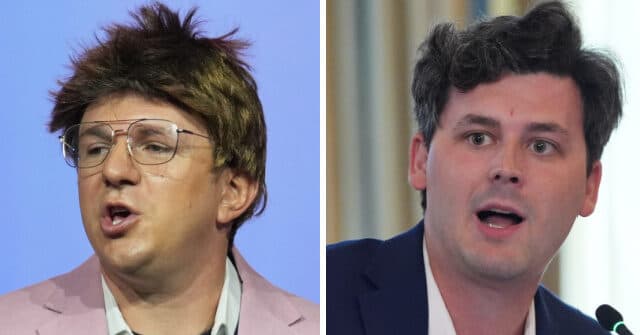
 James O'Keefe, right-wing activist charged with unlawful voting and identity theft
Undercover Election Sting or Voter Fraud? O'Keefe Charged
Left says
- •Posing as other registered voters using their names at a polling place is not journalism, it is impersonation that crosses into actual criminal conduct, not just investigation.
- •Undercover stunts that stage fraud rather than merely document it undermine public confidence in elections without proving any real vulnerability exists, since no illegal votes were actually cast through typical means.
- •The Hennepin County Attorney emphasized that undisclosed deception inside a polling place is illegal regardless of the actor's political views or media label, and that journalists who misrepresent themselves as other voters are not exempt from identity theft and voter fraud laws.
- •Framing prosecution as political persecution ignores that the charges stem from specific, documented conduct, namely using real people's identities without consent, not from criticism of the voting system itself.
Right says
- •O'Keefe and Higby were testing a real, publicly documented loophole in Minnesota law that allows one registered voter to vouch for up to eight other people's eligibility, a vulnerability worth exposing to the public.
- •Neither man actually cast a fraudulent vote, suggesting the charges punish the act of revealing a security flaw rather than any completed fraud that harmed an election outcome.
- •The prosecutor bringing these charges has documented ties to a prominent Democratic donor, raising concerns that the decision to prosecute is politically motivated rather than purely a matter of even-handed law enforcement.
- •Treating undercover investigative journalism exposing government or systemic weaknesses as a felony rather than protected speech sets a troubling precedent for press freedom and accountability journalism.
Common Take
High Consensus- O'Keefe and Higby disguised themselves and used other registered voters' names at Minnesota polling places during the August primary.
- Neither man actually cast a vote during the incident.
- Both men face felony charges of unlawful voting and identity theft brought by Hennepin County Attorney Mary Moriarty.
- Minnesota law does allow a registered voter to vouch for the eligibility of up to eight other voters, a policy now under public scrutiny.
The Arguments
Left argues
Using real registered voters' names and identities without their consent to gain entry into the voting process is impersonation and identity theft under the law, not protected journalism, regardless of intent.
Right counters
No vote was actually cast and no real voter was harmed, suggesting the law is being applied to punish the exposure of a flaw rather than any completed fraudulent act with real consequences.
Right argues
The vouching loophole they tested is a real, publicly documented feature of Minnesota law, and demonstrating how it could be exploited serves a legitimate public interest in election security.
Left counters
Demonstrating a vulnerability does not require assuming another specific person's legal identity without their consent; the same point could be made through disclosed, consensual methods that don't violate identity theft statutes.
Right argues
The prosecutor's documented financial ties to a partisan Democratic donor create a legitimate appearance of political bias in the decision to pursue felony charges against conservative journalists.
Left counters
The charges stem from specific, verifiable conduct — using real people's names and identities — not from the content of their political criticism, so the prosecutor's donors are irrelevant to whether the underlying law was broken.
Left argues
The prosecutor explicitly stated that claiming the 'journalist' label does not exempt anyone from disclosure requirements when engaging in deception inside a polling place, meaning the law applies evenly regardless of political affiliation.
Right counters
Treating standard undercover investigative techniques as felonies when used by conservative journalists, while similar stunts by left-leaning outlets have faced little if any prosecution, suggests the law is being selectively enforced based on viewpoint.
Right argues
Charging journalists with felonies for an investigation that exposed no actual illegal vote being cast sets a chilling precedent that could deter future accountability journalism into government and electoral systems.
Left counters
Undermining public confidence in elections through staged deception, without proving a real-world exploit occurred, causes its own harm to democratic trust that the law is entitled to deter and punish.
Challenge Questions
These questions target genuine internal contradictions — meant to provoke honest reflection.
Right asks Left
“If the concern is genuinely about unauthorized identity use rather than political viewpoint, why does the Hennepin County Attorney's press release emphasize 'sowing doubt about Minnesota's secure voting systems' as part of the justification for prosecution rather than focusing solely on the identity theft conduct itself?”
Left asks Right
“If the goal was purely to expose a security loophole for the public's benefit, why did O'Keefe and Higby need to use the names and identities of real, specific registered voters rather than demonstrating the vulnerability through a method that didn't require impersonating actual individuals without their consent?”
Outlier Report
Left Fringe
Groups like the ACLU or press freedom advocates (e.g., Reporters Committee for Freedom of the Press) might express some discomfort with prosecuting journalists even for impersonation, representing maybe 10-15% of the left breaking from full-throated support for prosecution.
Right Fringe
Figures like Candace Owens or more extreme election-fraud conspiracy voices might frame this as proof of systemic Democrat election rigging rather than a narrow legal dispute, representing roughly 15-20% of the right pushing a more conspiratorial framing than O'Keefe's own defenders.
Noise Assessment
Significant - Breitbart and Daily Caller framing ('left-wing prosecutors,' 'Soros-tied') and the underlying O'Keefe brand recognition drive outsized partisan reaction disproportionate to how many average Americans are tracking this specific Minnesota case.
Sources (3)
Conservative influencer James O'Keefe was charged Wednesday in Minnesota after he and fellow right-leaning commentator Cam Higby misrepresented themselves using registered voters' names at polling places during the state's primary election in August. Hennepin County Attorney Mary Moriarty announced during a press conference the two men are facing felony unlawful voting and identity fraud charges.
<p>Investigative journalists James O'Keefe and Cameron Higby have been hit with felony charges by left-wing Minneapolis prosecutors for their video exposing vulnerable loopholes in Minnesota's elections.</p> <p>The post <a href="https://www.breitbart.com/politics/2026/10/28/james-okeefe-cam-higby-criminally-charged-for-exposing-vulnerable-minnesota-election/" rel="nofollow">James O’Keefe, Cam Higby Criminally Charged for Exposing Vulnerable Minnesota Election</a> appeared first on <a href="https://www.breitbart.com" rel="nofollow">Breitbart</a>.</p>
Minnesota responded to an undercover sting by prosecuting the journalists