U.S. and Iran Close to One-Page Deal to End War
Left says
- •Trump's aggressive threats to resume bombing if Iran rejects the deal undermines diplomatic progress and could sabotage negotiations
- •The proposed agreement appears to abandon key demands like curbing Iran's missile program and ending support for regional proxies, suggesting Trump is desperate for any deal to claim victory
- •Rising gas prices and economic pressure from the prolonged conflict are forcing Trump to seek an exit strategy during a politically damaging midterm election year
- •The fragile ceasefire and ongoing military incidents, including attacks on Iranian tankers, demonstrate the volatile nature of current tensions
Right says
- •Iran faces unprecedented pressure and is desperate for a deal after months of effective U.S. military action and economic blockade
- •The proposed framework ensures Iran cannot develop nuclear weapons while providing a clear path to lift sanctions if Tehran complies with restrictions
- •Trump's strategic pause of military operations demonstrates strong leadership and creates space for diplomacy while maintaining maximum pressure
- •Iranian officials dismissing the proposal as a 'wish list' reveals their weakened negotiating position and reluctance to make necessary concessions
Common Take
High Consensus- Both countries are actively engaged in negotiations through Pakistani mediators on a one-page, 14-point memorandum of understanding
- The proposed deal would involve Iran halting nuclear enrichment in exchange for sanctions relief and reopening the Strait of Hormuz
- Oil markets and international shipping have been significantly disrupted by the two-month conflict
- Previous negotiation attempts have failed to reach agreement despite multiple rounds of talks
The Arguments
Right argues
Iran's unprecedented economic pressure and military losses have forced them into a weakened negotiating position, with officials dismissing the proposal as a 'wish list' revealing their desperation to avoid further concessions while facing an effective U.S. blockade.
Left counters
Trump's threats to resume bombing if Iran rejects the deal actually undermines diplomatic progress and demonstrates his own desperation for any agreement to claim victory before midterm elections, as rising gas prices create domestic political pressure.
Left argues
The proposed agreement appears to abandon key U.S. demands like curbing Iran's missile program and ending support for regional proxies, suggesting Trump is willing to accept a hollow victory that fails to address Iran's broader destabilizing activities.
Right counters
The framework ensures Iran cannot develop nuclear weapons while providing a clear path to lift sanctions if Tehran complies with restrictions, addressing the most critical threat while creating space for future negotiations on other issues.
Right argues
Trump's strategic pause of military operations demonstrates strong leadership by creating diplomatic space while maintaining maximum pressure through the blockade, forcing Iran to negotiate from a position of weakness.
Left counters
The fragile ceasefire and ongoing military incidents, including attacks on Iranian tankers, demonstrate the volatile nature of current tensions and how Trump's mixed messaging undermines consistent diplomatic strategy.
Left argues
Rising gas prices and economic pressure from the prolonged conflict are forcing Trump to seek any exit strategy during a politically damaging midterm election year, compromising U.S. negotiating leverage for short-term political relief.
Right counters
Iran faces far greater economic pressure under the effective U.S. blockade and cannot export oil, while the proposed 12-15 year moratorium on nuclear enrichment with enhanced inspections represents a significant Iranian concession that serves long-term U.S. interests.
Challenge Questions
These questions target genuine internal contradictions — meant to provoke honest reflection.
Right asks Left
“If Trump is truly desperate for a deal due to domestic political pressure, how does this strengthen rather than weaken the U.S. negotiating position when Iran is simultaneously facing an economic blockade and military pressure that you acknowledge is unprecedented?”
Left asks Right
“If Iran is genuinely in such a weakened position and desperate for a deal, why would they risk rejecting a proposal and continuing to face military and economic pressure rather than accepting terms that you claim demonstrate their desperation?”
Outlier Report
Left Fringe
Progressive anti-war activists like CodePink's Medea Benjamin and some Squad members who might oppose any deal that doesn't immediately end all sanctions, representing roughly 15% of the left.
Right Fringe
Hardline hawks like Senator Tom Cotton or John Bolton who might oppose any deal with Iran as appeasement and prefer continued military pressure, representing about 20% of the right.
Noise Assessment
Moderate noise level - most discourse reflects genuine policy preferences rather than performative positioning, though some partisan framing around Trump's leadership style versus diplomatic approach creates amplified debate.
Sources (14)
The White House believes it's getting close to an agreement with Iran on a one-page memorandum of understanding to end the war and set a framework for more detailed nuclear negotiations, according to two U.S. officials and two other sources briefed on the issue. The big picture: The U.S. expects Iranian responses on several key points in the next 48 hours. Nothing has been agreed yet, but the sources said this was the closest the parties had been to an agreement since the war began.
<p>The White House believes it's getting close to an agreement with <a href="https://www.axios.com/world/iran" target="_blank">Iran</a> on a one-page memorandum of understanding to end the war and set a framework for more detailed nuclear negotiations, according to two U.S. officials and two other sources briefed on the issue.</p><p><strong>The big picture: </strong>The U.S. expects Iranian responses on several key points in the next 48 hours. Nothing has been agreed yet, but the sources said this was the closest the parties had been to an agreement since the war began.</p><hr /><ul><li>Among other provisions, the deal would involve Iran committing to a moratorium on nuclear enrichment, the U.S. agreeing to lift its sanctions and release billions in frozen Iranian funds, and both sides lifting restrictions around transit through the <a href="https://www.axios.com/2026/05/04/strait-hormuz-us-merchant-ships-cross" target="_blank">Strait of Hormuz</a>.</li><li>Many of the terms laid out in the memo would be contingent on a final agreement being reached, leaving the possibility of renewed war or an extended limbo in which the hot war has stopped but nothing is truly resolved.</li></ul><p><strong>Reality check: </strong>The White House believes the Iranian leadership is divided and it may be hard to forge consensus across the different factions. Some U.S. officials remain skeptical that even an initial deal will be reached.</p><ul><li>U.S. officials have expressed optimism about a deal at several points during previous rounds of negotiations and during the current war, but have yet to reach one.</li><li>But the two U.S. officials said President Trump's decision to <a href="https://www.axios.com/2026/05/05/iran-war-trump-hormuz-ships-peace-talks" target="_blank">back off his newly announced operation</a> in the Strait of Hormuz and avoid a collapse of the fragile ceasefire was based on progress in the talks.</li></ul><p><strong>Behind the scenes:</strong> The one-page, 14-point memorandum of understanding (MOU) is being negotiated between Trump's envoys Steve Witkoff and Jared Kushner and several Iranian officials, both directly and through mediators. </p><ul><li>In its current form, the MOU would declare an end to the war in the region and the start of a 30-day period of negotiations on a detailed agreement to open the strait, limit Iran's nuclear program and lift U.S. sanctions. </li><li>Those negotiations could happen in Islamabad or Geneva, two sources said.</li><li>Iran's restrictions on shipping through the strait and the U.S. naval blockade would be gradually lifted during that 30-day period, according to a U.S. official.</li><li>If the negotiations collapse, U.S. forces would be able to restore the blockade or resume military action, the U.S. official said.</li></ul><p><strong>Zoom in:</strong> The duration of the moratorium on uranium enrichment is being actively negotiated, with three sources saying it would be at least 12 years and one putting 15 as a likely landing spot. Iran proposed a 5-year moratorium on enrichment and the U.S. demanded 20.</p><ul><li>The U.S. wants to insert a provision whereby any Iranian violation on enrichment would prolong the moratorium, the source said. Iran would be able to enrich to the low level of 3.67% after it expires.</li><li>Iran would commit in the MOU to never seek a nuclear weapon or conduct weaponization-related activities. According to a U.S. official, the parties are discussing a clause whereby Iran would commit not to operate underground nuclear facilities. </li><li>Iran would also commit to an enhanced inspections regime, including snap inspections by UN inspectors, according to the U.S. official.</li><li>The U.S. would commit as part of the MOU to a gradual lifting of the sanctions imposed on Iran and the gradual release of billions of dollars in Iranian funds that are frozen around the world.</li></ul><p><strong>The intrigue</strong>: Two sources with knowledge also claimed Iran would agree to remove its highly enriched uranium from the country, a key U.S. priority that Tehran has rejected up to now. </p><ul><li>One source said an option being discussed is moving the material to the U.S. </li></ul><p><strong>What they're saying: </strong>Secretary of State Marco Rubio said Tuesday that "we don't have to have the actual agreement written in one day."</p><ul><li>"This is highly complex and technical. But we have to have a diplomatic solution that is very clear on the topics they are willing to negotiate on and the extent of the concessions they are willing to make at the front end in order to make it worthwhile," he added.</li><li>But Rubio also called some of Iran's top leaders "insane in the brain" and said it was unclear whether they would make a deal.</li></ul>
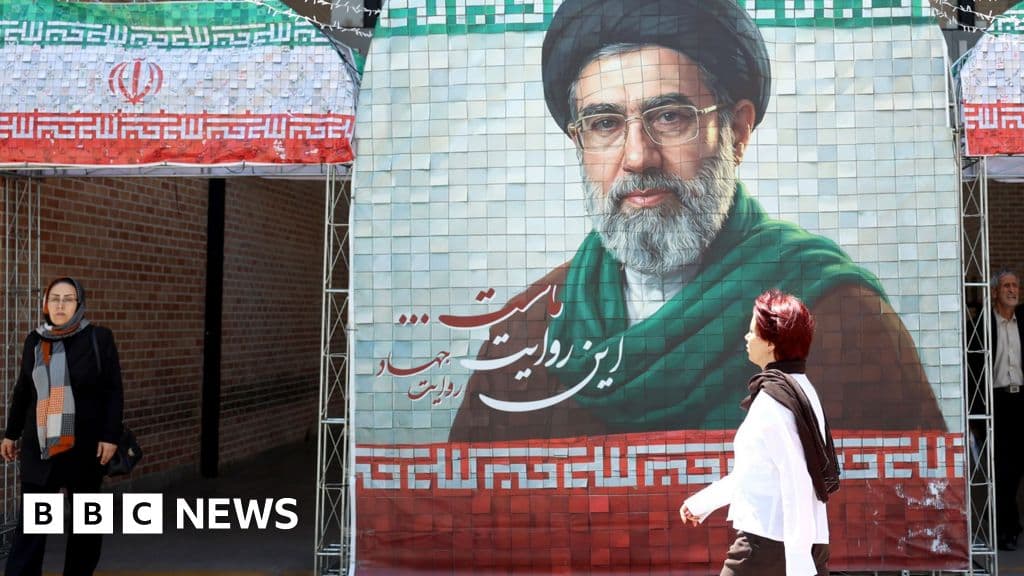
Iranians walk next to a picture of Iran supreme leader Ayatollah Mojtaba Khamenei in a street in Tehran, Iran, 06 May 2026. US President Donald Trump announced pausing the operation of escorting ships through the Strait of Hormuz, hinting at progress in peace talks with Tehran.
<p>Sources in Pakistan told Western media outlets on Wednesday that Tehran is reviewing a one-page, 14-point proposal that would formally conclude the conflict between the United States and Iran.</p> <p>The post <a href="https://www.breitbart.com/middle-east/2026/05/06/pakistan-says-u-s-and-iran-getting-close-to-ceasefire-deal/" rel="nofollow">Pakistan Says U.S. and Iran Getting Close to Ceasefire Deal</a> appeared first on <a href="https://www.breitbart.com" rel="nofollow">Breitbart</a>.</p>
Hope that the two-month conflict could soon end buoyed international markets on Thursday.
An American fighter jet attacked an Iranian tanker in the Gulf of Oman as it tried to break through the U.S. military blockade and make its way to an Iranian port, according to the U.S. Central Command. It comes as Iran says it’s deliberating a response to what the Wall Street Journal describes as a one page, 14-point U.S. proposal to end the war. NBC’s Richard Engel reports for TODAY from Jerusalem.
An Iranian official said that Tehran would convey its reply through Pakistan, a key mediator. Another Iranian official had earlier dismissed a reported proposal to end the war as a “list of American wishes.”
Iran is reviewing the Trump administration's latest proposal to end the war. And, Secretary of State Marco Rubio is meeting Pope Leo XIV amid President Trump's harsh criticism of him.
President Trump told PBS News Hour Wednesday there's a "very good chance" the U.S. and Iran are nearing a deal to end the war. The deal on the table would be a negotiated memorandum of understanding that would limit Iran's nuclear program and open the Strait of Hormuz, where Iran has kept a chokehold since the beginning of the war and where U.S. warships continue a blockade. Nick Schifrin reports.
With the U.S and Iran considering a potential deal to end the war we turn to two or our experts. Alan Eyre of the Middle East Institute was a senior member of the Obama administration's negotiating team for the previous Iran nuclear deal. Miad Maleki was born in Iran and is a senior fellow at the Foundation for the Defense of Democracies. They join Aman Nawaz for additional perspective.
A spokesperson for the Iranian Ministry of Foreign Affairs confirmed Thursday that Tehran is reviewing a U.S. proposal to end hostilities, after President Trump threatened Iran against rejecting the deal. Esmaeil Baqaei, the spokesperson for the ministry, told the ISNA news agency that Iranian officials are reviewing the proposal, according to Al Jazeera. He also…
An Iranian official on Wednesday called a reported peace deal for the end to the U.S. war against Iran the “Americans’ wish list.” “Axios’ text is Americans’ wish list until it becomes reality,” Ebrahim Rezaei, a spokesperson for the Iranian parliament on national security, said in a post on the social platform X Wednesday morning,…
The U.S. and Iran are reportedly trying to hammer out the details of one-page memorandum to end hostilities, the latest back-and-forth amid the stalemate over the months-long conflict. The U.S.-proposed memo would establish a framework for future talks on Tehran’s nuclear program, a source familiar with the talks told NewsNation’s Kellie Meyer on Wednesday. Earlier…
Oil prices plummeted and Wall Street stocks surged on Wednesday after President Trump pointed to "great progress" in reaching a deal that would end the U.S. war with Iran.