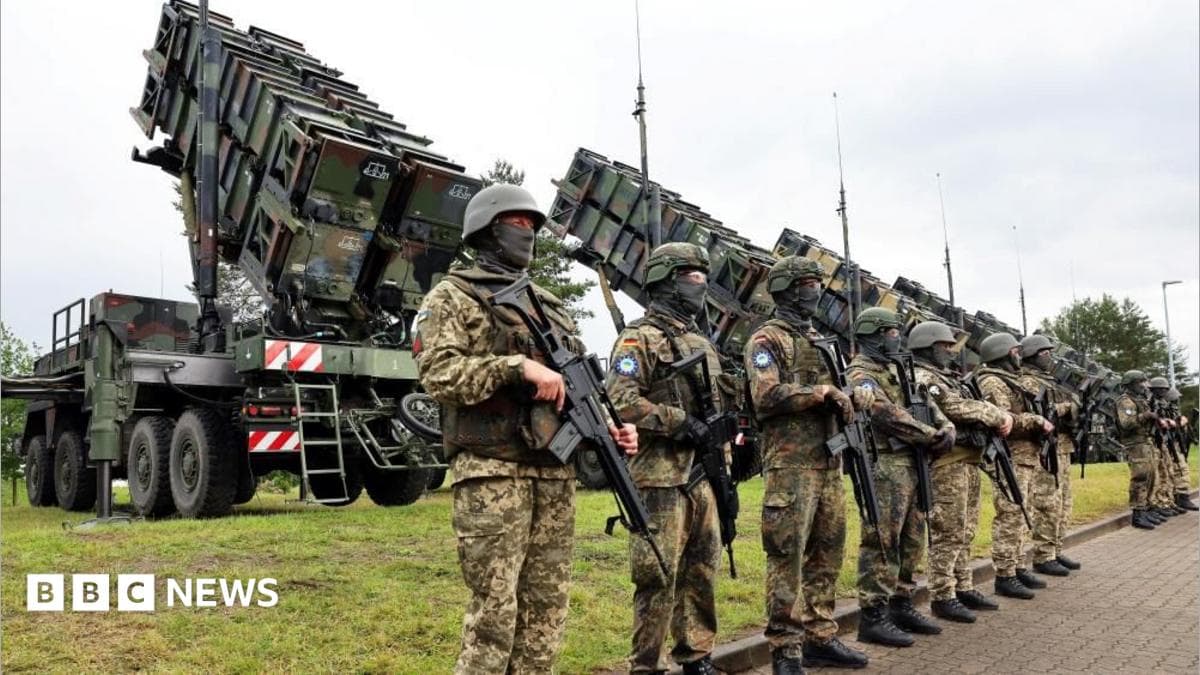
US Approves Patriot Sale to Ukraine, But Delivery Could Take Years
Left says
- •The sale underscores that European allies and Canada, not American taxpayers, are footing the $2.1 billion bill, reflecting a burden-sharing model worth highlighting as a success of coalition diplomacy.
- •Zelensky's repeated warnings about delayed deliveries expose the human cost of bureaucratic and political slow-walking while Russian strikes kill civilians, including the deadly Dnipro rail station attack.
- •The approval comes only after weeks of tension sparked by Trump's criticism of Zelensky and a controversial diesel deal with Russia, raising concerns about whether US support for Ukraine is being used as political leverage.
- •Restrictions on Starlink access further illustrate how Ukraine's defense capabilities can be constrained by decisions made in Washington, compounding worries about reliability of US commitment.
Right says
- •The deal proves the administration's approach of having allies and Ukraine itself pay for weapons, rather than US funds, is working as intended and protects American taxpayers.
- •This sale is framed as one of the most significant steps toward arming Kyiv since the start of the second Trump administration, showing continued US engagement despite past friction with Zelensky.
- •The extended delivery timeline, potentially years away, reflects legitimate manufacturing and logistical realities rather than political reluctance to support Ukraine.
- •Trump's earlier push for Ukraine to consider new leadership and a negotiated settlement is consistent with a broader goal of ending the war rather than prolonging it indefinitely.
Common Take
High Consensus- The State Department confirmed the $2.1 billion sale of 500 Patriot PAC-3 interceptor missiles will be funded by Canada, Germany, Norway, and the EU's Ukraine Support Loan, not US funds.
- Lockheed Martin is the principal contractor for the missile systems.
- Patriot missiles are recognized as the only effective defense against Russia's ballistic missile attacks.
- Delivery of the missiles is expected to take years, with some estimates pointing to the early 2030s, despite Ukraine's urgent battlefield needs.
The Arguments
Right argues
The deal proves that having allies and Ukraine's partners pay for weapons rather than US funds protects American taxpayers while still delivering critical capability to Kyiv.
Left counters
Burden-shifting to allies doesn't erase the fact that the US still controls approval timelines and could have moved faster regardless of who pays, so taxpayer savings don't address the delay's human cost.
Left argues
Zelensky's repeated warnings about delayed deliveries, set against the backdrop of deadly strikes like the Dnipro rail station attack, expose how bureaucratic and political slow-walking has real civilian costs.
Right counters
Weapons manufacturing and contracting realistically take years regardless of political will, so framing the delay as deliberate slow-walking ignores legitimate industrial and logistical constraints.
Left argues
The approval arriving only after weeks of tension following Trump's criticism of Zelensky and the Russia diesel deal raises legitimate concerns that US military support is being used as leverage in a broader negotiating strategy.
Right counters
Trump's push for a negotiated settlement and new leadership conversations are consistent with a goal of ending the war faster, and the sale's approval despite that friction shows support wasn't actually withheld as leverage.
Right argues
The scale of this sale, described as one of the most significant steps to arm Kyiv since the second Trump administration began, demonstrates continued substantive US engagement despite public friction with Zelensky.
Left counters
A large approval on paper means little if delivery timelines stretch into the 2030s, since Ukraine needs effective air defense now, not a symbolic commitment years away.
Left argues
Restrictions on Starlink access alongside delayed Patriot deliveries illustrate a pattern where Ukraine's defense capabilities are vulnerable to decisions made unilaterally in Washington, raising doubts about the reliability of US commitment.
Right counters
The administration approved a multibillion-dollar missile sale despite recent tensions, which actually demonstrates that disagreements over tactics like refinery strikes or diesel deals haven't translated into abandoning Ukraine's defense needs.
Challenge Questions
These questions target genuine internal contradictions — meant to provoke honest reflection.
Right asks Left
“If the funding comes entirely from Canada, Germany, Norway, and EU loan mechanisms rather than US taxpayers, on what basis can delays be blamed on American political slow-walking rather than the same manufacturing and logistics constraints that affect any large weapons order?”
Left asks Right
“If the extended delivery timeline is purely a matter of manufacturing capacity and logistics, why did Ukraine's Ministry of Defense reportedly have to lobby the Pentagon to backfill existing US stockpiles to speed things up, rather than that process happening automatically given the stated urgency?”
Outlier Report
Left Fringe
Progressive anti-war voices like Rep. Ro Khanna or commentators such as those at The Intercept who argue the US should reduce involvement entirely and push harder for negotiations rather than more weapons; represents roughly 10-15% of the left.
Right Fringe
MAGA isolationist figures like Tucker Carlson or Rep. Marjorie Taylor Greene who oppose any continued Ukraine funding or arms sales regardless of who pays, viewing it as unnecessary foreign entanglement; represents roughly 20-25% of the right.
Noise Assessment
High noise ratio, as cable news and social media amplify extreme takes on both Trump's diplomacy and Zelensky's leadership, while most Americans have limited engagement with the granular details of missile delivery timelines or funding mechanisms.
Sources (5)
The American-made interceptors are the only effective weapon for downing Russia's ballistic missiles.
The department said that no American money was spent in the deal and that the sale of 500 Patriot missiles is being funded through donations from Canada, Germany and Norway through a U.S. program.
The Trump administration approved the sale of $2.1 billion in Patriot air defense systems to Ukraine on Friday, the State Department said in a statement.
Ukraine has long said it urgently needs more missile interceptors to knock down the growing waves of missiles from Russia.
Presented by Palantir {beacon} Defense &National Security Defense &National Security   The Big Story  Ukraine gets approval for Patriot missile sale The State Department approved on Friday a possible $2.1 billion sale of 500 Patriot interceptor missiles to Ukraine that is funded entirely by U.S. partners and allies.  © Getty The Trump administration greenlit the…