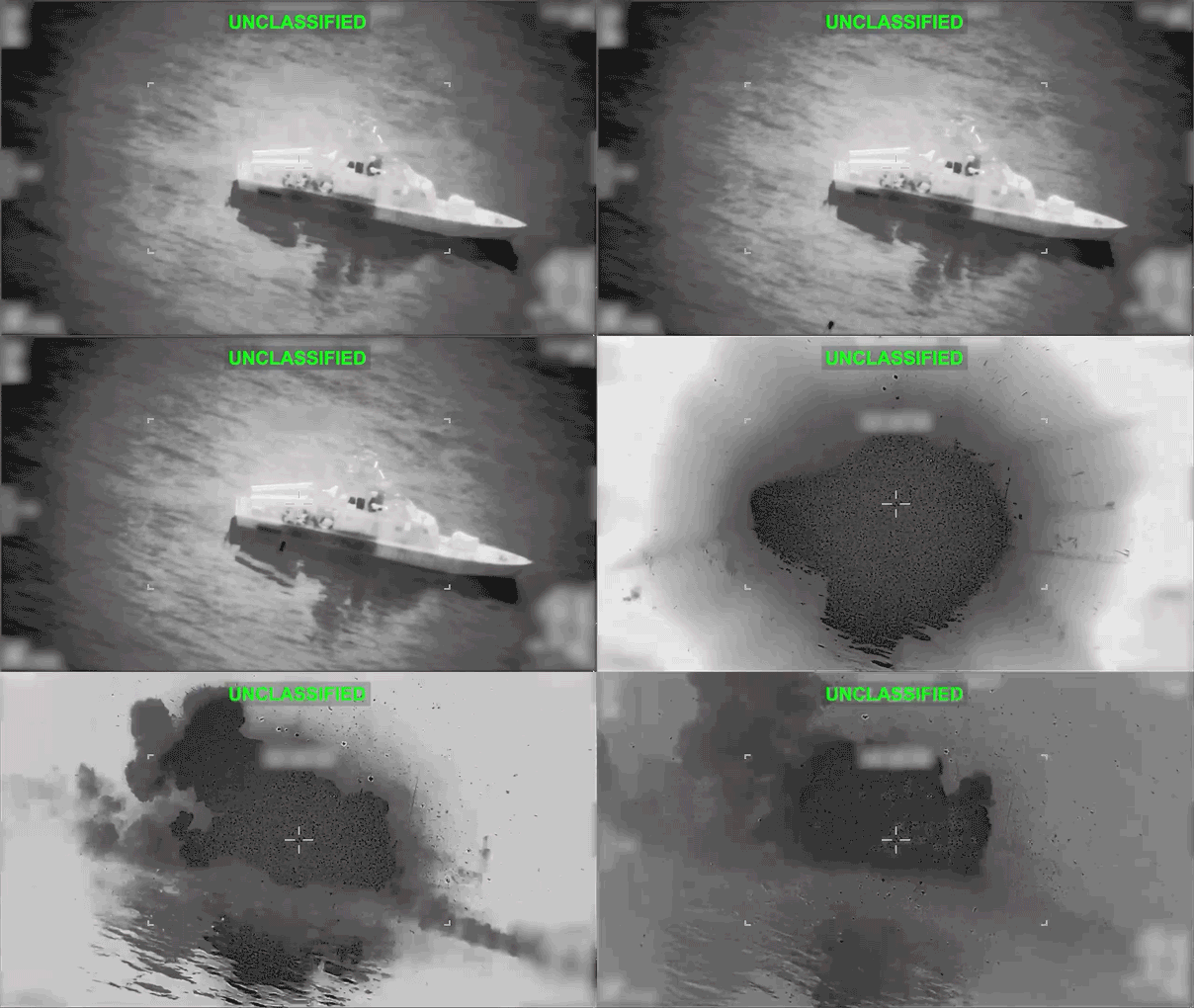
U.S. Destroys 16 Iranian Ships in Preemptive Strike
Left says
- •The preemptive strike was based on intelligence about Iranian operational plans rather than confirmed mine deployment, raising questions about the threshold for military action
- •Escalating military responses risk further destabilizing the region and could provoke Iranian retaliation that endangers civilian populations across the Middle East
- •The conflict has already resulted in over 1,200 Iranian deaths and threatens to spiral into a broader war with devastating humanitarian consequences
- •Military action should be coupled with diplomatic efforts to de-escalate tensions and find peaceful solutions to regional disputes
Right says
- •Iran's threat to mine the Strait of Hormuz represents an unacceptable attempt to hold global energy markets hostage and disrupt international commerce
- •Swift decisive action was necessary to prevent Iran from deploying thousands of mines that could have shut down a waterway carrying one-fifth of the world's oil supply
- •The strikes demonstrate American resolve to protect critical shipping lanes and prevent economic warfare that would harm allies and global markets
- •Iran's pattern of aggression and threats to international shipping justifies preemptive measures to protect vital strategic interests
Common Take
High Consensus- The Strait of Hormuz carries approximately 20% of the world's oil supply and is critical to global energy markets
- Iranian mining of the strait would pose severe risks to commercial shipping and international commerce
- The conflict has resulted in significant casualties across multiple countries in the region
- Energy market disruptions from the conflict are affecting global oil prices and supply chains
The Arguments
Right argues
Iran's threat to mine the Strait of Hormuz—which carries one-fifth of the world's oil supply—constitutes economic warfare that could devastate global energy markets and harm civilian populations worldwide through skyrocketing fuel costs. Swift preemptive action was necessary to prevent Iran from deploying thousands of mines that would effectively shut down this critical shipping lane.
Left counters
Acting on intelligence about 'operational plans' rather than confirmed mine deployment sets a dangerous precedent for preemptive warfare based on speculation. The strikes were based on reports of only a few dozen mines actually placed, not the thousands claimed as justification.
Left argues
The conflict has already resulted in over 1,200 Iranian deaths and threatens to spiral into a broader regional war with devastating humanitarian consequences. Military escalation risks provoking Iranian retaliation that could endanger civilian populations across the Middle East and should be coupled with diplomatic efforts to de-escalate tensions.
Right counters
Iran's pattern of aggression and threats to international shipping demonstrates that diplomatic approaches have failed to deter their destabilizing behavior. Allowing Iran to hold global energy markets hostage would embolden further aggression and harm innocent civilians worldwide through economic disruption.
Left argues
The preemptive strike was based on intelligence about Iranian operational plans rather than confirmed mine deployment, raising serious questions about the threshold for military action. This approach risks normalizing attacks based on potential future threats rather than actual imminent danger.
Right counters
Waiting for Iran to fully deploy its estimated 2,000-6,000 mine stockpile would have made the situation exponentially more dangerous and difficult to resolve. Even the threat of mining operations disrupts shipping and spikes insurance costs, demonstrating that preemptive action was justified.
Right argues
The destruction of Iranian mine-laying vessels demonstrates necessary American resolve to protect vital strategic interests and critical shipping lanes that are essential to global commerce. Iran's attempt to weaponize the Strait of Hormuz represents an unacceptable threat to international maritime law and economic stability.
Left counters
Escalating military responses in an already volatile region increases the risk of miscalculation and broader conflict that could ultimately cause far greater disruption to global energy markets than the original Iranian threat. Military action should be a last resort after exhausting diplomatic options.
Challenge Questions
These questions target genuine internal contradictions — meant to provoke honest reflection.
Right asks Left
“If diplomatic solutions are preferable to military action, what specific diplomatic measures could realistically deter Iran from mining the Strait of Hormuz when previous sanctions and negotiations have failed to prevent their escalating maritime aggression?”
Left asks Right
“If preemptive action was justified to prevent economic warfare through mining, how do you reconcile supporting strikes based on intelligence about 'operational plans' with opposing similar preemptive actions in other contexts where the evidence threshold was comparable?”
Outlier Report
Left Fringe
Without access to specific congressional statements or prominent progressive commentator responses in the provided coverage, cannot identify specific left-wing figures taking extreme positions on this story. Estimated <5% of left taking unusually extreme anti-intervention stance.
Right Fringe
Cannot identify specific right-wing figures taking extreme positions from the provided coverage, though RedState's detailed military analysis suggests some defense hawks may be pushing for even more aggressive action. Estimated <10% of right wanting immediate full-scale military response.
Noise Assessment
Moderate noise level - Trump's Truth Social posts generate amplified discussion, but the core issue of protecting global oil supply through the Strait of Hormuz has genuine strategic importance that limits purely performative discourse.
Sources (10)
<p>The U.S. military destroyed 16 Iranian mine-laying naval vessels on Tuesday amid concerns that Iran is preparing to deploy mines in the <a href="https://www.axios.com/2026/03/09/us-oil-iran-strait-hormuz-defend" target="_blank">Strait of Hormuz</a>. </p><p><strong>Why it matters:</strong> A senior U.S. official told Axios the strike on the inactive ships was a preemptive measure that was a result of intelligence about <a href="https://www.axios.com/world/iran" target="_blank">Iran's</a> operational plans.</p><hr /><ul><li>Iran's deployment of mines would create an extreme threat for commercial shipping in the region and prevent any oil from leaving through the Strait. Approximately one-fifth of the world's oil passes through the waterway.</li></ul><p><strong>What they're saying:</strong> President <a href="https://www.axios.com/politics-policy/donald-trump" target="_blank">Trump</a> threatened Iran in a Truth Social <a href="https://truthsocial.com/%40realDonaldTrump/posts/116206683370194686" target="_blank">post</a> with "military consequences" at a level "never seen before" if they were to place mines in the Strait.</p><ul><li>"If, on the other hand, they remove what may have been placed, it will be a giant step in the right direction," the president wrote, though he clarified that the U.S. has no reports that mines were placed in the waterway. </li><li>"Additionally, we are using the same Technology and Missile capabilities deployed against Drug Traffickers to permanently eliminate any boat or ship attempting to mine the Hormuz Strait. They will be dealt with quickly and violently," he added.</li></ul><p><strong>In a separate</strong> <a href="https://truthsocial.com/%40realDonaldTrump/posts/116206732840510472" target="_blank">post</a>, Trump said ten vessels were destroyed in a strike "with more to follow."</p><ul><li>U.S. Central Command later <a href="https://x.com/i/status/2031489675760640370" target="_blank">said on X</a> that 16 were "eliminated." </li></ul><p><strong>Zoom out:</strong> CNN <a href="https://www.cnn.com/2026/03/10/politics/iran-begins-laying-mines-in-strait-of-hormuz" target="_blank">reported</a> on Tuesday that Iran has started laying mines in the Strait of Hormuz, but that it was not extensive. </p><ul><li>"We thought the Iranians were planning to start laying the mines, so we took out many of the ships," the U.S. official told Axios.</li></ul>
About 20% of the world’s oil consumption passes through the Strait of Hormuz daily, and it’s been affected by the Iran war.
U.S. forces destroyed 16 Iranian mine-laying vessels near the Strait of Hormuz as oil traffic stalls through the critical shipping corridor amid rising tensions.
Iran suffered 'most intense' day of bombing as it reportedly planned to mine the narrow Strait of Hormuz
United States Central Command released video of American strikes that they say destroyed 16 suspected Iranian mine-laying ships near the Strait of Hormuz. It comes as Iran has threatened to shut the vital shipping route for 20% of the world’s oil and natural gas. NBC’s Richard Engel reports for TODAY from Jerusalem.
U.S. strikes over a dozen Iranian mine-laying ships
Attacks and counterattacks continued throughout the Middle East Wednesday. Two cargo ships were struck in the Gulf, as some lawmakers in Washington pressed for answers on the war's rationale.
President Trump on Tuesday threatened to escalate U.S. attacks on Iran if it has put mines in the Strait of Hormuz amid reporting that it has done so. Trump, in a post on Truth Social, made the threat but also indicated that the U.S. doesn’t have evidence of such activity. “If Iran has put out any mines…
"Civilian ports used for military purposes lose protected status and become legitimate military targets under international law," the Tampa, Fla.-based command said in a statement.