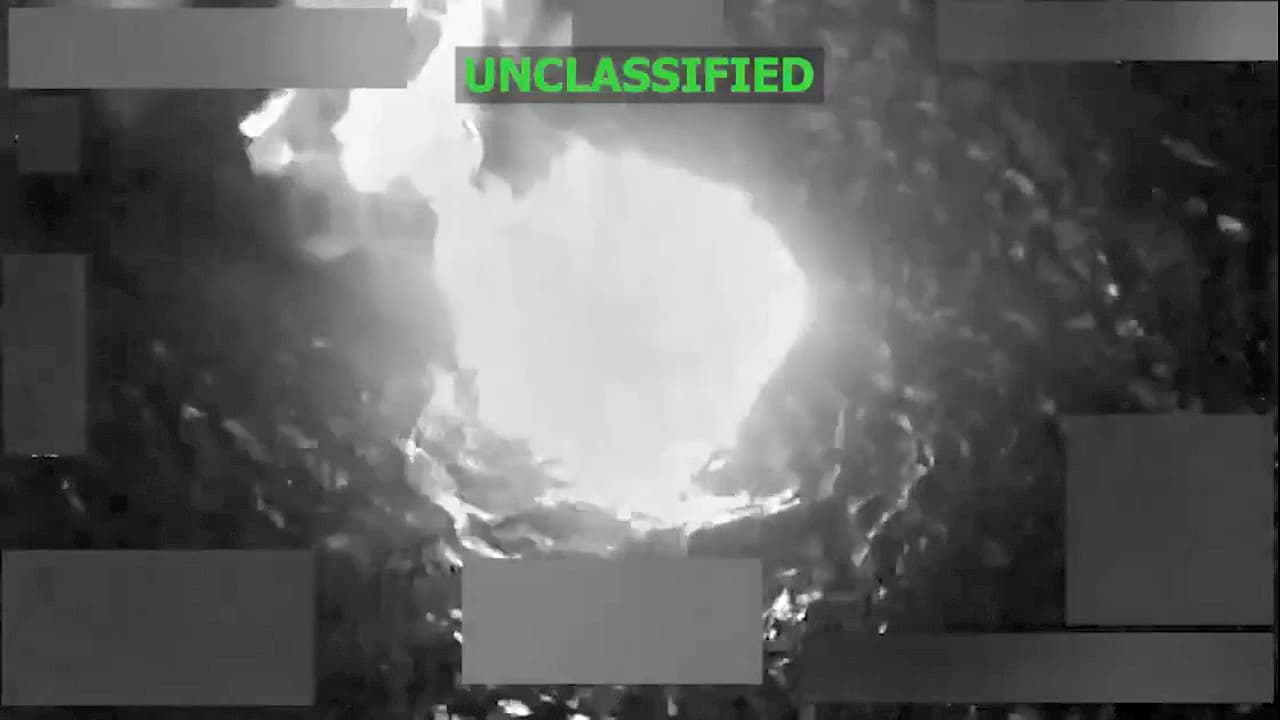
US kills 156+ in boat strikes with little evidence of drugs
Intra-Party Split Detected
Bipartisan Senate push to force release of unedited strike footage suggests some Republican skepticism of the boat strike campaign
Left says
- •The military has provided no evidence that the targeted vessels actually contained drugs, raising serious questions about the justification for lethal force
- •These strikes may violate international law by targeting individuals without due process or clear evidence of criminal activity
- •The campaign appears ineffective since most fentanyl enters the US overland from Mexico, not by boat through the Caribbean and Pacific
- •The administration's refusal to release identities of those killed or provide strike footage suggests a lack of transparency and accountability
Right says
- •Operation Southern Spear has successfully established deterrence against narco-terrorist cartels, with Pentagon officials noting fewer boats to target in recent weeks
- •The strikes target vessels along known drug trafficking routes based on intelligence confirming narco-trafficking operations
- •This represents a necessary escalation to combat cartels that have been poisoning Americans with drugs while operating with impunity
- •The campaign demonstrates renewed American leadership in the Western Hemisphere and commitment to protecting national security from transnational criminal organizations
Common Take
High Consensus- The US military has conducted over 40 boat strikes since September, killing at least 156-157 people
- Drug trafficking and cartel violence pose serious threats to both US and regional security
- The administration has not publicly released evidence of drugs found on the targeted vessels
- There is bipartisan interest in Congress for greater transparency, including calls to release unedited strike footage
The Arguments
Right argues
Operation Southern Spear has demonstrably established deterrence, with Pentagon officials noting they went weeks without finding boats to target because the campaign successfully drove traffickers away from known routes.
Left counters
The absence of boats could indicate the strikes are targeting legitimate fishermen or civilians rather than actual traffickers, explaining why fewer vessels now traverse these waters.
Left argues
The military has provided no physical evidence of drugs on any of the 45+ targeted vessels, raising fundamental questions about whether these strikes are killing drug traffickers or innocent civilians.
Right counters
Intelligence operations necessarily rely on classified information and surveillance that cannot be publicly disclosed without compromising sources and methods used to identify narco-trafficking operations.
Left argues
These strikes appear strategically misguided since most fentanyl enters the US overland from Mexico, making boat interdiction in the Caribbean and Pacific a costly distraction from the actual drug supply chain.
Right counters
Disrupting maritime trafficking routes forces cartels to use more expensive and vulnerable overland routes, increasing their operational costs and making them easier to intercept at established border checkpoints.
Right argues
The strikes target vessels along established narco-trafficking routes based on intelligence confirmation, representing a necessary escalation against cartels that have operated with impunity while poisoning Americans.
Left counters
Operating along known trafficking routes is not evidence of criminal activity, and the lack of due process violates international law by executing individuals without trial or proof of wrongdoing.
Left argues
The administration's refusal to release strike footage, victim identities, or drug evidence suggests a deliberate lack of transparency that undermines accountability for potentially unlawful killings.
Right counters
Operational security requires protecting intelligence sources and methods, while releasing detailed strike information would provide tactical advantages to criminal organizations seeking to evade future interdiction efforts.
Challenge Questions
These questions target genuine internal contradictions — meant to provoke honest reflection.
Right asks Left
“If these strikes are truly unlawful and ineffective as you claim, why haven't international bodies or allied nations formally condemned the operations or demanded their cessation?”
Left asks Right
“If intelligence truly confirms these vessels are engaged in narco-trafficking operations, why is the administration unable to provide any physical evidence of drugs from 45+ strikes without compromising operational security?”
Outlier Report
Left Fringe
Progressive House members like Alexandria Ocasio-Cortez and Ilhan Omar who have called these strikes potential war crimes without congressional authorization, representing approximately 15% of the left coalition.
Right Fringe
Defense hawks like Senator Tom Cotton who have advocated for even more aggressive military action against cartels including ground operations, representing roughly 20% of the right coalition.
Noise Assessment
Moderate noise level - most discourse appears genuine policy debate rather than performative, though some social media amplification of 'war crimes' language on left and 'tough on cartels' messaging on right.
Sources (6)
Aided by U.S. intelligence, Mexican security forces killed the nation’s most wanted man, the leader of the Jalisco New Generation Cartel, Nemesio Oseguera Cervantes, known as “El Mencho,” on Sunday. At least 70 people were killed in the raid and aftermath as armed groups retaliated in more than a dozen states.</p> <p>“There’s a real sense in Mexico and beyond that governments need to show the U.S. that they are willing and able to take military action on their own, lest Washington send special forces into the country,” says Reuters correspondent Laura Gottesdiener about the raid and Mexican President Claudia Sheinbaum’s wider crackdown on organized crime. While Sunday’s operation will help Sheinbaum “stave off some of the pressure from Trump,” Latin American historian Alexander Aviña warns that “this is not going to do much in terms of stopping the flow of illicit drugs from Mexico into United States.” Instead, he says, instability within cartel leadership will likely lead to internal power struggles that spill out into local communities. “The burden of this war always falls upon the very bottom of the hierarchy within this political economy,” says Aviña.
The Pentagon struck another boat carrying suspected narco-traffickers, killing 6 people aboard the vessel as the death from U.S. boat attacks reaches at least 156.
The attack, in the eastern Pacific, was part of a continuing campaign by the U.S. Southern Command to target people suspected of smuggling drugs, and raised the overall death toll to at least 156.
Sunday's attack brought the death toll to at least 157 people since the Trump administration began targeting alleged drug-smuggling vessels, in early September.
<p>Sunday’s attack brought death toll to at least 157 people since the Trump administration began targeting alleged ‘narco-terrorists’</p><p>The US military said it killed six men on Sunday in a strike on an alleged drug-smuggling vessel in the Eastern Pacific as part of the Trump administration’s campaign against alleged traffickers.</p><p>Sunday’s attack brought the death toll to at least 157 people since the administration began targeting “narco-terrorists” in small vessels in September.</p> <a href="https://www.theguardian.com/us-news/2026/mar/09/us-military-drug-boat-strike-pacific">Continue reading...</a>
The U.S. military carried out a “successful” operation against a “narco-terrorist” supply complex in Ecuador as part of the Trump administration’s push to dismantle drug-trafficking networks in the Western Hemisphere, according to defense officials.  At the request of Ecuador, a U.S. military joint force executed the targeted action against a suspected drug-smuggling facility inside Ecuador…