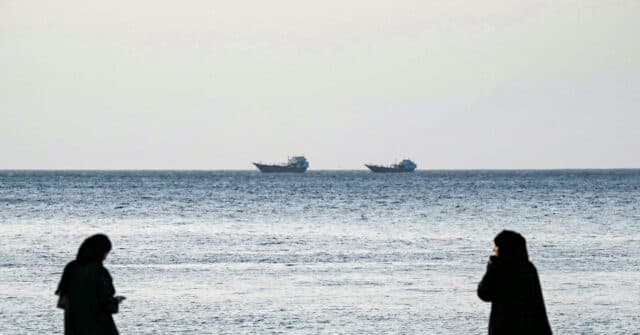
U.S. Navy Clears Iranian Mines From Strait of Hormuz Without Permission
Left says
- •The U.S. is conducting unilateral military operations in international waters without coordinating with Iran, escalating tensions during fragile ceasefire negotiations
- •America is essentially cleaning up Iran's mess at taxpayer expense and risk to U.S. sailors, while Iran refuses to take responsibility for mines it placed
- •The operation demonstrates the broader costs of military intervention, as the U.S. bears the burden of reopening critical shipping lanes that benefit global commerce
Right says
- •The U.S. is rightfully asserting freedom of navigation in international waters and refusing to let Iran hold global commerce hostage with illegal mining
- •Iran's incompetence in tracking its own mines proves the regime cannot be trusted to manage critical infrastructure or honor agreements
- •America is providing essential leadership to reopen vital energy supply routes that Iran deliberately closed, benefiting allies and global economic stability
Common Take
High Consensus- The Strait of Hormuz carries about one-fifth of global oil supplies and is critical to international commerce
- Iran placed mines in the waterway during the conflict, effectively closing it to most commercial shipping
- The U.S. Navy successfully transited two destroyers through the strait for the first time since the conflict began
- Ceasefire negotiations between the U.S. and Iran are ongoing in Pakistan with uncertain outcomes
The Arguments
Right argues
The U.S. is rightfully exercising freedom of navigation in international waters and preventing Iran from holding global commerce hostage through illegal mining of a critical shipping lane that carries 20% of world oil supplies.
Left counters
Unilateral military operations during ceasefire negotiations escalate tensions and undermine diplomatic efforts, while forcing American taxpayers to bear the costs and risks of cleaning up Iran's mess without coordination.
Left argues
The operation demonstrates the broader costs of military intervention, as the U.S. assumes responsibility for reopening shipping lanes at significant expense and risk to sailors while Iran refuses accountability for mines it placed.
Right counters
Iran's incompetence in tracking its own haphazardly-placed mines proves the regime cannot be trusted to manage critical infrastructure, making U.S. leadership essential to restore global energy supply chains.
Right argues
Iran's demand for over $1 million transit fees per ship violates international law, which prohibits charging tolls for passage through natural waterways, making U.S. action necessary to uphold maritime law.
Left counters
Conducting mine-clearing operations without Iranian coordination during fragile negotiations risks derailing diplomatic progress and could be seen as provocative military action rather than peacekeeping.
Left argues
The timing of unilateral military operations while Vice President Vance conducts trilateral talks in Pakistan undermines the diplomatic process and sends mixed signals about America's commitment to negotiated solutions.
Right counters
Iran's threats to 'deal severely' with military vessels and admission they cannot locate their own mines demonstrates the regime's bad faith, making U.S. action necessary to protect global commerce.
Right argues
America is providing essential leadership to benefit allies and global economic stability, as empty oil tankers from multiple nations head to the U.S. to load up while other countries lack the courage or capability to clear the mines themselves.
Left counters
The operation essentially makes the U.S. a cleanup service for Iran's actions, bearing all the financial and human costs while Iran faces no consequences for its irresponsible mining of international waters.
Challenge Questions
These questions target genuine internal contradictions — meant to provoke honest reflection.
Right asks Left
“If you oppose unilateral U.S. action in international waters, what specific alternative mechanism would you propose to reopen this critical shipping lane when Iran admits it cannot locate or remove its own mines and is demanding illegal transit fees?”
Left asks Right
“If Iran's regime is truly incompetent and untrustworthy as you argue, why should the U.S. continue bearing the costs and risks of cleaning up their mistakes rather than holding them accountable for the consequences of their actions?”
Outlier Report
Left Fringe
Progressive anti-war activists like CodePink's Medea Benjamin and some Squad members like Rashida Tlaib who might frame this as imperialist intervention regardless of circumstances. Represents roughly 15-20% of the left.
Right Fringe
Hardline isolationists like Tucker Carlson or some America First voices who might argue the U.S. shouldn't risk sailors for other countries' shipping lanes, even against Iran. Represents roughly 10-15% of the right.
Noise Assessment
Moderate noise level - most discourse reflects genuine policy positions rather than performative outrage, though some amplification occurs around broader Iran policy debates.
Sources (11)
<p>The United States Navy has begun operations in preparation of clearing mines from the Strait of Hormuz, U.S. Central Command said on Saturday.</p> <p>The post <a href="https://www.breitbart.com/europe/2026/04/11/centcom-u-s-navy-starts-mission-to-clear-mines-from-strait-of-hormuz/" rel="nofollow">CENTCOM: U.S. Navy Starts Mission to Clear Mines From Strait of Hormuz</a> appeared first on <a href="https://www.breitbart.com" rel="nofollow">Breitbart</a>.</p>
The destroyers were beginning mine-clearing operations in the vital waterway, U.S. Central Command said Saturday.
The U.S. military said on Saturday that it had started “setting conditions" for clearing mines in the Strait of Hormuz.
<p>"It is the first time U.S. warships crossed the strait since the beginning of the war."</p> The post <a href="https://legalinsurrection.com/2026/04/u-s-reportedly-moves-to-clear-strait-of-hormuz-as-iran-talks-open/">U.S. Reportedly Moves to Clear Strait of Hormuz as Iran Talks Open</a> first appeared on <a href="https://legalinsurrection.com">Le·gal In·sur·rec·tion</a>.
The U.S. military has launched operations to begin de-mining the Strait of Hormuz, U.S. Central Command (Centcom) said on Saturday. Centcom said in a social media post highlighted by Defense Secretary Pete Hegseth that two Navy guided-missile destroyers began “setting conditions” for this mission on Saturday morning. The USS Frank E. Peterson and USS Michael…
The Navy sent two guided missile destroyers through the Strait of Hormuz as the first step in its plan to reopen the critical waterway to commercial ship traffic.