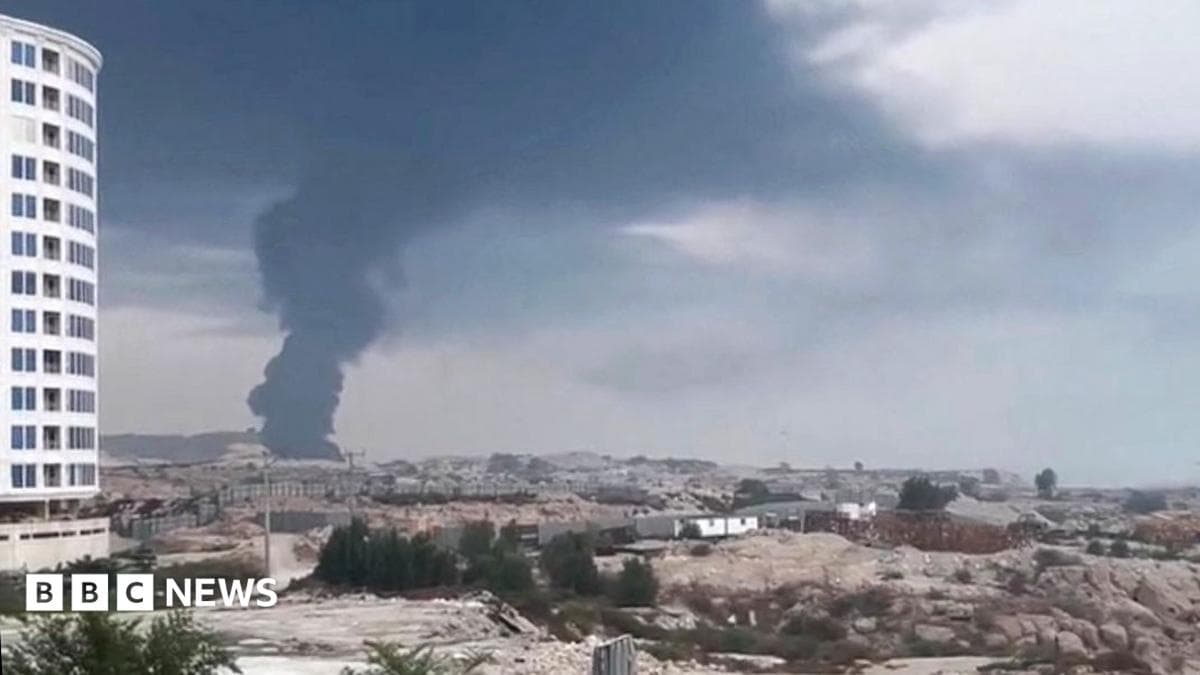
US Strikes Iran Hard After Missile Attack Shatters Fragile Pause
Left says
- •The abrupt collapse of the diplomatic pause raises questions about whether a durable off-ramp from war is achievable while both sides keep responding to provocations with escalation.
- •Civilian deaths in the retaliatory strikes, including a two-year-old child on Qeshm island, underscore the human toll of continued military action and the risks of expanding the conflict.
- •The widening scope of the war, including new US-Saudi joint strikes in Iraq and a drone attack on Egyptian territory, raises concern about regional spillover drawing in more countries and civilians.
- •Trump's combative rhetoric and vow to 'beat the... out of them' reflects an escalatory posture that some worry undercuts quieter diplomatic channels that were reportedly showing progress.
Right says
- •Iran's surprise ballistic missile attack on US forces in Jordan, during a period the US had paused strikes to allow negotiations, demonstrates bad faith and justifies a decisive military response.
- •The US response targeted military and IRGC-linked infrastructure, including missile, drone, and command facilities, framed as necessary to protect American troops, shipping, and allied Gulf nations.
- •Trump's firm public stance signals resolve and deterrence, sending a clear message that attacks on US forces will not go unanswered.
- •Iran's own IRGC statement claiming credit for the Jordan strike and threatening further 'resistance' confirms Tehran initiated the escalation, not the United States.
Common Take
High Consensus- Iran launched ballistic missiles at a US base in Jordan on Tuesday, and all were intercepted with no US casualties or damage.
- The US had paused its bombing campaign days earlier specifically to give diplomacy a chance before this attack shattered that pause.
- CENTCOM confirmed the US conducted a 'heavy wave' of strikes against dozens of IRGC targets in Iran in direct retaliation.
- The conflict has expanded this week to include joint US-Saudi strikes in Iraq and a drone attack on an Egyptian port, broadening the war's regional footprint.
The Arguments
Right argues
Iran's surprise ballistic missile attack on U.S. forces in Jordan during a negotiating pause—confirmed by Iran's own IRGC statement claiming credit and threatening more 'resistance'—demonstrates Tehran negotiated in bad faith and forced the U.S. hand.
Left counters
Even if Iran struck first, the question of who provoked whom is murkier given months of tit-for-tat escalation since April's ceasefire collapsed in June, including US port blockades and strikes that preceded this attack, meaning bad faith likely runs in both directions.
Left argues
The civilian toll of the retaliatory strikes, including a two-year-old child killed on Qeshm island, shows that expanding military action carries real human costs that a rush to 'hit hard' rhetoric obscures.
Right counters
Civilian casualties, while tragic, are the responsibility of a regime that embeds military infrastructure near population centers and chose to attack first; restraint in the face of a direct attack on U.S. troops was never a realistic option.
Right argues
Trump's blunt, public vow to retaliate hard signals resolve and deterrence, making clear that attacks on American forces carry swift and severe consequences—an approach that arguably prevents future attacks by removing ambiguity.
Left counters
That same combative rhetoric, delivered while quieter diplomatic channels were reportedly showing progress, risks foreclosing off-ramps and locking both sides into a cycle where de-escalation becomes politically impossible for either leader.
Left argues
The war's expansion—new US-Saudi joint strikes in Iraq and a drone attack on Egyptian territory, a country not previously drawn into the conflict—raises serious concern that the fighting is metastasizing beyond its original bounds and could destabilize the wider region.
Right counters
Regional spillover is a predictable consequence of Iran's proxy network and missile/drone proliferation across the Middle East, not evidence that the U.S. response is disproportionate; failing to degrade that network invites even broader attacks later.
Right argues
CENTCOM's strikes were narrowly framed around military and IRGC-linked targets—command centers, missile and drone facilities, coastal defense sites—aimed specifically at protecting U.S. troops, shipping lanes, and Gulf allies rather than open-ended war-making.
Left counters
Framing strikes as narrowly defensive doesn't change the fact that they killed civilians and came after the U.S. itself had been conducting 13 consecutive nights of attacks before the pause, suggesting the campaign was already broader than pure self-defense.
Challenge Questions
These questions target genuine internal contradictions — meant to provoke honest reflection.
Right asks Left
“If diplomatic pauses have repeatedly collapsed after Iranian attacks on U.S. forces, at what point does continuing to prioritize a 'diplomatic off-ramp' become indistinguishable from asking the U.S. to absorb repeated strikes without consequence?”
Left asks Right
“If the goal of these strikes is genuinely to deter further Iranian aggression and stabilize the region, how does an expanding war that has now pulled in Iraq, Saudi Arabia, and Egypt demonstrate that the strategy of escalation is working rather than backfiring?”
Outlier Report
Left Fringe
Figures like Rep. Ilhan Omar and antiwar commentators (e.g., Code Pink, some DSA-aligned voices) who would call the strikes illegal escalation regardless of provocation represent roughly 15-20% of the left.
Right Fringe
Hawkish commentators like Mark Levin or Lindsey Graham-aligned voices who push for maximalist strikes or regime change represent roughly 15-20% of the right, exceeding Trump's more transactional 'hit them hard' framing.
Noise Assessment
High noise ratio; cable news and X amplify both the most dovish and most hawkish voices, while most Americans hold conditional views (support retaliation for attacks on troops but want the war to end) that get underrepresented in loud partisan discourse.
Sources (8)
Iran launched a surprise ballistic-missile attack on American forces in Jordan, a U.S. official said, a violent escalation that piles new pressure on President Trump to renew the war in earnest. The missiles were all successfully intercepted, the U.S. military said. But the assault raised the prospect that American forces would have to respond, just as negotiations to reopen the Strait of Hormuz and eventually jump-start broader peace talks were picking up speed...
<p>The U.S. military conducted "a heavy wave" of airstrikes in <a href="https://www.axios.com/world/iran" target="_blank">Iran</a> on Wednesday evening, U.S. Central Command said in a <a href="https://x.com/CENTCOM/status/2082651747869147214" target="_blank">statement</a>.</p><p><strong>Why it matters: </strong>These are the first U.S. strikes in Iran since President <a href="https://www.axios.com/politics-policy/donald-trump" target="_blank">Trump</a> paused the bombing campaign Friday to give negotiations another chance.</p><hr /><ul><li>Wednesday's strikes came in retaliation for an <a href="https://www.axios.com/2026/07/28/iran-missile-attack-us-base-jordan" target="_blank">Iranian missile attack</a> targeting a U.S. base in Jordan on Tuesday. All of the Iranian missiles were intercepted, according to the U.S. military.</li></ul><p><strong>What they're saying: "</strong>CENTCOM assets struck dozens of Islamic Revolutionary Guard Corps (IRGC) targets in Iran, including military command centers, missile and drone facilities, coastal surveillance and defense sites, and maritime capabilities," CENTCOM said in a statement.</p><ul><li>"The strikes aimed to further diminish threats posed by Iran and its proxies to American forces, commercial shipping, and neighboring Gulf countries."</li></ul><p><strong>Driving the news: </strong>Trump told reporters Wednesday afternoon that the U.S. would hit Iran "very hard" later in the day.</p><ul><li>"It's our turn," Trump said.</li><li>He claimed Iran had acknowledged that launching the missiles was a mistake and had asked the U.S. not to retaliate.</li></ul><p><strong>The big picture:</strong> Trump paused the strikes Friday after 13 consecutive nights of attacks on Iranian military targets, opening a brief window for diplomacy.</p><ul><li>Iran's missile attack shattered the pause and prompted Trump to resume the military campaign five days later.</li></ul><p><em>Editor's note: This is a breaking news story. Please check back for updates.</em></p>
After a short period of relative calm when hostilities were paused, both sides have now restarted missile attacks.
<p>The U.S. military launched a round of strikes against Iran Wednesday evening after President Donald Trump vowed to hit the Islamic Republic "very hard" in response to Iran's attempted ballistic missile attack on U.S. forces in Jordan the previous day.</p> <p>The post <a href="https://www.breitbart.com/middle-east/2026/07/29/u-s-launches-powerful-strikes-iran-trump-vows-hit-hard-attacks/" rel="nofollow">U.S. Launches ‘Powerful’ Strikes on Iran After Trump Vows to ‘Hit Hard’ over Attacks</a> appeared first on <a href="https://www.breitbart.com" rel="nofollow">Breitbart</a>.</p>
<p>Iran’s Islamic Revolutionary Guard Corps attacked the CENTCOM headquarters of the US military in Jordan with ballistic missiles.</p> <p>The post <a href="https://www.breitbart.com/national-security/2026/07/29/iran-claims-it-bombed-u-s-central-command-headquarters-middle-east/" rel="nofollow">Iran Claims It Bombed U.S. Central Command Headquarters in Middle East</a> appeared first on <a href="https://www.breitbart.com" rel="nofollow">Breitbart</a>.</p>
Following a thwarted "surprise attack" from Iran, the U.S. leveled a new barrage of strikes against Iran. Retired Marine Col. Mark Cancian joins CBS News with more.
The resumption of fighting in the region comes after President Donald Trump paused his strikes against the Middle Eastern country over the weekend in order to give peace negotiations another chance.