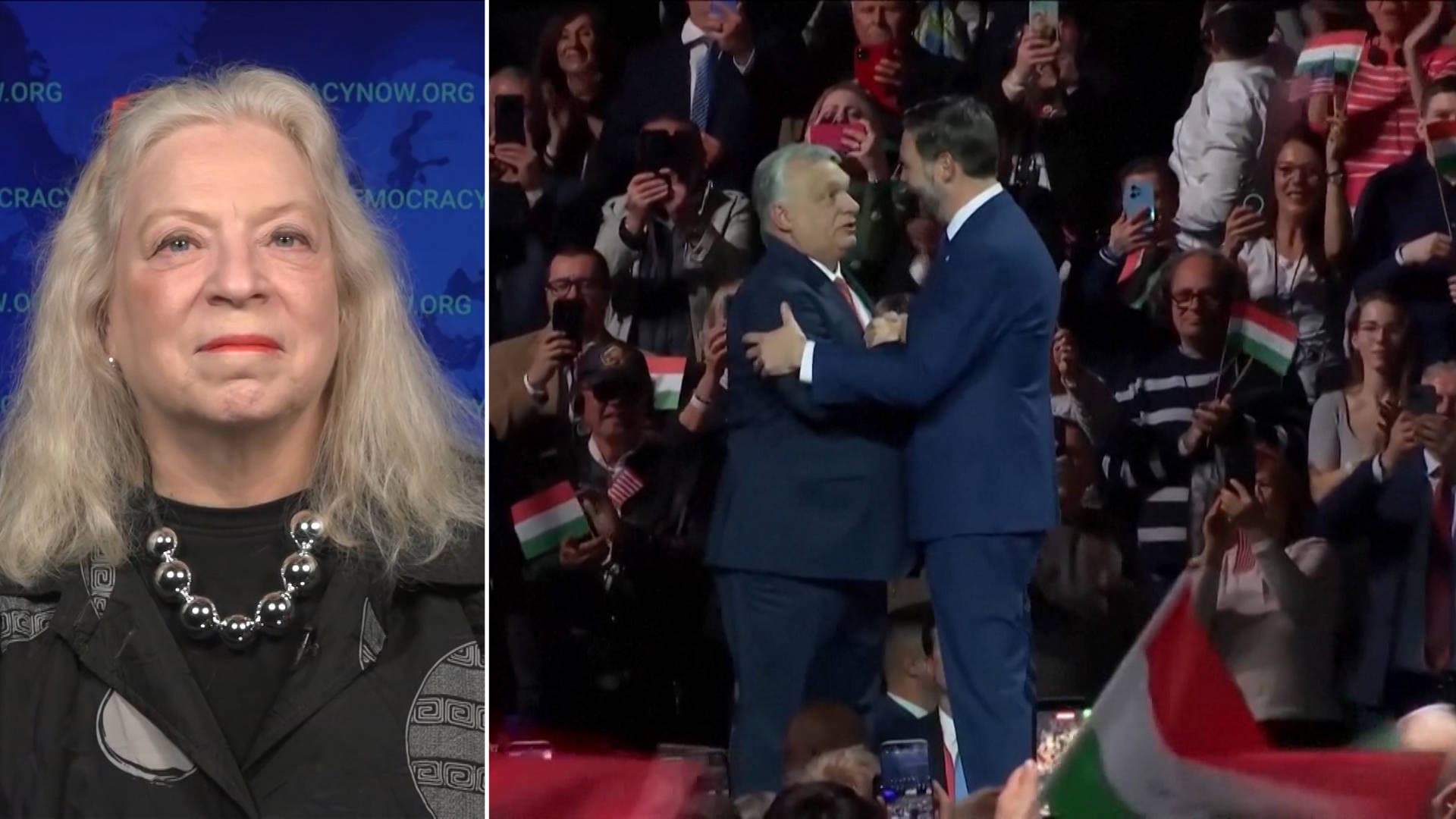
 JD Vance and Viktor Orban embrace at campaign event in Hungary
VP Vance Campaigns for Hungary's Orbán Amid EU Tensions
Left says
- •The Trump administration is undermining democratic norms by having the U.S. Vice President actively campaign for a foreign leader who has eroded press freedom and judicial independence in Hungary
- •Vance's support for Orbán represents an alarming alignment with authoritarian movements across Europe that threaten liberal democratic institutions
- •This intervention occurs while Orbán trails in polls, suggesting American interference in a democratic election where Hungarian voters appear ready for change
- •The partnership strengthens far-right networks internationally and legitimizes attacks on EU institutions that protect human rights and democratic governance
Right says
- •Vance is supporting a democratically elected ally who shares American values of national sovereignty and traditional conservative principles
- •Hungary under Orbán has been a reliable partner defending Christian values and strong border security policies that align with American interests
- •The EU has unfairly targeted Hungary with sanctions and interference, making American support necessary to counter Brussels' overreach
- •This partnership represents a natural alliance between leaders who prioritize their nations' interests over globalist institutions
Common Take
High Consensus- Orbán faces his most serious electoral challenge in 16 years, with opposition polls showing his party trailing
- The visit occurs just days before Hungary's parliamentary elections on Sunday
- U.S.-European relations have experienced significant strains during the Trump administration
- Hungary's election outcome will have implications for the country's relationship with both the EU and the United States
The Arguments
Left argues
A sitting U.S. Vice President actively campaigning for a foreign leader represents unprecedented interference in another nation's democratic process, especially when that leader trails in polls and Hungarian voters appear ready for change. This violates fundamental principles of national sovereignty and democratic self-determination.
Right counters
Hungary is a sovereign ally that invited American support, and the U.S. has legitimate interests in supporting leaders who share our values and strategic priorities. The EU's own interference through sanctions and pressure campaigns against Hungary justifies American counter-support for a democratically elected partner.
Right argues
Orbán has been a reliable ally defending shared conservative principles like strong border security, traditional values, and national sovereignty against EU overreach that threatens member state autonomy. Supporting such partnerships strengthens America's position against globalist institutions that undermine national interests.
Left counters
Orbán has systematically dismantled press freedom, judicial independence, and democratic institutions in Hungary, earning condemnation from EU human rights bodies. American support legitimizes authoritarianism and damages U.S. credibility as a defender of democratic values worldwide.
Left argues
This partnership strengthens international far-right networks and signals American approval for attacks on democratic institutions, press freedom, and judicial independence that Orbán has systematically undermined over 16 years in power. It represents a dangerous alignment with authoritarian movements across Europe.
Right counters
The 'authoritarian' label is propaganda from EU elites who cannot accept that Hungarian voters have repeatedly chosen Orbán's policies. Hungary remains a democracy with competitive elections, and American support helps counter Brussels' attempts to impose its agenda on sovereign nations.
Right argues
The massive turnout at the Orbán-Vance rally demonstrates genuine popular support, and Hungary's Christian conservative policies align naturally with American values on family, faith, and national defense. This partnership counters EU attempts to force liberal social policies on unwilling populations.
Left counters
Current polling shows Orbán trailing significantly, suggesting the rally turnout doesn't reflect broader Hungarian sentiment. American intervention appears designed to prop up an unpopular leader against the will of Hungarian voters who seem ready for democratic change after 16 years.
Challenge Questions
These questions target genuine internal contradictions — meant to provoke honest reflection.
Right asks Left
“If national sovereignty and democratic self-determination are paramount principles, how do you reconcile condemning American support for Orbán while simultaneously supporting EU sanctions and pressure campaigns against Hungary's democratically elected government?”
Left asks Right
“If you genuinely believe in democratic values and letting voters decide, why support a leader who is currently trailing in polls and appears to need foreign intervention to maintain power against the apparent will of the Hungarian electorate?”
Outlier Report
Left Fringe
Progressive activists like those in Democratic Socialists of America and commentators like Cenk Uygur who frame this as part of a global fascist conspiracy represent about 15% of the left with more extreme anti-authoritarian rhetoric.
Right Fringe
America First isolationists like Nick Fuentes and some Tucker Carlson followers who want complete withdrawal from European affairs represent about 20% of the right, while neoconservatives like Bill Kristol who oppose any support for Orbán represent about 10%.
Noise Assessment
Moderate noise level - most discourse reflects genuine policy disagreements rather than performative outrage, though some amplification occurs around 'democracy vs authoritarianism' framing on both sides.
Sources (4)
As the hours ticked down to the Tuesday deadline his boss had set to escalate bombings in Iran, Vice President JD Vance's day was consumed by another matter: helping the prime minister of Hungary as he faced his toughest election yet.
US Vice-President JD Vance accused the European Union of interfering in Hungary's election campaign and imposing censorship, as he visited Budapest days ahead of a pivotal vote on Sunday which could see a dramatic change in government. Vance's trip comes five days before Sunday's election, in which Prime Minister Viktor Orbán faces his most serious challenge in 16 years in power. The opposition Tisza party, led by Péter Magyar, is currently ahead of Orbán's Fidesz in opinion polls.
The invitation said arrival should be by 2:30. But many suspected that might be a tad late if they wanted to grab a seat inside the MTK Sports Park's arena for the Viktor Orbán–JD Vance rally yesterday. In fact, such a huge crowd showed up that the queue seemed to be stretching endlessly outside the venue located in central Budapest. As people waited patiently to be screened before entering (security was tight, but not exceptionally so), a score of reporters representing government-critical domestic and international media approached them for short interviews. And interviews they got. As far as the author of this article could see, no one responded angrily or impatiently—a notable departure from the norm these days in Hungary, where opposition rally participants typically respond that way when approached by pro-government outlets and influencers.
Amid strains in U.S.-European relations, the Trump administration has worked to strengthen ties with Hungary and its far-right leader, Prime Minister Viktor Orbán, who is facing his biggest challenge in 16 years. With just days to go before parliamentary elections, Orbán’s Fidesz party is trailing the center-right pro-EU Tisza party led by Péter Magyar. U.S. Vice President JD Vance traveled to Budapest this week and appeared alongside Orbán to openly campaign for his reelection.</p> <p>“This election is really crucial, not just for Hungary, but for the international right wing,” says Kim Lane Scheppele, professor of sociology and international affairs at Princeton University. “There’s been a lot of American signaling that the U.S. would really love to have Viktor Orbán be reelected. The problem is the Hungarian people don’t seem to agree.”</p> <p>Scheppele also discusses the role of Sebastian Gorka, a top counterterrorism official in the Trump administration, who has longstanding ties to the far right in Hungary and has been instrumental in forging closer ties between the two governments. According to a recent <em>New York Times</em> investigation, Gorka is also leading an effort to target left-wing groups in the United States and abroad as “terrorist organizations.”