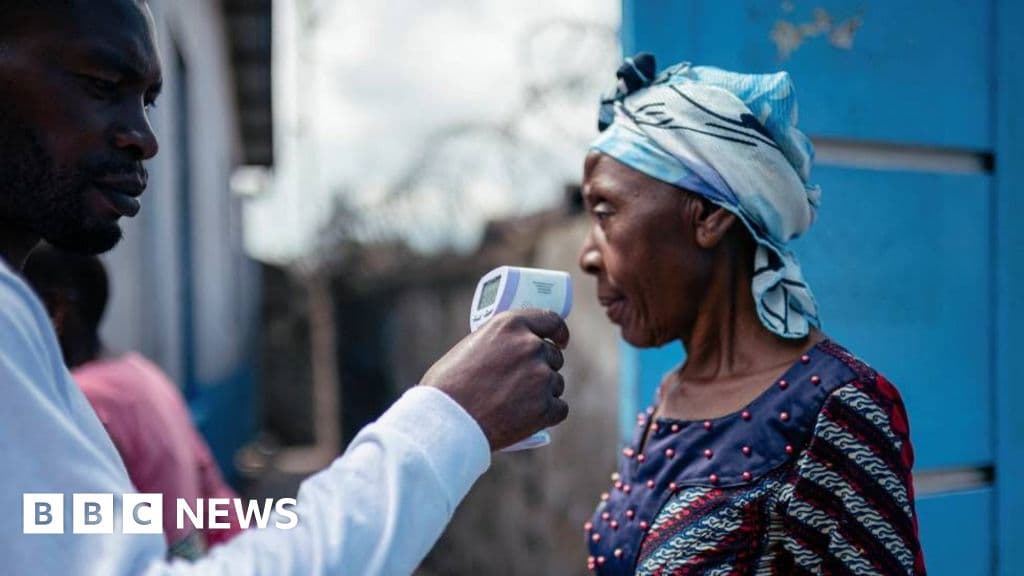
WHO Declares Global Health Emergency as Ebola Spreads Across Borders
Left says
- •The outbreak represents a critical test of global health infrastructure and international cooperation in preventing pandemic spread
- •Vulnerable populations in conflict-affected regions like eastern DRC face heightened risks due to inadequate healthcare systems and ongoing humanitarian crises
- •Swift WHO emergency declaration demonstrates the importance of multilateral health organizations in coordinating rapid international response
- •The lack of approved vaccines or treatments for this Bundibugyo strain highlights urgent need for increased global health research funding
Right says
- •Health officials were caught off guard by the outbreak's size, raising serious questions about surveillance and early warning systems
- •The rapid cross-border spread to Uganda demonstrates how quickly diseases can move across porous borders in unstable regions
- •This marks the 17th Ebola outbreak in DRC since 1976, indicating persistent public health challenges in the region
- •The outbreak's emergence in mining towns with high population mobility creates significant containment challenges
Common Take
High Consensus- The WHO declared this a public health emergency of international concern but not a pandemic emergency
- At least 80 deaths and over 300 suspected cases have been reported across DRC and Uganda
- The outbreak involves the Bundibugyo virus strain, for which no approved vaccines or treatments currently exist
- Early symptoms include fever, muscle pain, and fatigue, progressing to vomiting, diarrhea, and bleeding
The Arguments
Left argues
The WHO's swift emergency declaration demonstrates the critical importance of multilateral health organizations in coordinating rapid international response, especially for vulnerable populations in conflict-affected regions like eastern DRC where inadequate healthcare systems compound the crisis.
Right counters
The fact that health officials were caught off guard by an outbreak of this size in a region that has experienced 16 previous Ebola outbreaks since 1976 reveals fundamental failures in surveillance systems that no amount of multilateral coordination can fix after the fact.
Right argues
The rapid cross-border spread to Uganda, with a patient traveling through public transportation and dying in Kampala before his body was returned to DRC, demonstrates how porous borders and high population mobility in unstable regions create uncontainable disease corridors.
Left counters
This cross-border case actually validates the importance of international health cooperation, as Uganda quickly confirmed the case and coordinated with DRC authorities, showing that multilateral systems can track and respond to transnational health threats when properly supported.
Right argues
The outbreak's emergence in gold-mining towns like Mongwalu and Rwampara, where workers constantly move in and out, creates a perfect storm for disease amplification that surveillance systems failed to detect until hundreds of cases had already occurred.
Left counters
The mining town locations actually highlight why increased global health research funding is urgently needed - these economically vital but medically underserved areas require sustained investment in healthcare infrastructure and disease monitoring systems.
Left argues
The lack of approved vaccines or treatments for the Bundibugyo strain, which has only caused two previous outbreaks, underscores the critical need for increased global health research funding to develop broad-spectrum countermeasures against emerging viral threats.
Right counters
After 17 Ebola outbreaks in DRC since 1976, the persistent lack of preparedness for known viral variants reveals that the problem isn't funding for research but fundamental failures in translating existing knowledge into effective on-ground surveillance and response capabilities.
Right argues
The suspected index case being a healthcare worker who died three weeks ago in April, yet the outbreak wasn't announced until May, exposes dangerous delays in detection and reporting that allowed the virus to spread unchecked through vulnerable populations.
Left counters
Healthcare workers in conflict-affected regions face extraordinary challenges including ongoing humanitarian crises and security threats that make rapid disease detection and reporting extremely difficult, which is precisely why international support and coordination are essential.
Challenge Questions
These questions target genuine internal contradictions — meant to provoke honest reflection.
Right asks Left
“If multilateral health organizations and international cooperation are so effective, why has the DRC experienced 17 Ebola outbreaks since 1976 with seemingly no improvement in early detection capabilities, and what evidence suggests that more funding and coordination will succeed where decades of previous efforts have failed?”
Left asks Right
“If surveillance and early warning systems are the primary problem, how do you explain the successful containment of previous Ebola outbreaks in the same region, and why do you assume that better surveillance alone can overcome the fundamental challenges of poverty, conflict, and population mobility that drive disease transmission?”
Outlier Report
Left Fringe
Progressive activists like Ady Barkan or groups like Physicians for a National Health Program who might call for massive global health spending redistribution or blame Western pharmaceutical companies for vaccine inequity. Represents roughly 15% of the left.
Right Fringe
Anti-WHO figures like Alex Jones or Senator Rand Paul who might claim the outbreak is manufactured or call for complete withdrawal from international health organizations. Represents roughly 20% of the right.
Noise Assessment
Moderate noise level - most discourse focuses on legitimate policy debates about preparedness and response rather than conspiracy theories or extreme positions.
Sources (7)
The agency added that the outbreak, with around 246 cases and 80 deaths, does not meet the criteria of pandemic emergency.
<p>You have been warned. The World Health Organization (W.H.O.) on Sunday declared an ever broadening Ebola outbreak in the Democratic Republic of Congo and neighboring Uganda a global health emergency.</p> <p>The post <a href="https://www.breitbart.com/europe/2026/05/17/masks-on-w-h-o-declares-global-health-emergency-as-ebola-outbreak-in-congo-and-uganda-builds/" rel="nofollow">Masks On: W.H.O. Declares Global Health Emergency as Ebola Outbreak in Congo and Uganda Builds</a> appeared first on <a href="https://www.breitbart.com" rel="nofollow">Breitbart</a>.</p>
At least 80 deaths have been reported in Congo's new Ebola disease outbreak in the eastern Ituri province, authorities said.
'It’s pretty stunning'
Just a day after the outbreak was announced, cases were confirmed in the capitals of Uganda and the Democratic Republic of Congo. There is no approved vaccine for the strain.
Health officials are working to contain a new Ebola outbreak in the DRC of a virus strain with no known vaccine.
Health workers raced Saturday to intensify screening and contact tracing to contain the disease.