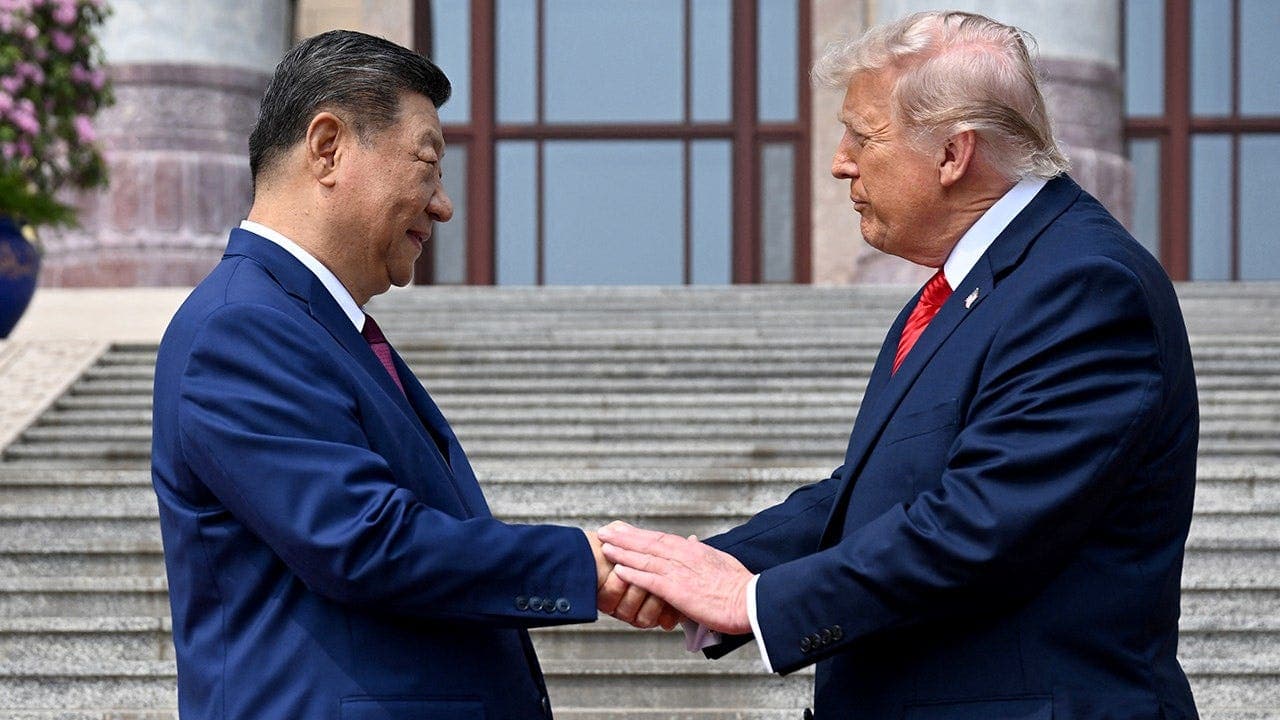
Xi warns Trump Taiwan could spark 'clashes and conflicts'
Left says
- •Trump failed to respond forcefully to Xi's warning, appearing weak and mute when China threatened potential military conflict over Taiwan
- •The administration's downplaying of Xi's stark warning undermines America's commitment to defending democracy and Taiwan's self-determination
- •Trump's warm praise of Xi as 'a great leader' while receiving threats shows he prioritizes personal relationships over protecting democratic allies
Right says
- •Xi's warning demonstrates China's aggressive posture and willingness to threaten military action to achieve territorial ambitions
- •The White House appropriately managed the exchange by maintaining established positions while focusing on productive economic cooperation and trade deals
- •Secretary Rubio confirmed U.S. policy on Taiwan remains unchanged, showing America's commitment to the island democracy despite Chinese pressure
Common Take
High Consensus- Xi Jinping explicitly warned that Taiwan could cause clashes and conflicts between the U.S. and China during the Beijing summit
- Both leaders acknowledged Taiwan as a critical issue in U.S.-China relations that requires careful handling
- The summit produced some positive outcomes including agreements on Iran nuclear policy and Chinese purchases of American agricultural products and Boeing aircraft
- U.S. officials confirmed that American policy toward Taiwan has not changed following the meeting
The Arguments
Left argues
Trump's failure to publicly respond to Xi's stark warning about potential military conflict over Taiwan demonstrates weakness and emboldens Chinese aggression. His warm praise of Xi as 'a great leader' while receiving threats shows he prioritizes personal relationships over defending democratic allies.
Right counters
The White House appropriately managed the exchange by maintaining established diplomatic positions while focusing on productive areas like trade cooperation. Secretary Rubio confirmed U.S. policy on Taiwan remains unchanged, demonstrating America's commitment despite Chinese pressure.
Right argues
Xi's explicit warning about 'clashes and conflicts' reveals China's increasingly aggressive posture and willingness to threaten military action to achieve territorial ambitions. This demonstrates the importance of maintaining strong deterrence and supporting Taiwan's democracy against authoritarian expansion.
Left counters
Trump's downplaying of this serious threat and the White House's omission of Taiwan from their official readout undermines America's credibility and sends mixed signals about our commitment to defending democratic values in the region.
Left argues
The administration's focus on trade deals and economic cooperation while China threatens military action shows misplaced priorities that could encourage further Chinese aggression. Trump's statement that he 'made no commitment either way' on Taiwan creates dangerous ambiguity about U.S. support.
Right counters
Maintaining productive economic dialogue while standing firm on core principles is effective diplomacy. The U.S. position on Taiwan has remained consistent, and engaging China on multiple fronts prevents escalation while protecting American interests.
Right argues
China's centering of the Taiwan issue in bilateral relations while threatening conflict shows Beijing's determination to use military intimidation as a diplomatic tool. The administration correctly avoided making concessions while keeping communication channels open to prevent miscalculation.
Left counters
Trump's warm tone and praise for Xi while receiving threats about potential military conflict sends the wrong message to both allies and adversaries about American resolve to defend democratic partners against authoritarian aggression.
Challenge Questions
These questions target genuine internal contradictions — meant to provoke honest reflection.
Right asks Left
“If maintaining strong public rhetoric against China's threats is so important, how do you reconcile this with the need for diplomatic engagement to prevent actual military conflict, especially when previous confrontational approaches have often escalated tensions without achieving policy goals?”
Left asks Right
“If the administration's approach of maintaining established positions while engaging economically is effective diplomacy, how do you explain the apparent disconnect between Trump's warm personal praise for Xi and the serious nature of China's military threats against a democratic ally?”
Outlier Report
Left Fringe
Progressive isolationists like some DSA members and anti-war activists who argue the U.S. should completely withdraw from Taiwan commitments to avoid conflict represent roughly 15% of the left coalition.
Right Fringe
Hardline hawks like John Bolton and some neoconservative commentators calling for immediate military escalation or preemptive strikes against China represent about 10% of the right coalition.
Noise Assessment
Moderate noise level - most discourse reflects genuine policy disagreements rather than performative positioning, though some partisan figures are amplifying tensions for political advantage.
Sources (10)
Xi Jinping warned Trump that Taiwan could cause clashes and even conflicts between the U.S. and China, injecting tension into the Beijing summit.
The White House described the meeting in Beijing, China, between President Donald Trump and Chinese President Xi Jinping as "good."
President Donald Trump and Chinese President Xi Jinping are set to meet on Friday to wrap up a two-day state visit that has featured pomp and business deals but also a stark warning from Xi that mishandling the Taiwan issue could push U.S.-China relations to "a very...
Chinese leader Xi Jinping hosted President Trump and offered the U.S. a "new vision" of relations more focused on trade and collaboration than on confrontation. Trump in turn, offered a future in which he and Xi were "united and together." But China's president also had a stark warning to his American counterpart about Taiwan. Nick Schifrin reports from Beijing.
The exchange at a highly anticipated summit in Beijing underscored just how far apart Trump and Xi still are on thorny issues, including the war in Iran, trade disputes and Washington's relations with Taiwan, which is self-ruled but which China claims as part of its territory.
President Trump told reporters on Air Force One on Friday that he “made no commitment” on the issue of Taiwan during his summit with Chinese President Xi Jinping in Beijing this week.  “On Taiwan, he feels very strongly, I made no commitment either way,” Trump told reporters while en route back to Washington.  The comments…
Chinese President Xi Jinping is using the issue of Taiwan to exert power over President Trump as the two leaders seek to tackle a number of hot button issues during this week’s high stakes summit in Beijing.  During their bilateral meeting on Thursday, Xi told Trump the “entire relationship” between Washington and Beijing would be…
Chinese President Xi Jinping warned President Trump about tensions between Washington and Beijing over Taiwan during their first meeting in Beijing on Thursday, according to China’s Foreign Ministry.  “Safeguarding peace and stability across the Taiwan Strait is the biggest common denominator between China and the U.S.,” Xi told Trump, according to a post on social platform…
China’s leader made clear his top priority is the fate of the contested island and its U.S. military support, a striking move given President Donald Trump’s effort to mend ties and deliver trade deals.
Secretary of State Marco Rubio said Chinese warnings of a conflict over Taiwan during the summit in Beijing have not altered the U.S. policy of supporting the island democracy.