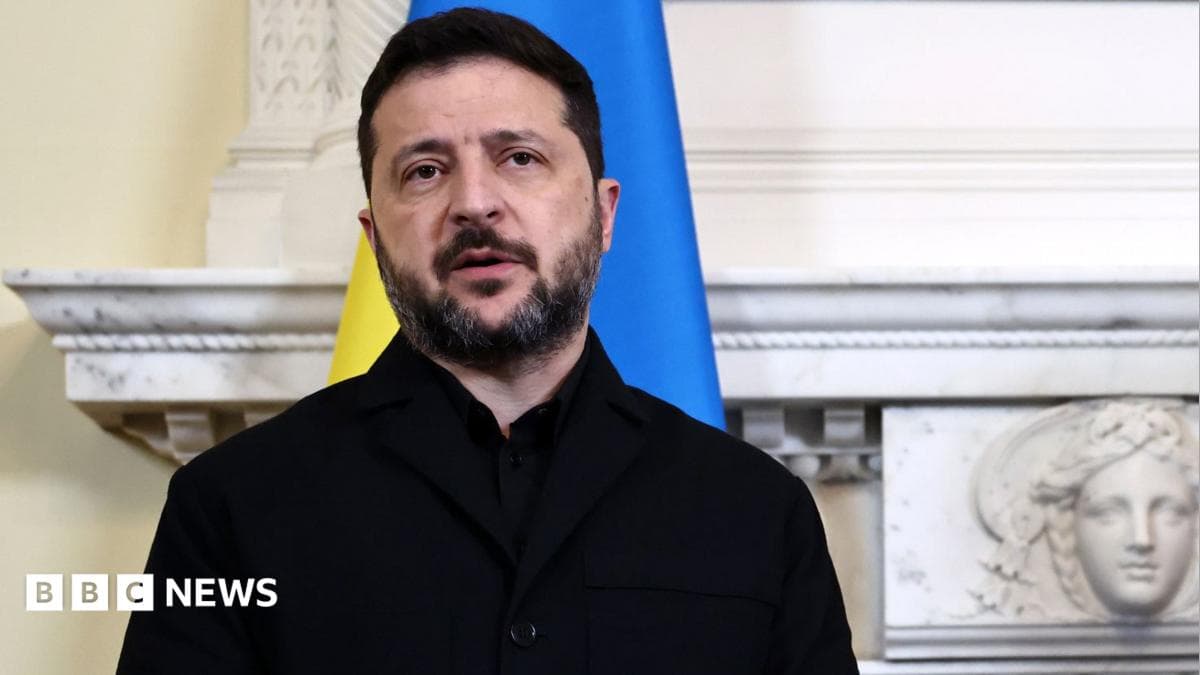
Zelensky Defies Trump, Resumes Russian Refinery Strikes
Left says
- •Ukraine only paused refinery strikes to comply with Trump's unilateral ceasefire demand, while Russia continued bombing Ukrainian power plants and grid infrastructure, leaving hundreds of thousands without electricity.
- •The U.S. withdrew intelligence-sharing on incoming Russian missile strikes and throttled Starlink/Starshield access as leverage against Kyiv, directly endangering Ukrainian lives and undercutting a wartime ally.
- •Trump's diesel deal with Putin to ease sanctions on Russian oil exports rewards the aggressor and prioritizes U.S. gas prices over Ukraine's survival and sovereignty.
- •Zelensky's resumption of strikes reflects a reasonable breaking point after enduring one-sided compliance while Russia faced no real consequences for violating the proposed truce.
Right says
- •Ukraine's refinery strikes have been identified as a significant driver of the global refining crisis and rising fuel prices, compounding pressure on consumers already strained by Middle East disruptions.
- •President Trump brokered a ceasefire framework and diesel arrangement aimed at easing energy costs and moving toward ending the war, and Ukraine's defiance undermines those diplomatic efforts.
- •Trump's call for new Ukrainian leadership reflects frustration that Zelensky has repeatedly passed on chances to negotiate an end to a conflict that keeps escalating with no clear resolution in sight.
- •Restoring Starlink and Starshield service shows the U.S. continued supporting Ukraine's defense capabilities even amid disagreements over strategy and the refinery campaign.
Common Take
High Consensus- Ukraine paused refinery strikes for three days following Trump's announced energy ceasefire before resuming attacks.
- A drone strike hit the Ryazan oil refinery southeast of Moscow, starting a fire confirmed by Russian officials.
- Starlink and Starshield satellite services were disrupted this week and have since been restored to Ukraine.
- Trump's diesel agreement with Russia and demand that Ukraine halt refinery strikes preceded the breakdown of the ceasefire.
The Arguments
Left argues
Ukraine honored a three-day pause on refinery strikes while Russia kept bombing Ukrainian power plants and grid infrastructure, leaving hundreds of thousands without electricity, so Zelensky's resumption is a response to one-sided compliance, not reckless escalation.
Right counters
Even if Russia struck first, reigniting attacks that are known to be driving global fuel-price spikes undermines a US-brokered diplomatic framework at a moment when de-escalation, not retaliation, serves Ukraine's longer-term interests.
Right argues
Trump's diesel arrangement and ceasefire push were aimed at lowering fuel costs for consumers and creating momentum toward ending a war with no clear resolution, and Ukraine's refinery campaign directly works against that effort.
Left counters
A ceasefire that only constrains Ukraine while Russia faces no verified enforcement or consequence isn't a real framework for peace — it's unilateral disarmament dressed up as diplomacy, and easing sanctions on Russian oil exports rewards the aggressor rather than pressuring it toward real negotiation.
Left argues
Withdrawing intelligence-sharing on incoming Russian missile strikes and throttling Starlink/Starshield access as leverage against Kyiv directly endangers Ukrainian soldiers and civilians, marking a troubling shift from ally to pressure tactic.
Right counters
Starlink and Starshield service was restored within roughly a day, showing the U.S. continued supporting Ukraine's core defense capabilities even while applying pressure over a specific disagreement about refinery strikes.
Right argues
Trump's suggestion that Ukraine consider new leadership reflects legitimate frustration that years of fighting have produced no resolution, and that Zelensky has passed on chances to negotiate an end to the conflict.
Left counters
Calling for a wartime ally's leader to be replaced — especially one who has said he'd hold elections if Russia agreed to an actual 60-day ceasefire — looks less like constructive pressure for peace and more like scapegoating Zelensky for Russia's refusal to stop attacking.
Left argues
The Kremlin never actually confirmed it agreed to Trump's announced 'energy ceasefire,' yet Ukraine was expected to comply regardless, exposing the deal as structurally one-sided from the outset.
Right counters
Confusion over who agreed to what doesn't erase the fact that Ukraine's refinery strikes are a real, documented contributor to global refining shortages, meaning Kyiv's actions have consequences beyond the battlefield that Washington is entitled to weigh.
Challenge Questions
These questions target genuine internal contradictions — meant to provoke honest reflection.
Right asks Left
“If the left argues Ukraine must resume strikes because Russia wasn't honoring the ceasefire, does that same logic not also justify the U.S. demanding verified compliance from Ukraine before restoring full intelligence and satellite support?”
Left asks Right
“If restoring Starlink/Starshield is cited as evidence the U.S. remains a reliable ally, how does that square with having throttled it as leverage in the first place, and what does that say about how conditional U.S. support has become?”
Outlier Report
Left Fringe
Progressive anti-war voices like those aligned with The Grayzone or figures such as Jimmy Dore occasionally criticize Zelensky and Western arms support entirely, representing maybe 5-8% of the left.
Right Fringe
Pro-Trump isolationist commentators like Tucker Carlson and some America First figures (e.g., Marjorie Taylor Greene) go further than mainstream Republicans, openly blaming Zelensky for prolonging the war and framing Ukraine as the obstacle to peace; this represents roughly 25-30% of the right.
Noise Assessment
High noise ratio: social media discourse is dominated by highly engaged partisan accounts amplifying extreme takes (both pro-Zelensky maximalism and pro-Trump 'Ukraine is the problem' framing), while most Americans hold more moderate, fatigued views wanting the war to end without clear allegiance to either side's tactics.
Sources (9)
A defiant President Volodymyr Zelenskyy told the Financial Times on Thursday morning that Ukrainian forces will resume attacks on Russian refineries. The move certainly seems more political than anything else. Such attacks have been described as one of the drivers behind the global refining crisis, which has collided with Strait of Hormuz disruptions.
<p>Ukraine's Starlink and Starshield satellite services — a critical tool in its war against Russia that was unexpectedly throttled this week by Elon Musk's SpaceX — has been restored to full capacity, a Ukrainian official tells Axios.</p><ul><li>The official also said that Ukraine conducted a strike overnight against a Russian oil refinery — defying President Trump's demand that it stop hitting those facilities.</li></ul><hr /><p><strong>Why it matters:</strong> The twin developments further strained the U.S.-Ukraine relationship, as the war with Russia drags on and the Trump administration sided with Russian President Vladimir Putin last week by lifting sanctions on Russian oil sales.</p><p><strong>State of play: </strong>The move angered Ukraine. President Volodymyr Zelensky responded by calling it "a weak decision" and a "gift to Putin." Trump then called for Ukraine to elect a new president.</p><ul><li>The crisis intensified this week when SpaceX restricted service of Starlink — a satellite service used for defensive purposes in battle — while Starshield, a tool used for offensive war operations that is controlled by the U.S. government, was also slowed.</li><li>After more than a day, the services were restored. Ukraine, meanwhile, fired on a Russian oil refinery, which U.S. officials are unlikely to look kindly upon.</li><li> The Ukrainian official said the country resumed strikes because Russia continued to hit Ukrainian energy infrastructure, despite Trump announcing that the two sides had agreed to a ceasefire.</li><li>That declaration came as a surprise to Zelensky.</li></ul><p><strong>The bottom line: </strong>It's still unclear to many inside the Trump administration and the Ukrainian government whether Trump ordered the satellite restrictions or not.</p><p><strong> </strong></p>
<p>President <a href="https://www.axios.com/politics-policy/donald-trump" target="_blank">Trump</a> claimed Sunday that Russia and Ukraine agreed to an "<a href="https://www.axios.com/2026/09/24/zelensky-ukraine-russia-war-energy-ceasefire-grain" target="_blank">energy ceasefire</a>" and will halt attacks on each other's energy facilities.</p><ul><li>Ukrainian President Volodymyr <a href="https://www.axios.com/2026/10/09/exclusive-zelensky-putin-trump-diesel-deal" target="_blank">Zelensky</a> tells Axios the announcement "was news for me. But if Russians agree to an energy ceasefire, <a href="https://www.axios.com/energy-climate" target="_blank">Ukraine </a>will agree."</li></ul><p><strong>Why it matters:</strong> An "<a href="https://www.axios.com/energy-climate" target="_blank">energy</a> ceasefire" would be a dramatic diplomatic breakthrough ahead of the winter. It remains unclear if <a href="https://www.axios.com/world/russia" target="_blank">Russia</a> indeed agreed to stop the strikes. </p><hr /><ul><li>Trump made a similar announcement last month, but neither party confirmed that there was a deal. Both Russia and Ukraine continued attacking energy infrastructure.</li></ul><p><strong>What they're saying:</strong> "Effective immediately, there is an ENERGY CEASEFIRE in the War between Russia and Ukraine. Both parties have agreed. Do not break it!" Trump wrote on Truth Social. </p><ul><li>In a short interview after Trump's announcement, Zelensky told Axios, "If President Trump negotiated it with Putin, please tell us when the ceasefire begins. We are ready, and we will accept it."</li></ul><p><strong>Catch up quick: </strong>The announcement follows days of escalating tensions between Trump and Zelensky over Ukraine's attacks on Russian oil refineries.</p><ul><li>On Friday, Trump <a href="https://www.axios.com/2026/10/09/trump-putin-diesel-agreement-ukraine-war" target="_blank">announced a deal</a> to ease sanctions on Russian diesel exports in an effort to lower soaring fuel prices, infuriating Ukraine.</li><li>On Saturday, Trump <a href="https://www.axios.com/2026/10/10/trump-ukraine-zelensky-replace-putin-diesel" target="_blank">called for Ukraine to replace Zelensky</a>, accusing him of refusing opportunities to end the war.</li><li>Zelensky responded Sunday on ABC's "This Week," saying Ukraine would hold elections if Russia agreed to a 60-day ceasefire. He also said Ukraine was prepared to stop attacking Russian refineries if Moscow halted strikes on Ukrainian energy infrastructure.</li></ul><p><strong>The big picture: </strong>The war with Iran has driven up global fuel prices, intensifying pressure on Trump to deliver relief for American consumers.</p><ul><li>"It's more difficult to stop Putin than to pressure others," Zelensky told ABC on Sunday.</li></ul><p><em>Editor's note: This is a breaking news story and will be updated.</em></p>
Ukraine's president says a pause on striking energy sites is over following fresh Russian attacks.
Ukrainian President Volodymyr Zelensky accused Russia of repeatedly attacking its power grid during the ceasefire, and he accused the U.S. of betraying Kyiv by withdrawing support critical to its defense against Russia.
Ukraine has resumed strikes on Russian oil refineries after President Volodymyr Zelenskyy angrily accused the United States of betraying Kyiv with a “dangerous” withdrawal of support critical to its defense against Russia.
President Volodymyr Zelensky made the announcement in an interview with The Financial Times. He had paused the strikes to comply with a demand from the United States.
Ukrainian drones attacked a refinery in Russia's Ryazan region early Thursday, hours after Ukrainian President Volodymyr Zelenskyy said that a brief truce spurned by Moscow was over.
Ukraine has resumed drone attacks on Russian refineries on Thursday after Ukrainian President Volodymyr Zelensky said the energy ceasefire announced by President Trump was over. The attack struck a refinery in Russia’s Ryazan region, southeast of Moscow, Russia’s Defense Ministry and Ryazan Gov. Pavel Malkov posted on Telegram, according to Reuters. “The material damage is now…