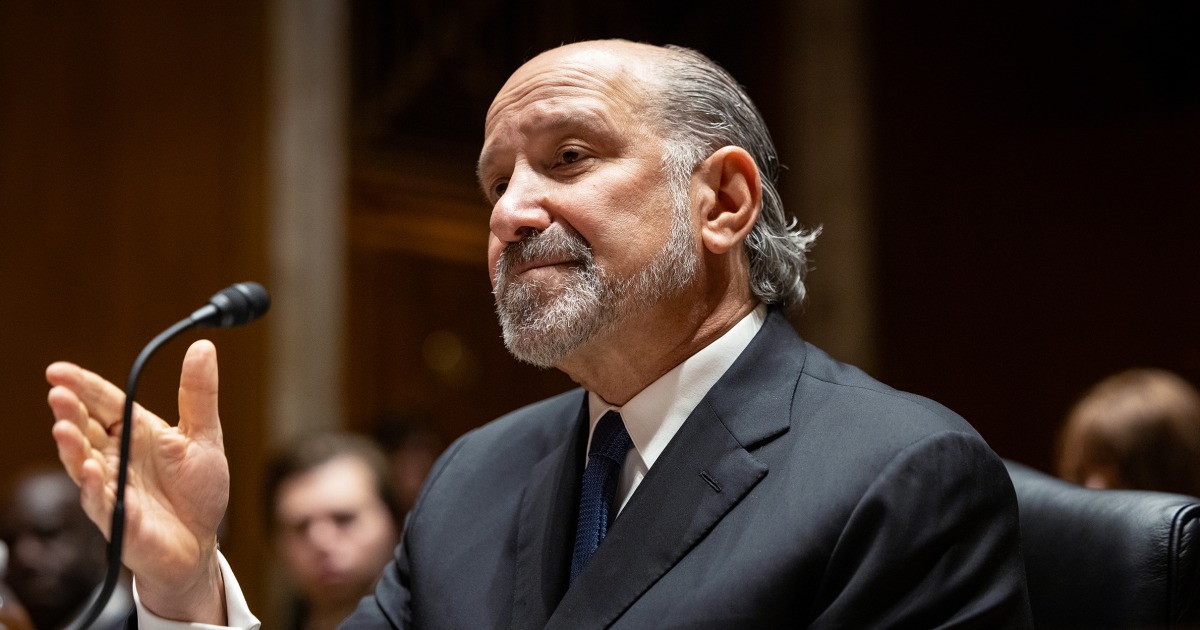
Did Lutnick Stall Chip Export Curbs Despite Spy Warnings?
Left says
- •Lutnick received repeated warnings, including a classified memo flagging Jensen Huang's relationship with a suspected Chinese spy, yet he stalled action on export controls for months rather than closing loopholes that let advanced chips reach China.
- •This pattern reflects a broader administration willingness to prioritize trade relationships and Nvidia's business interests over national security, with Commerce going more than a year without adding a single company to its Entity List despite mounting warnings from intelligence and national security officials.
- •Accountability shouldn't stop with Jensen Huang's resignation — Congress needs full transparency on who knew what and when, including scrutiny of Secretary of State Marco Rubio's decision to proceed with a China trip after being briefed on the spy concerns.
- •Senior administration officials themselves acknowledge it's 'impossible' that Lutnick didn't know about the memo, undercutting any defense that he was simply unaware of the risk.
Right says
- •Lutnick has been a highly effective Commerce Secretary who helped secure nearly 20 trade deals and trillions in manufacturing investment, and the administration continues to stand firmly behind him.
- •Limiting chip sales too aggressively risks sparking a damaging trade war with China, a concern Lutnick raised directly in high-level meetings even as others pushed to move faster.
- •Lutnick has voluntarily agreed to testify before the Senate Banking Committee, showing a willingness to answer tough questions rather than avoid accountability.
- •Some Republicans are just as alarmed as Democrats, arguing Jensen Huang's attitude toward China concerns was arrogant and that a subpoena for his testimony would be entirely justified.
Common Take
High Consensus- Lutnick was sent intelligence about Jensen Huang's relationship with a suspected Chinese spy as early as May.
- Lawmakers from both parties want Lutnick to testify before Congress about his department's handling of export controls.
- Both sides agree that protecting advanced U.S. chip technology from reaching China's military is a critical national security priority.
- Jensen Huang's resignation as Nvidia CEO does not resolve the underlying questions about what the administration knew and when it acted.
The Arguments
Left argues
Lutnick received a classified memo about Jensen Huang's relationship with a suspected Chinese spy and still stalled export control action across multiple Oval Office-approved decisions, suggesting a pattern of deliberate obstruction rather than oversight.
Right counters
Delaying aggressive export restrictions reflects a legitimate policy judgment about avoiding an escalatory trade war with China, not necessarily a cover-up, and Lutnick raised this concern openly in front of other Cabinet officials rather than hiding his reasoning.
Right argues
Lutnick has voluntarily agreed to testify before the Senate Banking Committee, demonstrating a willingness to be transparent and accountable rather than stonewalling Congress.
Left counters
Agreeing to testify only after bipartisan pressure and bombshell reporting forced the issue is not the same as proactive transparency — it came after the Commerce Department initially refused to confirm whether Lutnick had even seen the memo.
Left argues
Commerce going over a year without adding a single company to its Entity List, despite repeated warnings about Megaspeed specifically, shows systemic institutional failure to act on national security intelligence, not just a one-off delay.
Right counters
Blacklisting decisions are interagency processes requiring consensus across Commerce, State, Defense, and Energy, so the absence of additions could reflect broader disagreement about strategy rather than Lutnick single-handedly blocking enforcement.
Right argues
Trump's continued confidence in Lutnick, citing nearly 20 trade deals and trillions in manufacturing investment, reflects a track record of effective governance that shouldn't be discarded over a single contested personnel controversy.
Left counters
Trade deal success is irrelevant to whether Lutnick compromised national security by sitting on intelligence about chip diversion to a U.S. adversary — competence in one domain doesn't excuse potential negligence in a far more consequential one.
Right argues
Bipartisan concern, including Republicans like Sen. John Kennedy and Sen. Jim Banks demanding answers, shows this is a genuine oversight issue rather than a partisan attack, and the process of hearings and testimony is working as intended.
Left counters
The fact that Republicans are also alarmed only underscores how serious the lapse was — it suggests the administration's own allies don't buy the official defense that Lutnick's inaction was reasonable policy caution.
Challenge Questions
These questions target genuine internal contradictions — meant to provoke honest reflection.
Right asks Left
“If multiple officials across the administration, including Trump himself, approved export control action on three separate occasions only to have it stall, why should Lutnick alone bear primary blame rather than the broader interagency process or the President's own follow-through?”
Left asks Right
“If Lutnick's trade-war concerns were a legitimate policy rationale rather than obstruction, why did he reportedly agree to the export controls in the Oval Office meeting and then immediately propose developing 'new options' as a delay tactic instead of simply executing the decision?”
Outlier Report
Left Fringe
Figures like Rep. Ro Khanna pushing to extend scrutiny to Marco Rubio and the China trip represent a more aggressive ~20% of the left seeking broader administration-wide accountability beyond just Lutnick/Huang.
Right Fringe
A small contingent of pro-Trump loyalists and administration defenders (roughly 15-20% of the right) who view this entirely as a Democrat-led witch hunt and fully back Lutnick's trade-war concerns without reservation, dismissing the spy allegations as overblown.
Noise Assessment
High noise ratio: much of the Capitol Hill outrage (letters, subpoena threats, dueling 'investigate him' statements) is performative positioning ahead of hearings, while actual public attention to the granular Lutnick-Bessent Situation Room dynamics is likely low compared to the broader Huang/spy scandal headline.
Sources (7)
<p>The White House is standing by Commerce Secretary Howard Lutnick despite a view within the administration that <a href="https://www.axios.com/2026/11/11/trump-lutnick-nvidia-china-chip-export-controls" target="_blank">Lutnick delayed action</a> to address concerns over chip smuggling to China. </p><p><strong>Why it matters: </strong>Congress smells blood in the water following bombshell reports that U.S. national security may have been jeopardized by former Nvidia CEO Jensen Huang's relationship with a suspected Chinese spy. </p><hr /><ul><li>Lawmakers want to know what the Trump administration did or did not do in response to that intelligence — and Lutnick, the official in charge of the department at the center of export control policy, is squarely in their field of view. </li></ul><p><strong>President Trump, however, </strong>is not distancing himself from the secretary. </p><ul><li>"Secretary Lutnick is a champion of President Trump's America First trade and tariff policies, which have secured almost 20 fair trade deals and trillions in manufacturing investments," a White House official tells Axios. </li><li>"President Trump maintains complete confidence in the secretary and his ability to carry out the position as the most transformative Commerce Secretary in modern history."</li></ul><p><strong>Catch up quick: </strong>Lutnick <a href="https://www.axios.com/2026/11/10/lutnick-nvidia-jensen-huang-china-memo" target="_blank">was sent</a> intelligence about Jensen Huang's relationship with an alleged Chinese spy and repeatedly <a href="https://www.axios.com/2026/11/11/trump-lutnick-nvidia-china-chip-export-controls" target="_blank">did not take export control action</a> — despite pressure from the broader administration and the president himself, Axios first reported.</p><ul><li>Lutnick's role is prompting scrutiny on the Hill from members on both sides of the aisle. </li><li>"Secretary Howard Lutnick and Under Secretary Jeffrey Kessler must explain why they have not closed export control loopholes and act today to ensure our advanced technology is not fueling China's military," Senate Banking Committee Chair Elizabeth Warren (D-Mass.) said in a statement.</li><li>"The obvious question is why did he choose to sell advanced chips?," Sen. John Kennedy (R-La.) told Politico. </li><li>"Secretary Lutnick needs to answer that in front of God and country," Kennedy added. "I mean, there will be a congressional investigation. But I don't think he ought to wait on Congress."</li></ul><p><strong>The Commerce Department has not confirmed </strong>for the record whether or not Lutnick has seen the memo.</p><p><strong>Yes, but: "</strong>It's impossible that Howard Lutnick didn't know about this memo," one senior administration official told Axios.</p><ul><li>"Of course Commerce got the memo. It had to get the memo. That's the point of the memo. It's about chips. Commerce deals with chips," a second official said.</li></ul><p><strong>Meanwhile, Jensen Huang resigned </strong>as Nvidia CEO following reports of a second affair with a direct report. He previously admitted to an affair and apologized, but members on both sides of the aisle are also not letting him off the hook. </p><ul><li>"NVIDIA CEO Jensen Huang's decision to resign does not absolve him, other executives, or the company as a whole of responsibility for putting our national security at risk or for any potential violations of our laws," Warren said.</li><li>Republican House Foreign Affairs Chair Brian Mast (Fla.) and House Intelligence Committee Chair Rick Crawford (Ark.) <a href="https://news.bgov.com/bloomberg-government-news/house-gop-intel-foreign-affairs-leaders-push-jensen-huang-probe" target="_blank">told reporters</a> on Thursday that Huang's resignation doesn't change their plans to probe him and the company, Bloomberg Government reported. </li><li>"Jensen Huang himself has been a pretty bold, some might even say arrogant promoter, sort of dismissing our concerns about China having access to these most advanced chips. And I do not take that lightly ... I would be happy to support a subpoena," Republican Sen. Kevin Cramer (N.D.) <a href="https://bsky.app/profile/atrupar.com/post/3n24l75b3vg2v" target="_blank">said on</a> CNBC.</li></ul><p><strong>The bottom line: </strong>Resignations and apologies aside, Washington is ready to hold someone accountable as the FBI, Congress and Nvidia's board all investigate in tandem.</p>
<p>President Trump on Thursday authorized a crack down on companies suspected of diverting Nvidia's advanced AI chips to China for the third time this year — even consulting Elon Musk before giving the go-ahead. </p><ul><li>One administration official has repeatedly stood in the way: Commerce Secretary Howard Lutnick.</li></ul><p><strong>Why it matters: </strong>This standoff illustrates a breakdown in efforts to keep American technology out of China's hands as the world wonders why the Trump administration has not taken action against the company at the center of suspected chip smuggling — and <a href="https://www.axios.com/2026/11/09/alice-huang-nvidia-jensen-megaspeed" target="_blank">an espionage scandal.</a></p><hr /><ul><li>This report was assembled from interviews with six high-level sources who were briefed on or, in some cases, heard the discussions.</li></ul><p><strong>Inside the room:</strong> On Thursday, as the spy scandal rocked the administration, Lutnick met in the Situation Room with Treasury Secretary Scott Bessent, Defense Secretary Pete Hegseth, U.S. Trade Representative Jamieson Greer and National Security Adviser and Secretary of State Marco Rubio. </p><ul><li>During the meeting, <a href="https://www.axios.com/2026/11/11/bessent-lutnick-megaspeed-nvidia-china-chips" target="_blank">Bessent confronted Lutnick </a>about why his department has resisted implementing the export controls, particularly on Megaspeed, the company at the center of the spy scandal. The group sided with Bessent.</li><li>Lutnick appeared to agree, but then muttered under his breath, "I need to check with the president."</li></ul><p><strong>Friction point:</strong> Lutnick's seemingly innocuous comment raised concerns, the sources said, because officials have repeatedly believed the Commerce Department would impose the export controls, only to have nothing happen. </p><ul><li>"He's stalling it out," said one official, describing how Lutnick had previously met privately with the president to change his mind about the export limit. </li><li>"This is an ongoing concern with Howard and this issue," said another.</li></ul><p><strong>This time,</strong> one person in the room called his bluff by saying: "Great. Why don't we do it today?"</p><ul><li>Around 5pm, the group headed to the Oval Office.</li><li>Trump called tech advisor Elon Musk and agreed to move forward. Musk supported Rubio, Bessent, Greer and Hegseth's case to impose the controls while Lutnick warned it "will start a trade war with China."</li><li>"Everyone argued back that China is already doing to us what Lutnick warned would happen," a source said.</li></ul><p><strong>Behind the scenes: </strong>With Lutnick the lone holdout, Trump made his decision: "Let's get it done." But once everyone was outside of the Oval Office, Lutnick proposed a new delay tactic.</p><ul><li>"I'll develop some options and come back," he said.</li><li>"Everyone was like: 'No, no, the decision's been made. Go fucking execute,'" one source said. "Well, it still hasn't happened."</li></ul><p><strong>The other side:</strong> Commerce Department spokesperson Kristen Eichamer denied that Bessent confronted Lutnick and would not immediately comment on the other allegations.</p><p><strong>Flashback: </strong>On at least three separate occasions — in May, August, and Nov. 5 — Trump approved taking action against suspected diversions of Nvidia chips to China.</p><ul><li>But Lutnick and Commerce Undersecretary Jeffrey Kessler resisted pressure from Bessent and others to move forward.</li><li>In May, a highly classified memo warning about Jensen Huang's relationship with Alice Huang, a Megaspeed employee suspected by U.S. intelligence of being a Chinese agent, was shared with the president and other officials.</li><li>In a subsequent meeting, Bessent, Director of National Intelligence Jay Clayton, Hegseth and White House officials pressed Lutnick and Kessler to act, the source said, "and they were refusing."</li></ul><p><strong>Catch up quick: </strong>The Trump administration last year announced it would loosen export controls on Nvidia H200 chip sales to China — something Nvidia has lobbied hard for.</p><ul><li>Trump has taken a more lax approach to export controls on China, agreeing to allow sales of Nvidia's H200 chips, which are older but still powerful, in exchange for a 25% tariff.</li><li>Long before the affair with Alice Huang, Jensen Huang has pushed for tapping into the Chinese market. </li><li>The CEO at the center of an AI boom Trump is dead set on winning has largely been successful at convincing Trump and Lutnick that selling less powerful chips to China is good for national security because it prevents China from developing its own alternatives and keeps the adversary dependent on the U.S. </li></ul><p><strong>The bottom line: </strong>While Lutnick oversees the department squarely at the center of export control policy, Trump is the ultimate decider.</p>
<p>Treasury Secretary Scott Bessent confronted Commerce Secretary <a href="https://www.axios.com/2026/11/10/lutnick-nvidia-jensen-huang-china-memo" target="_blank">Howard Lutnick</a> over a failure to place Nvidia customer <a href="https://www.axios.com/2026/11/09/alice-huang-nvidia-jensen-megaspeed" target="_blank">Megaspeed</a> on a list of companies that pose national security concerns, sources familiar told Axios. </p><p><strong>Why it matters: </strong>The Commerce Department oversees the export of sensitive U.S. technologies and Lutnick's actions — or lack thereof — are increasingly under scrutiny following revelations that Nvidia CEO <a href="https://www.axios.com/2026/11/08/nvidia-ceo-jensen-huang-admits-affair-board-to-launch-investigation" target="_blank">Jensen Huan</a>g had an affair with Megaspeed employee and suspected Chinese spy Alice Huang. </p><hr /><p><strong>Driving the news:</strong> At a White House Situation Room meeting on Thursday after the midterm elections, Bessent pressed Lutnick on why Megaspeed had not been added to the Commerce Department's entity list, to which Lutnick responded he would "look into it." </p><ul><li>Commerce Undersecretary Jeff Kessler also was repeatedly warned about Megaspeed in deputy meetings. </li><li>But Kessler deferred to Lutnick, saying "That's a decision for the secretary."</li><li>Sources told Axios that Lutnick has spent the last year "undoing" efforts by other administration officials to hold Megaspeed — a company accused of illegally diverting U.S. chips to China — accountable because of concerns it would escalate the trade war with China. </li><li>Spokespeople for Treasury couldn't be immediately reached for comment.</li></ul><p><strong>The other side: </strong>The Commerce Department denied the Situation Room confrontation occurred.</p><ul><li>"This is false. Secretary Bessent and Secretary Lutnick had no such conversation," spokesperson Kristen Eichamer said.</li></ul><p><strong>Catch up quick:</strong> The Commerce Department is increasingly at the center of scrutiny over the broader Trump administration's handling of an intelligence memo overseen by State Department head Marco Rubio.</p><ul><li>Lutnick was among the officials who received the report in May, ahead of a trip to China, Axios first reported. </li><li>On Tuesday, the New York Times reported Commerce Undersecretary Kessler abruptly stopped an investigation into Megaspeed after Nvidia intervened.</li><li>The Financial Times reported the department was delaying efforts to blacklist Megaspeed despite several U.S. government agencies pushing it to do so.</li></ul><p><strong>Inside the room:</strong> White House and intelligence officials have pressed Lutnick and his top advisers to take action against Megaspeed since the fall of 2025, sources tell Axios. But they refused, so Bessent spoke up Thursday.</p><ul><li>"How come Megaspeed isn't on the entities list?" Bessent asked Lutnick, according to a source briefed on the meeting.</li><li>Lutnick initially stammered, sources said, and then replied: ""I don't know. I'll look into it."</li><li>One source, who has extensive experience concerning the chip controversy, said the reply was "bullshit" because Lutnick had resisted action ever since he was personally handed a memo, drafted by National Security Adviser and Secretary of State Marco Rubio, that outlined the problems with Megaspeed.</li></ul><p><strong>The big picture:</strong> Nvidia's AI chips provide the computing power needed to develop cutting-edge artificial intelligence, including systems that could transform warfare and cyberattacks.</p><p><strong>Between the lines:</strong> The rivalry between Bessent and Lutnick dates to Trump's transition, when <a href="https://www.newyorker.com/magazine/2025/07/28/donald-trumps-tariff-dealmaker-in-chief" target="_blank">both sought</a> the Treasury secretary job. After Trump chose Bessent, the two clashed over trade policy.</p><ul><li>Bessent's confrontation comes amid a broader slowdown in Commerce's enforcement of U.S. export restrictions, with national security officials increasingly frustrated by decisions to <a href="https://www.investing.com/news/economy-news/exclusiveus-holds-offblacklisting-chinas-deepseek-more-than-100-firms-deemed-security-risks-sources-say-4746216" target="_blank">avoid antagonizing China</a>.</li><li>Blacklisting a company is an interagency decision, with Commerce leading a committee that includes State, Defense and Energy, and consults Treasury when appropriate.</li><li>Commerce has not added a single company to its Entity List in more than a year, according to a review of the <a href="https://www.federalregister.gov/agencies/industry-and-security-bureau" target="_blank">Federal Register</a>, despite mounting pressure from national security officials.</li></ul><p><em>Editor's note: This is a breaking news story and will be updated.</em></p>
Top House Democrats are calling for an investigation into Howard Lutnick over his alleged role in the NVIDIA Jensen Huang Chinese spy scandal.
Former Nvidia CEO Jensen Huang, who was also requested to testify, had previously praised the commerce secretary for his support and involvement in the industry.
The top Democrats on the House and Senate’s trade committees are requesting the Commerce Department preserve its records on President Trump’s decision late last year to allow Nvidia to sell its H200 chips to China. The investigation was announced Thursday by Sen. Ron Wyden (D-Ore.), ranking member of the Senate Finance Committee; and Rep. Richard…
Sen. Jim Banks (R-Ind.) called on Commerce Secretary Howard Lutnick to testify regarding his involvement with former Nvidia CEO Jensen Huang’s relationship with an alleged Chinese spy, accusing Lutnick of using a “loophole.” “This news is as concerning as it gets,” Banks said Thursday during an appearance on Fox News. “When you’re in a war…