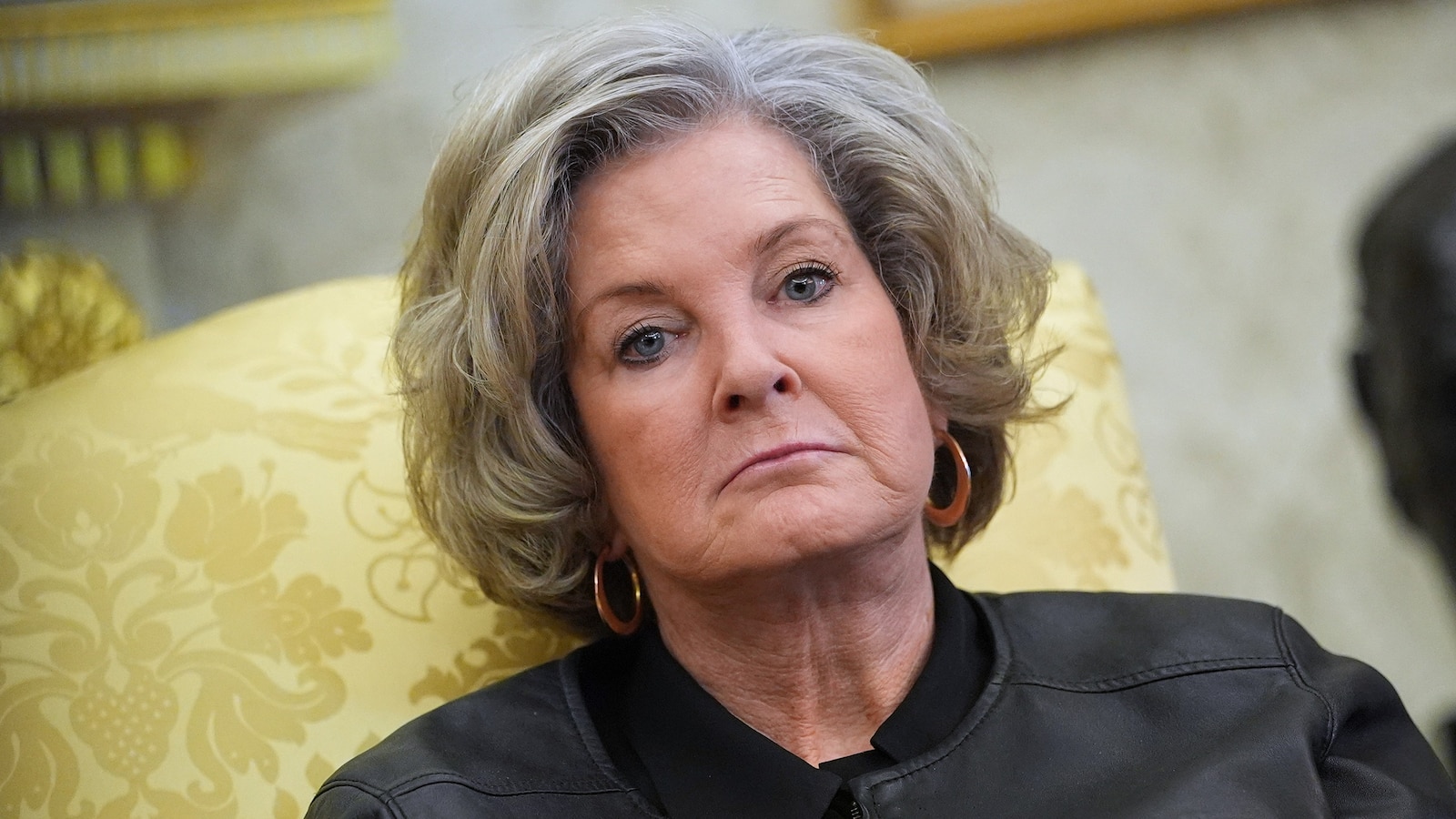
Trump Replaces Chief of Staff With Immigration Hardliner After Midterm Rout
Intra-Party Split Detected
Some conservative hawks had criticized Wiles for moderating Trump's hardline instincts and welcomed her ouster, while others (including Trump himself as recently as October) praised her discipline and effectiveness; her exit also raises concerns among Republicans about doubling down on hardline policies that contributed to midterm losses, versus others celebrating Miller's elevation as a win for the administration's immigration agenda.
Left says
- •Elevating Miller signals Trump is doubling down on the hardline immigration and deportation policies that voters just rejected at the polls, rather than moderating course.
- •Wiles was a stabilizing, disciplined force who privately pushed back against Miller's harshest tactics and the Iran war decision, and her removal eliminates one of the few internal checks on the administration's most extreme impulses.
- •Trump scapegoated Wiles for the midterm losses rather than reckoning with how his own policies, including immigration enforcement and foreign military action, drove the historic Republican defeat.
- •The ousting of the first woman to serve as White House chief of staff in favor of a hardline ideologue reflects a broader marginalization of pragmatic voices within the administration.
Right says
- •Trump is entitled to reshape his senior staff as he sees fit, and elevating a trusted, loyal advisor like Miller after a resignation is a normal exercise of presidential prerogative.
- •Miller's promotion rewards years of unwavering loyalty and effectiveness in implementing the president's core agenda, particularly on border security and deportations.
- •Wiles herself emphasized her resignation was amicable, framing it as a transition to the political operation rather than a firing, and she praised the administration's accomplishments.
- •Calls for Wiles' resignation had been building among conservative commentators who felt her cautious, moderating instincts had failed to translate campaign success into effective governance.
Common Take
High Consensus- Susie Wiles resigned as White House chief of staff on Thursday night and Stephen Miller will officially take over the role on Monday, November 9, 2026.
- The staffing change follows Republicans losing control of both chambers of Congress in the 2026 midterm elections.
- Wiles was Trump's longest-serving chief of staff and the first woman to hold the position, having run his successful 2024 campaign and managed the White House since January 2025.
- Miller previously served as deputy chief of staff and is widely recognized as the architect of the administration's immigration enforcement and deportation policies.
The Arguments
Left argues
Elevating Miller, the architect of the hardline immigration crackdown, immediately after voters delivered a historic rebuke of the GOP signals Trump is doubling down on exactly the policies that cost Republicans Congress, rather than course-correcting.
Right counters
Trump's base and the voters who re-elected him in 2024 specifically wanted aggressive immigration enforcement, and Trump is entitled to interpret the midterm loss as a messaging or execution failure rather than a mandate to abandon core policy commitments.
Right argues
A president has clear authority to reorganize his senior staff, and promoting a loyal, effective deputy who has been central to implementing his signature agenda is a routine and legitimate exercise of that prerogative, not a scandal.
Left counters
The timing and context matter: this isn't a routine reshuffle but the removal of the one senior aide known to push back on the administration's most extreme instincts, replaced by its most zealous enforcer, which raises legitimate concerns about accountability and checks on power.
Left argues
Wiles was a stabilizing, disciplined presence who privately moderated some of the administration's harshest immigration tactics and reportedly opposed the Iran war, and her removal eliminates a crucial internal check just as the policies she questioned are blamed for the election loss.
Right counters
Wiles herself never publicly characterized her departure as a loss of a moderating check; she called it an honor and framed her move to the political operation as amicable, undercutting the narrative that she was purged for resisting hardline policy.
Right argues
Conservative commentators and insiders had been openly calling for Wiles to step aside for weeks, arguing her campaign skills never translated into effective governance, so her departure reflects legitimate, building dissatisfaction rather than an impulsive scapegoating.
Left counters
Those same reports indicate Trump explicitly blamed Wiles for the midterm losses despite insisting as recently as October that there was 'zero chance' of replacing her, suggesting a reactive, face-saving decision rather than a principled response to sustained performance concerns.
Left argues
Removing the first woman ever to serve as White House chief of staff in favor of an ideological hardliner fits a broader pattern of pragmatic, institutionalist voices being marginalized in favor of maximalist loyalists within the administration.
Right counters
Miller's promotion is based on years of demonstrated loyalty and policy effectiveness rather than gender or ideology per se, and reading the move primarily through an identity lens overlooks the straightforward personnel logic of promoting a trusted deputy.
Challenge Questions
These questions target genuine internal contradictions — meant to provoke honest reflection.
Right asks Left
“If Wiles herself publicly described her departure as amicable and an honor, and Trump had insisted just weeks earlier there was 'zero chance' of replacing her, on what basis can her removal be characterized as a purge of a moderating voice rather than a mutual, dignified transition?”
Left asks Right
“If Wiles' cautious approach helped deliver the disciplined 2024 campaign win that conservatives now praise, how do you reconcile blaming her 'moderating instincts' for governing failures with crediting those same instincts for the electoral success that got Trump back into office?”
Outlier Report
Left Fringe
Figures like Keith Olbermann or certain MSNBC commentators frame this as authoritarian consolidation and proof of impending extremism, a view held by maybe 15-20% of the left that goes beyond the mainstream Democratic critique of policy doubling-down.
Right Fringe
Commentators like Caroline Sunshine and some MAGA-aligned pundits who actively campaigned for Wiles' ouster represent a vocal minority (perhaps 20-25% of the right) pushing a purity-test framing that Wiles was insufficiently hardline, a more aggressive stance than most Republicans who simply defend Trump's prerogative.
Noise Assessment
Roughly a third of the visible discourse is performative positioning by partisan commentators and former staffers settling scores, rather than reflecting genuine shifts in broad public sentiment.
Sources (21)
Trump said his top aide Stephen Miller will replace her in the job.
<p>Stephen Miller is replacing Susie Wiles as White House Chief of Staff on Monday, President <a href="https://www.axios.com/politics-policy/donald-trump" target="_blank">Trump</a> wrote in a Friday Truth Social post.</p><p><strong>Why it matters:</strong> Trump is replacing one of his few moderating forces with one of the most maximalist champions of his agenda, a striking signal that the president may double down on the hardline policies that helped Republicans lose control of Congress.</p><hr /><p><strong>What they're saying: </strong>"I am pleased to announce that Mr. Stephen Miller, the current Deputy Chief of Staff of the Trump Administration, and one of my most trusted advisors, will become the Chief of Staff starting Monday, November 9, 2026," Trump <a href="https://truthsocial.com/%40realDonaldTrump/posts/117571000109141399" target="_blank">wrote</a> on Truth Social.</p><ul><li>"Susie Wiles, who has done an outstanding job, will be moving over to the Trump Political Operation. I want to thank her for her service as Chief of Staff."</li></ul><p><strong>Driving the news: </strong>Wiles submitted her resignation on Thursday night. Sources told Axios that her departure was a mutual decision, but driven by Tuesday's midterm losses, for which Trump blamed her.</p><ul><li>Trump did not ask for her resignation, said one informed source who spoke with Wiles, "but he couldn't get it out of his head that she was to blame, not him."</li><li>"Susie could've stuck around, but what's the point?" that person said. "Whether it's right or wrong, Susie knows that serving the president means it's at his pleasure. And if she couldn't change the way he felt, there was no reason to stay."</li><li>For all of Trump's reputation for saying "You're fired" on The Apprentice, the president can be conflict-averse, longtime advisers say, making it difficult for him to actually dismiss people he likes.</li></ul><p><strong>Zoom out: </strong>Wiles is widely viewed as the most powerful person in the White House outside the president himself, and she achieved something few in his orbit could: earning his trust, influencing his decisions and bringing discipline to an administration defined by historic infighting and upheaval.</p><ul><li>She was Trump's longest-serving chief of staff, outlasting all four people who held the position during his first term.</li><li>Her exit also ends the tenure of the first woman ever to hold the powerful position.</li></ul><p><strong>Wiles commanded an</strong> extraordinary level of trust from Trump, often serving as the last person he consulted before making major decisions. </p><ul><li>Her influence stemmed from a relationship with Trump that stretched back to his 2016 campaign when she led his efforts in Florida.</li><li>At Trump's lowest point, after Republicans abandoned him in the wake of the Jan. 6 Capitol riot, Wiles signed on to manage his political efforts in his plot to return.</li><li>She helped engineer his 2024 comeback, running a disciplined campaign that crushed his Republican rivals and returned him to the White House.</li></ul><p><strong>Between the lines: </strong>Wiles' strength was understanding how to navigate Trump rather than trying to control him.</p><ul><li>She avoided public confrontations, offered disagreements privately and sought to carry out Trump's priorities rather than restrain them.</li><li>Wiles bristled at the mere mention of her "managing" Trump, telling others that "no one manages him. No one controls him."</li><li>But her influence had limits. She was a critical voice against the war in Iran and repeatedly questioned the hardline immigration tactics championed by Miller.</li></ul><p><strong>Friction point: </strong>In a grand irony, the very Trump decisions she opposed —the Iran war and the brutality of immigration enforcement — drove Tuesday night's midterm shellacking that led the president to lose confidence in her.</p><p><strong>Catch up quick: </strong>As recently as Oct. 16, Trump emphatically <a href="https://www.c-span.org/clip/white-house-event/president-trump-denies-wanting-to-fire-white-house-chief-of-staff-susie-wiles/5208983" target="_blank">denied</a> reports he was considering replacing Wiles.</p><ul><li>He said there was "zero chance" she would be replaced and declared that she had his "COMPLETE confidence."</li><li>Trump noted at the time that Wiles would stay as long as she wanted, and he praised her toughness in surviving cancer while serving as his staff chief.</li><li>While Wiles underwent chemotherapy, Trump cleared a special room in the White House for her to rest while she worked 12-hour days.</li></ul><p><strong>Context: </strong>Wiles spent decades mastering the art of influencing powerful men while staying out of the spotlight.</p><ul><li>The daughter of famed NFL broadcaster Pat Summerall, Wiles has credited growing up with an alcoholic father with teaching her how to handle larger-than-life personalities.</li><li>In Florida, she became a powerful behind-the-scenes operator for two moderate Republican mayors in Jacksonville, helped elect Rick Scott as governor in 2010, and rescued Ron DeSantis' struggling gubernatorial campaign in 2018. </li></ul><p><em>Editor's note: This is a breaking news story and will be updated. </em></p>
Miller, considered the architect of Trump's hard-line immigration policy, will move into the role on Monday.
President Trump announced Stephen Miller will replace Susie Wiles as his chief of staff, the most significant shakeup of his team since the midterms.
President Trump announced on social media that Stephen Miller will replace Susie Wiles as his chief of staff. Tony Dokoupil anchored this special report.
WASHINGTON — President Donald Trump has removed Susie Wiles from her role as chief of staff, replacing her with his longtime adviser Stephen Miller. A White House official told The Daily Wire on Friday afternoon that Wiles had resigned from her role on Thursday evening. The president announced the news on Friday afternoon before he ...
Susie Wiles served 21 months as Trump's longest-serving chief of staff across both terms, departing after Republicans lost the House and Senate. Trump announced Stephen Miller will take on the role.
President Donald Trump on Friday announced that deputy chief of staff Stephen Miller would replace Susie Wiles as White House chief of staff.
<p>Current Chief of Staff Susie Wiles will transition to the Trump Political Operation.</p> The post <a href="https://legalinsurrection.com/2026/11/stephen-miller-replacing-susie-wiles-as-chief-of-staff/">Stephen Miller Replacing Susie Wiles as Chief of Staff</a> first appeared on <a href="https://legalinsurrection.com">Le·gal In·sur·rec·tion</a>.
President Donald Trump announced Friday that White House chief of staff Susie Wiles will step down this week, with Stephen Miller replacing her. “I am pleased to announce that Mr.
President Donald Trump announced Friday that Stephen Miller will replace Susie Wiles as White House chief of staff starting Monday, elevating a longtime adviser and architect of his immigration agenda while moving Wiles to his political operation.Trump described Miller,...
Trump names Stephen Miller his new White House chief of staff as Susie Wiles moves to the president’s political operation.
The change comes after sweeping Republican losses in the midterm elections.
President Trump's White House chief of staff, Susie Wiles, is stepping down. She is Trump's longest-serving chief of staff and the first woman ever to hold the position.
President Donald Trump announced that his chief of staff Susie Wiles is leaving the Trump administration. She will be replaced by Deputy Chief of Staff and Homeland Security Advisor Stephen Miller. Miller has been a leader on Trump’s successful crackdown on illegal immigration. Wiles resigned last night, a White House official told the Daily Signal....
<p>US president confirms Susie Wiles, current chief of staff and first woman to serve in the role, will step down</p><ul><li><p><a href="https://www.theguardian.com/us-news/live/2026/nov/06/us-midterm-elections-2026-democrats-blue-wave-congress-latest-news-updates">US politics live – latest updates</a></p></li></ul><p>Stephen Miller, Donald Trump’s most controversial aide, and the architect of his sweeping immigration crackdown, will become his new White House chief of staff.</p><p>The US president announced the extraordinary appointment on Friday, confirming that Susie Wiles – his current chief of staff, and the first woman to serve in the role – would be stepping down on Monday.</p> <a href="https://www.theguardian.com/us-news/2026/nov/06/stephen-miller-chief-of-staff-trump">Continue reading...</a>
President Trump announced Friday that his chief of staff, Susie Wiles, is leaving the White House and longtime adviser Stephen Miller will take her place. The move comes after Republicans suffered sweeping defeats in the midterms, losing dozens of House seats and control of the Senate. “I am pleased to announce that Mr. Stephen Miller,…
The staffing shake-up comes as Trump remains angry over Tuesday’s midterm losses, and it means his policy agenda will probably move further to the right.
Susie Wiles is leaving as White House chief of staff after staggering Republican losses in the midterm election and will be replaced by Stephen Miller, a key adviser to Mr. Trump who has helped shape the administration's immigration crackdown.