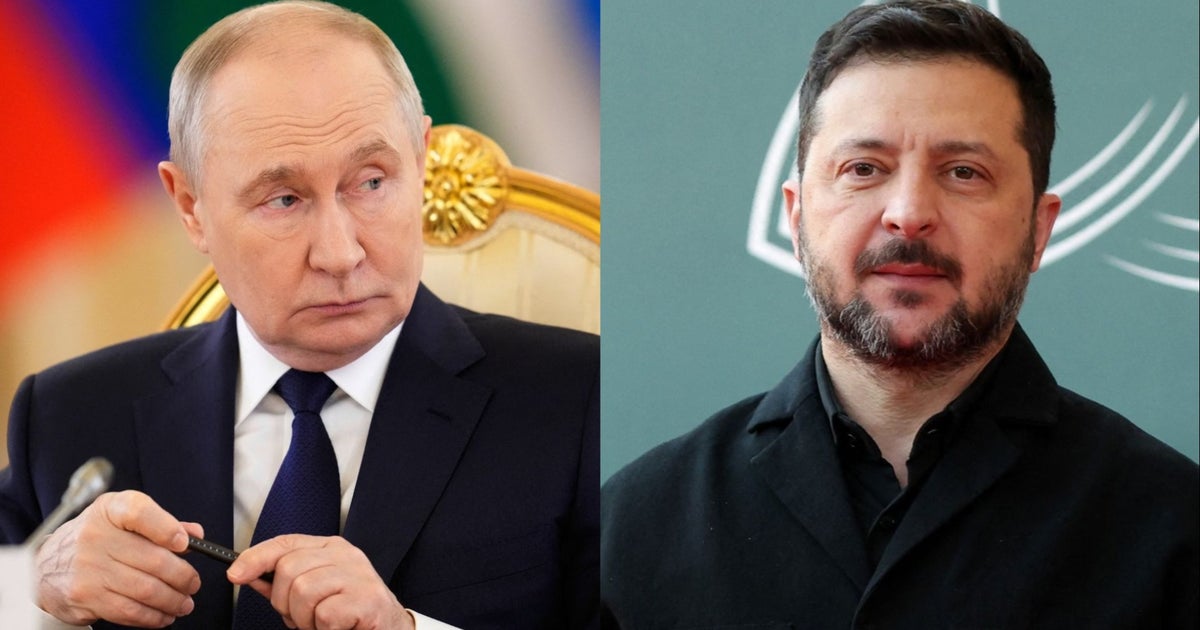
US Asks Russia to Draft Europe Security Deal, Alarming Allies
Left says
- •Asking Russia to draft its own proposal for European security hands the Kremlin leverage it has sought since Putin's 2021 letter demanding NATO rollback, legitimizing grievances used to justify the invasion.
- •European governments were not full participants in the Abu Dhabi talks and fear a US-Russia deal over their heads that could constrain NATO's future posture without their consent.
- •Negotiating a Europe-Russia security architecture before the war even ends rewards Moscow's aggression and risks normalizing the idea that Europe's security arrangements are subject to Russian veto.
- •Putin adviser Vladimir Medinsky's dismissal of European leaders as engaged in 'collective deception' shows Russia's distrust toward the very allies the US hopes to bring into talks, undercutting hopes for good-faith cooperation.
Right says
- •Ending a nearly five-year war that has killed and displaced enormous numbers of people justifies creative diplomacy, including asking Russia to put concrete de-escalation steps on paper rather than just demands.
- •The US has been explicit that any European security arrangement would come only after a Ukraine peace deal and would not replace or weaken NATO, addressing the core fear driving criticism.
- •Progress such as the largest prisoner exchange of the war and a path toward a Trump-Putin-Zelensky summit shows the engagement strategy is yielding tangible humanitarian results.
- •The US has also pushed Russia to accept European representatives at the negotiating table, showing Washington is trying to bring allies in rather than exclude them.
Common Take
High Consensus- Russia and Ukraine agreed to what both sides describe as the largest prisoner exchange since the war began.
- No breakthrough was reached on a broader peace agreement or on territorial disputes in Donbas during the Abu Dhabi talks.
- Both the US and European officials agree that any final European security architecture decisions should only be implemented after the war in Ukraine ends.
- The talks marked the first direct Russia-Ukraine engagement with US mediators present since February, representing renewed momentum after a long pause.
The Arguments
Left argues
Asking Russia to draft its own European security proposal hands Moscow leverage it has sought since Putin's 2021 letter demanding NATO rollback, effectively legitimizing grievances the Kremlin used to justify invading Ukraine.
Right counters
The US has explicitly said any security arrangement would only take effect after a Ukraine peace deal and would not replace or weaken NATO, so drafting a proposal is a diagnostic exercise, not a concession of leverage.
Right argues
Ending a nearly five-year war that has killed and displaced enormous numbers of people justifies unconventional diplomacy, including asking Russia to commit its de-escalation steps to paper rather than just restating demands.
Left counters
Unconventional diplomacy that excludes the parties most affected by the outcome—European states whose security architecture is being negotiated—risks trading short-term progress for a deal that collapses once allies see its terms.
Left argues
European governments were not full participants in the Abu Dhabi talks and fear a US-Russia deal negotiated over their heads that could constrain NATO's future posture without their consent.
Right counters
The US pushed Russia to accept European representatives at the next round of talks and briefed senior diplomats from Germany, the UK, France, Italy, the EU and NATO before and after each session, showing a genuine effort at inclusion rather than exclusion.
Right argues
Tangible outcomes like the largest prisoner exchange of the war demonstrate that sustained US engagement with both sides is producing real humanitarian results, not just abstract diplomatic theater.
Left counters
A prisoner exchange, however welcome, is a separate achievement from the far riskier project of negotiating Europe's long-term security architecture with the aggressor state, and conflating the two overstates the case for the broader strategy.
Left argues
Putin adviser Vladimir Medinsky's dismissal of European leaders as engaged in 'collective deception' reveals the deep distrust Russia holds toward the very allies the US hopes to bring into talks, undermining any expectation of good-faith cooperation.
Right counters
Medinsky's rhetoric is consistent with Russia's public negotiating posture throughout the war, yet Russian negotiators simultaneously indicated willingness to pursue a broader security deal with Europe, suggesting posturing and substantive flexibility can coexist.
Challenge Questions
These questions target genuine internal contradictions — meant to provoke honest reflection.
Right asks Left
“If the US has publicly committed that any Russia-Europe security arrangement only takes effect after a war-ending deal and won't weaken NATO, what specific evidence would it take to convince you this isn't simply a backdoor concession to Moscow?”
Left asks Right
“If ending the war justifies asking Russia to draft its own security proposal, does that same logic imply Washington should also be willing to let Russia's draft define the terms of debate even if European allies ultimately reject it outright?”
Outlier Report
Left Fringe
Figures like Rep. Jamie Raskin or commentators at The Atlantic and some national security hawks (e.g., Bill Kristol-aligned never-Trumpers) who argue this amounts to a Yalta-style betrayal of Europe; roughly 15-20% of the left holds this more alarmist framing versus a more measured majority.
Right Fringe
Pro-Trump commentators like Tucker Carlson and some America First voices who argue the US should fully disengage from Europe's security entirely and see even this diplomacy as excessive; this represents maybe 10-15% of the right, while most conservatives support Trump's negotiators without endorsing full Russian sympathies.
Sources (9)
Russia and Ukraine have agreed to the "largest prisoner exchange" of the war at their first US-brokered talks since February but made little progress towards a broader peace agreement. Both sides sent senior delegations to the two-day talks, led by Donald Trump's envoys Jared Kushner and Steve Witkoff, in an effort to find a solution to end the nearly-five-year war.
Trilateral talks in Abu Dhabi between Russia, Ukraine and the US aimed at ending the war in Ukraine have concluded after a second day. Although the American side said they saw "some openings", there was no hint of any breakthroughs to end the nearly five year-long war sparked by Russia's invasion. However, both Moscow and Kyiv confirmed that a large-scale prisoner of war exchange was in the works and could be carried out soon.
Russia and Ukraine agreed to a large prisoner exchange as the second day of U.S.-brokered talks ended in Abu Dhabi, United Arab Emirates, on Nov. 11, officials said, with American negotiators preparing to meet the two countries' presidents to advance efforts to end the war. Calling the discussions "pretty tough" and "very substantive," U.S. envoy Jared Kushner told reporters that the sides touched on all relevant issues in the long-running conflict.
President Donald Trump's son-in-law Jared Kushner and US envoy Steve Witkoff landed in Moscow on Thursday ahead of talks with Russian President Vladimir Putin aimed at ending the Ukraine war. The pair met with Russian presidential special envoy Kirill Dmitriev on their arrival at Vnukovo Airport.
<p>The U.S. has asked Russia to submit a new proposal for a future security agreement with Europe that includes Russian steps to ease tension with the continent, two sources with knowledge of the matter said.</p><p><strong>Why it matters: </strong>For years, Russia has sought a European security deal that limits NATO expansion and scales back its military presence in Eastern Europe. The U.S. has rejected those demands in the past, but now appears open to them in some form as part of a <a href="https://www.axios.com/2026/11/09/ukraine-russia-zelensky-putin-peace-abu-dhabi" target="_blank">broader agreement</a> to end the war in Ukraine.</p><hr /><ul><li>But many European governments are deeply suspicious of the administration's approach.</li></ul><p><strong>State of play: </strong>President Trump's envoys Jared Kushner and Steve Witkoff will meet with Russian President Vladimir Putin in Moscow on Thursday to reiterate the request. They also want Putin to allow European representatives to join the next round of Russia-Ukraine peace talks, a U.S. official said. </p><ul><li>From Moscow, Kushner and Witkoff are expected to travel to Dublin to meet with Ukrainian President Volodymyr Zelensky on Thursday night. </li></ul><p><strong>Catch up quick:</strong> The talks on Tuesday and Wednesday were the first time Ukrainian and Russian officials met with U.S. mediators present since February, when they were suspended due to the war in Iran.</p><ul><li>In recent weeks, Witkoff and Kushner met with both Putin and Zelensky, creating a bit of momentum.</li><li>Putin agreed to resume peace talks and release U.S. citizen Stephen Hubbard, who was detained by Russia in 2022<strong>. </strong>Together with first lady Melania Trump and her team, Witkoff and Kushner also brokered a humanitarian ceasefire in the city of Oleshky.</li></ul><p><strong>Driving the news:</strong> The talks in Abu Dhabi started on Tuesday with Witkoff, Kushner and commander of the U.S. European Command Gen. Alexus Grynkewich mediating between the Russians and the Ukrainians. </p><ul><li>The parties agreed to a prisoner exchange deal that Kushner and Ukrainian negotiator David Arakhamia said could be the biggest since the war began.</li><li>U.S. and Ukrainian officials said the exact number of prisoners to be released will be decided during meetings with Putin and Zelensky on Thursday. </li><li>Before and after the talks, the U.S. and Ukrainian negotiating teams briefed a delegation of senior diplomats from Germany, the U.K., France, Italy, the EU and NATO.</li></ul><p><strong>Behind the scenes:</strong> The meetings between the Russians and the Ukrainians on Tuesday were tense and at times emotional, with both sides airing grievances after nine months of not talking directly, according to a source in the room.</p><ul><li>Kushner and Witkoff tried to lower the temperature, telling Russian and Ukrainian negotiators that the goal is to end this round of talks with options for the leaders on both sides. </li><li>Eventually, after each party made its case, the discussion became more constructive, the source said. </li><li>"We had pretty tough discussions," Kushner said at a press conference after the talks concluded on Wednesday. </li><li>"The Russians came with strict directives. It was very hard to soften it, but it ended productively," Arakhamia said. </li></ul><p><strong>Zoom in: </strong>The U.S. proposal to secure a deal on a new Europe-Russia security architecture as part of an agreement to end the war in Ukraine was a key focus of the Abu Dhabi talks.</p><ul><li>Russian negotiators said Putin launched the invasion of Ukraine because then-President Biden did not reply to his 2021 letter laying out his security concerns, two sources with knowledge of the talks said. </li><li>According to one of the sources, Kushner and Witkoff told the Russians that the world has changed a lot since 2021.</li><li>They proposed that Russia draft a new proposal that includes its security concerns and demands, but also lays out what "symmetrical steps" it's willing to take to de-escalate and reassure Europe that it will not attack in the future. </li><li>Kushner and Witkoff also told the Russians that in order to seriously discuss security issues in Europe, they need to agree to allow European representatives to participate in future peace talks. </li><li>"We told the Russians, they have their desires and fears, but they have to provide different de-escalation and different proposals as well, if they want Europe to be able to receive those proposals in a good way," Kushner said at the press conference. </li></ul><p><strong>The other side:</strong> So far, Russia has been unwilling to allow Europeans to be part of peace talks with Ukraine. </p><ul><li>"As for the leadership of a number of European countries, they are essentially engaged in a collective deception of the Ukrainian people and contributing to the mass deaths of civilians," Putin adviser Vladimir Medinsky, who headed the Russian delegation, said at a press conference after the talks. "Therefore, I don't understand what can be discussed with them." </li><li>Still,<strong> </strong>Medinsky said that Russia wants to reach a broader security deal with Europe as part of an agreement to end the war. </li><li>"In Ukraine, an abscess has simply burst. The entire body needs to be treated — a Band-Aid won't do the trick," he said.</li></ul><p><strong>What to watch:</strong> The Trump administration wants to negotiate a new Europe-Russia security architecture and a Russia-Ukraine peace deal simultaneously. But the implementation of a security arrangement would only<strong> </strong>happen after a deal to end the war is reached, according to a source familiar with the White House's thinking. </p><ul><li>The president of the European Commission, Ursula von der Leyen, said before the talks in Abu Dhabi that Europe will discuss a new security architecture only after the war in Ukraine ends.</li><li>But two sources with knowledge said European officials who were in Abu Dhabi this week agreed to engage on both tracks simultaneously, while stressing that final decisions on European security architecture would be made only after the war in Ukraine ends. </li><li>The U.S. hopes giving European representatives a seat at the peace talks will make their governments more willing to discuss and agree on a broader security agreement before the war ends.</li><li>"Zelensky won't agree to a deal until he knows what happens next regarding security guarantees and Putin wants to know this, too. This is why the security issue is so important," the source said.</li><li>The source added that the U.S. made it clear to European countries that it would not agree to a security deal with Russia unless Europe and Ukraine are on board. The U.S. also wouldn't give Russia a veto over Europe's security considerations, the source said.</li></ul><p><strong>The bottom line:</strong> Security will be a key issue at a summit of European leaders in Dublin later this week. European diplomats said the idea of a Russia-Europe security arrangement still faces a lot of resistance and unanswered questions. </p>
<p>The White House is "cautiously optimistic" as <a href="https://www.axios.com/2026/11/03/us-russia-ukraine-peace-talks-uae-trump-witkoff-kushner" target="_blank">peace talks</a> between Russia and Ukraine resume in Abu Dhabi this week, U.S. officials said on Monday. </p><p><strong>Why it matters:</strong> The talks on Tuesday and Wednesday will be the first time the parties have met with U.S. mediators present since February, when they were suspended due to the war in Iran.</p><hr /><ul><li>White House envoys Steve Witkoff and Jared Kushner have worked for weeks to convince Russian President Vladimir Putin to restart negotiations. President Trump and his team hope Putin will be more willing to compromise after the U.S. lifted sanctions on <a href="https://www.axios.com/2026/10/13/trump-russian-diesel-deal-betrayal-bipartisan-letter" target="_self">Russian diesel sales</a> and took other steps welcomed by Moscow. </li><li>"The relations we have built with Putin will be instrumental in these negotiations," a U.S. official said. </li><li>After the meetings in Abu Dhabi, Witkoff and Kushner may travel to Moscow and Kyiv to speak directly with Putin and Zelensky, a U.S. official said. </li></ul><p><strong>Yes, but:</strong> The parties remain far apart, particularly over potential territorial concessions by Ukraine. Russia's escalating attacks on Ukrainian cities and Putin's refusal to agree to a ceasefire have cast doubt on prospects for meaningful progress.</p><p><strong>Behind the scenes:</strong> Over the last two weeks, Witkoff and Kushner had daily phone calls — sometimes multiple times a day — with Russian and Ukrainian officials to prepare for the upcoming talks, U.S. officials said. </p><p><strong>What they're saying:</strong> U.S. officials who briefed reporters on Monday struck a positive tone despite skepticism in Europe and Ukraine about Putin's willingness to end the war.</p><ul><li>"There is a shot to make significant progress towards a deal and to try and bridge the gaps," a U.S. official said. "Getting the parties back to the table wasn't easy to do and we see promising signs as mediators."</li><li>The official added that Witkoff and Kushner want to use the talks to "crystallize" the decisions Putin and Zelensky will have to make.</li></ul><p><strong>Driving the news:</strong> The talks in Abu Dhabi will focus on two tracks: </p><ul><li>A military working group led by the commander of U.S. European command, Gen. Alexus Grynkewich, will discuss post-war ceasefire monitoring and security arrangements. The working group made significant progress on this front during the last round of talks in February. </li><li>A political working group that focuses on the most sensitive topic: territorial demands. There was no progress on this issue in February. </li></ul><p><strong>State of play:</strong> The two sides haven't budged publicly. Russia is demanding control over the entire region of Donbas, while Ukraine insists that territory be divided based on current front lines. </p><ul><li>In private, though, U.S. officials say that both sides "have shown a little bit of flexibility" on the territorial issue in recent weeks. </li><li>They say an agreement on territory won't be possible until security guarantees are reached. </li></ul><p><strong>The big picture:</strong> Witkoff and Kushner invited senior officials from NATO, the EU and four major European powers — the UK, France, Germany and Italy — to Abu Dhabi to hold separate discussions on the sidelines of the Russia-Ukraine negotiations. </p><ul><li>Ukraine's European allies will play a key role in any post-war security arrangements. </li><li>The U.S. also wants to start a third track of negotiations between European countries and Russia to create new ways of easing tensions and avoiding conflict. </li><li>But many European countries are highly suspicious of the idea. They believe it endorses a Russian narrative that Europe is a security threat to Moscow and worry it will result in weakening NATO. </li><li>U.S. officials stress that the proposed Europe-Russia security initiative would not replace or diminish NATO and the central role it plays in protecting Europe. </li><li>But a new security agreement between Europe and Russia would help end the war in Ukraine, they say. <strong> </strong></li><li>A U.S. official said Witkoff and Kushner hope Russians will agree to include European representatives in the next round of peace talks after Abu Dhabi. </li></ul><p><strong>What to watch:</strong> Ukrainian officials say they have three priorities for the talks: </p><ul><li>Clinching a deal to de-escalate tensions on the Black Sea and allow grain exports. </li><li>Reaching an agreement to stop attacks on Ukrainian power plants and Russian oil refineries before the winter. </li><li>Organizing a trilateral summit between Trump, Putin and Zelensky, possibly during the G20 summit in Miami next month. </li></ul>
U.S. special envoys Steve Witkoff and Jared Kushner held separate talks with Russian President Vladimir Putin and Ukrainian President Volodymyr Zelenskyy. CBS News' Aidan Stretch has more.
U.S. special envoys Steve Witkoff and Jared Kushner are set to meet with Ukrainian President Volodymyr Zelensky this week amid reports the eastern European country’s access to Starshield satellite communications has been restricted for a second time. “I think progress was made. I think it was made earlier today,” Witkoff told CNN after meeting with…
U.S. envoy Jared Kushner announced Thursday that Russia has agreed to European participation in direct negotiations to end the Russia-Ukraine war, after three days of talks with delegations from both sides of the conflict. In the past, Russian leadership has opposed European diplomatic involvement, citing Europe’s financial support for Ukraine in the ongoing war effort. …