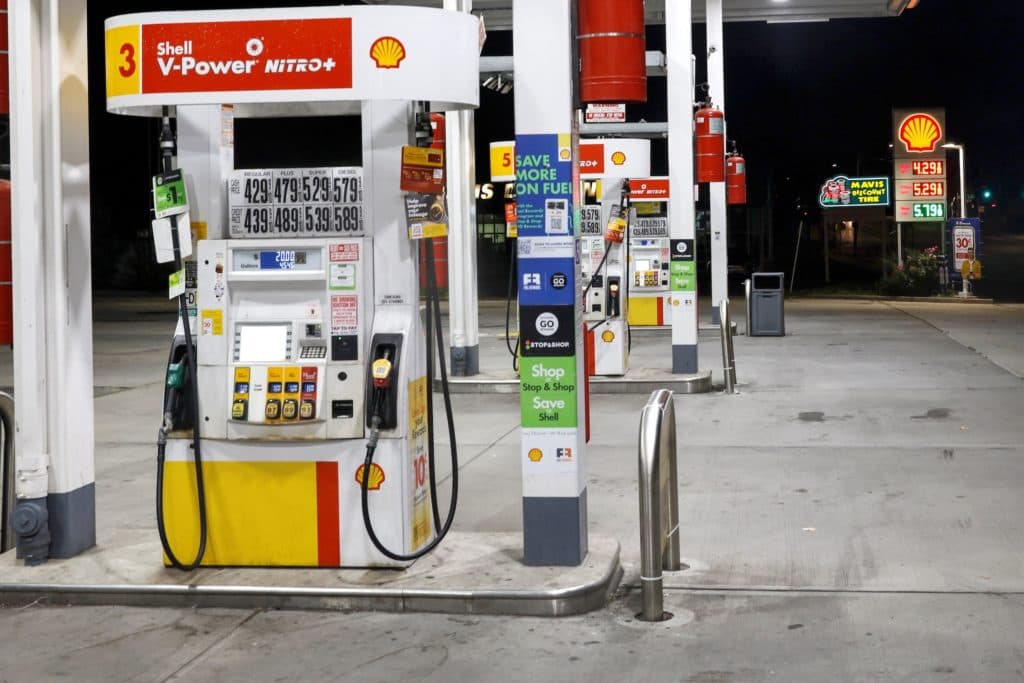
 Gas station pumps display diesel and fuel prices at night.
Diesel Prices Hit Record Highs, Straining Farmers Ahead of Midterms
Intra-Party Split Detected
Farm-state Republicans (e.g., Rep. Ashley Hinson) are publicly pressuring the Trump administration for immediate action—like pausing diesel exports and suspending the gas tax—breaking from the administration's more cautious stance tying prices to refining capacity and the Iran conflict, and creating political tension within the GOP ahead of the midterms.
Left says
- •The war in Iran, a war of choice, is a direct driver of the diesel spike, with one estimate putting the cost to U.S. consumers at over $100 billion in higher energy prices.
- •Farmers, food banks, and small businesses are absorbing devastating costs that translate directly into fewer meals delivered and higher financial strain on family farms and Black farmers already at risk.
- •The administration's deregulatory push and refining capacity excuses deflect responsibility for a crisis tied to its own foreign policy decisions.
- •Proposed fixes like a diesel export ban risk compounding the problem according to experts, suggesting the administration lacks a coherent plan to protect consumers.
Right says
- •Farm-state Republicans are taking decisive action, demanding Congress return to session to pause diesel exports, suspend the gas tax, and create direct relief programs for farmers and truckers.
- •The administration frames the pain as a necessary short-term cost of preventing Iran from acquiring nuclear weapons, a long-term security goal worth the sacrifice.
- •Officials are pursuing concrete solutions, including invoking the Defense Production Act and pushing infrastructure investment to expand domestic refining capacity.
- •Republican governors like Louisiana's Jeff Landry are stepping in with emergency declarations to deliver immediate relief to farmers hurt by the price spike.
Common Take
High Consensus- Diesel prices have hit unprecedented levels, surging from around $3.69 a year ago to over $6.50 a gallon.
- Farmers, ranchers, truckers, and food banks are facing real and substantial financial strain from the price increase.
- Instability tied to the Iran conflict and strained global refining capacity are recognized as key factors behind the surge.
- There is broad agreement that the situation demands some form of government response, whether through export policy, tax relief, or emergency declarations.
The Arguments
Left argues
The war in Iran is a war of choice that has directly driven diesel to record highs, costing U.S. consumers an estimated $100 billion, and the administration should own that consequence rather than blame refining capacity.
Right counters
The administration argues the long-term security benefit of preventing Iran from acquiring nuclear weapons justifies short-term economic pain, and points to genuine structural refining constraints in Russia and China that predate and compound the current crisis.
Right argues
Farm-state Republicans like Rep. Ashley Hinson are pushing concrete, immediate legislative fixes—pausing diesel exports, suspending the gas tax, and creating farmer relief programs—showing the GOP is responding decisively to constituents' pain.
Left counters
Experts warn that a diesel export ban would likely compound the problem rather than solve it, suggesting these proposals are more about political messaging ahead of midterms than a coherent economic strategy.
Right argues
Officials are pursuing structural solutions like invoking the Defense Production Act and expanding domestic refining infrastructure, which could address the root capacity constraints driving prices up globally.
Left counters
These are long-term fixes that do nothing for farmers and food banks suffering right now, and they don't address the immediate cause—an ongoing war the administration chose to wage and could choose to end.
Left argues
Vulnerable populations bear the sharpest costs: the Atlanta Community Food Bank alone loses the equivalent of 122,000 meals to diesel costs, and Black farmers face disproportionate risk, showing the human toll behind the price index.
Right counters
Republican governors like Jeff Landry are already stepping in with emergency declarations to deliver immediate, targeted relief, demonstrating that state-level action can address these specific hardships faster than waiting on federal policy or war's end.
Left argues
The administration's shifting explanations—first floating an export ban, then dismissing it, while blaming refining capacity abroad—suggest a lack of coherent strategy and an attempt to deflect blame from a war of its own choosing.
Right counters
Energy adviser Jarrod Agen has been consistent that affordability is the president's top priority and that multiple tools, from crude flow to refining investment, are being pursued simultaneously because the crisis has multiple, genuinely complex causes.
Challenge Questions
These questions target genuine internal contradictions — meant to provoke honest reflection.
Right asks Left
“If diesel export bans are widely criticized by experts as likely to worsen the problem, why do many on the left implicitly credit Democratic-aligned farm advocates for demanding the same policy that Republican lawmakers are criticized for proposing?”
Left asks Right
“If the administration insists the Iran conflict's economic pain is a worthwhile long-term tradeoff for national security, why are Republican officials simultaneously scrambling for emergency domestic relief measures as if the costs are an unexpected crisis rather than an accepted price of policy?”
Outlier Report
Left Fringe
Figures like some progressive commentators (e.g., voices at The Intercept or Jacobin-aligned writers) who frame this purely as anti-war messaging and downplay farmer relief efforts as insufficient theater; this represents a small slice, maybe 10-15% of the left, most of whom focus more on cost-of-living framing than war criticism.
Right Fringe
Some MAGA-aligned commentators and figures close to Trump (e.g., certain America First media voices) who fully embrace the 'necessary sacrifice for Iran deterrence' framing without pushing for relief, differing from farm-state Republicans like Ashley Hinson who are demanding immediate government intervention; this hardline stance likely represents 15-20% of the right, with most Republicans, especially those in agricultural states, prioritizing relief over ideological consistency.
Noise Assessment
A significant portion of the discourse, especially the framing around Iran war costs and Defense Production Act invocations, is elevated by political messaging ahead of midterms rather than reflecting how most ordinary Americans process this issue, which is largely through the lens of 'gas and food costs are too high' rather than detailed geopolitical or regulatory debates.
Sources (6)
The surge in diesel prices this year is putting a financial squeeze on schools, farms and small businesses around the U.S.
Rising diesel prices are proving to be a particular problem for Republicans as surging energy costs sour the economic mood just 45 days out from the midterms.
Farm state Republicans are increasingly pressing the Trump administration and Congress to take action to bring down diesel prices, underscoring how rising costs have become a political liability for the GOP heading into the November midterms. Rep. Ashley Hinson, the Iowa GOP Senate candidate, on Tuesday demanded action, calling for the House to return to session "immediately" to pause diesel exports, suspend the gas tax and create a diesel relief program for farmers and truckers.
<p>The affordability of gasoline remains "the top issue that the president looks at," <a href="https://www.axios.com/politics-policy/donald-trump" target="_blank">Trump</a> energy adviser <a href="https://www.axios.com/2025/09/22/trump-administration-energy-dominance-russia" target="_blank">Jarrod Agen</a> said at an Axios House event Tuesday.</p><p><strong>Why it matters: </strong>The Trump administration is championing <a href="https://www.axios.com/energy-climate" target="_blank">energy</a> savings from its <a href="https://www.epa.gov/newsreleases/what-they-are-saying-huge-support-across-america-after-trump-epa-delivers-largest" target="_blank">deregulatory</a> push as overseas conflicts, including the Iran war, rattle oil markets, driving up <a href="https://www.axios.com/2026/04/19/gas-prices-below-3-dollars-2027-midterm-iran" target="_blank">fuel costs</a> and threatening an <a href="https://www.axios.com/2026/09/09/heating-oil-diesel-price-surge" target="_blank">expensive winter</a> for millions of households.</p><hr /><ul><li>Tuesday's national average gas price was roughly $4.48, up from around $3.18 a year ago, per <a href="https://gasprices.aaa.com/" target="_blank">AAA</a>.</li></ul><p>Driving the news: Asked by Axios' Amy Harder if the president takes responsibility for the higher prices Americans are paying, Agen said that the president's "long-term goal is preventing Iran" from having "nuclear capabilities."</p><ul><li>"He says the long term is worth it to stop them from having a nuclear weapon."</li></ul><p><strong>Flashback: </strong>Asked last year what a successful term would look like once the administration's time in Washington is up, Agen told Axios' Mike Allen that the one factor the president always looks at is the price at the pump.</p><ul><li>"We want to make sure that U.S. consumers are paying not high prices on their electricity bills and gas," he said. "That is the key that ... drives us every single day."</li></ul><p><strong>Zoom in: </strong>Pressed on those remarks, Agen told Harder it's "still the top issue the president looks at" and attributed the price pain to strained refining capacity.</p><ul><li>"We've got crude flowing," he said, though the full picture of how much oil is leaving the Strait of Hormuz <a href="https://www.axios.com/2026/09/04/trump-strait-hormuz-oil-claims-iran" target="_blank">isn't yet entirely clear</a>. </li><li>"More crude is on the market, and so that's great. But refining capacity is the issue we're trying to solve, both domestically and then globally," Agen said. "If you look at refining capacity, Russia, for example, it's down 30, 40% China is not at their capacity."</li><li>He floated the possibility of relief via the Defense Production Act, which Trump <a href="https://www.axios.com/2026/04/20/trump-energy-fuel-cold-war-defense-law" target="_blank">already invoked</a>, and infrastructure projects "to attack the refining issue."</li></ul><p><strong>Catch up quick: </strong>The national average diesel price <a href="https://www.axios.com/2026/09/04/diesel-prices-record-iran-truckers-farmers" target="_blank">shattered its record</a> earlier this month and then topped $6 a gallon for the first time, threatening <a href="https://www.axios.com/2026/09/11/diesel-fuel-prices-food-transportation" target="_blank">higher inflation</a> and household costs amid already elevated fuel prices.</p><ul><li><a href="https://www.axios.com/2026/09/07/iran-gas-prices-diesel-100-billion" target="_blank">An estimate</a> from Brown University found that the war in Iran has cost U.S. consumers more than $100 billion in higher energy prices, adding to the administration's affordability challenges ahead of the midterms as Republicans fight to retain control of Congress.</li><li>Disruptions in the Strait of Hormuz and other compounding crises have put American refineries operating near <a href="https://www.reuters.com/commentary/reuters-open-interest/us-refiners-face-historic-stress-test-global-crisis-looms-2026-08-24/" target="_blank">maximum capacity</a> to an unprecedented test and <a href="https://www.axios.com/2026/09/16/diesel-export-ban-problem-gas-prices" target="_blank">raised questions</a> about whether the administration would place an export ban on American diesel.</li></ul><p><strong>What he's saying: </strong>Trump addressed the General Assembly gathering Tuesday, <a href="https://www.axios.com/2026/09/22/trump-speech-un-general-assembly-iran-annihilate" target="_blank">teling fellow world leaders</a> that he "gave absolutely no credence and will not give credence to the election when it comes to Iran."</p><p><strong>Go deeper: </strong><a href="https://www.axios.com/2026/07/19/gas-prices-iran-war-trump-election" target="_blank">Gas prices are rising again — and so is GOP grief in the midterms</a></p>
Farmers are speaking out on the “national farm crisis,” with one claiming their monthly fuel bill jumped by $75,000 as a result of the record prices.
A rapid surge in the price of diesel fuel is straining businesses and threatening to raise costs across the economy. It's also putting pressure on President Trump to bring relief at the pump, including through a diesel export ban that's been pushed by some Republican lawmakers ahead of November's midterm elections. William Brangham reports.