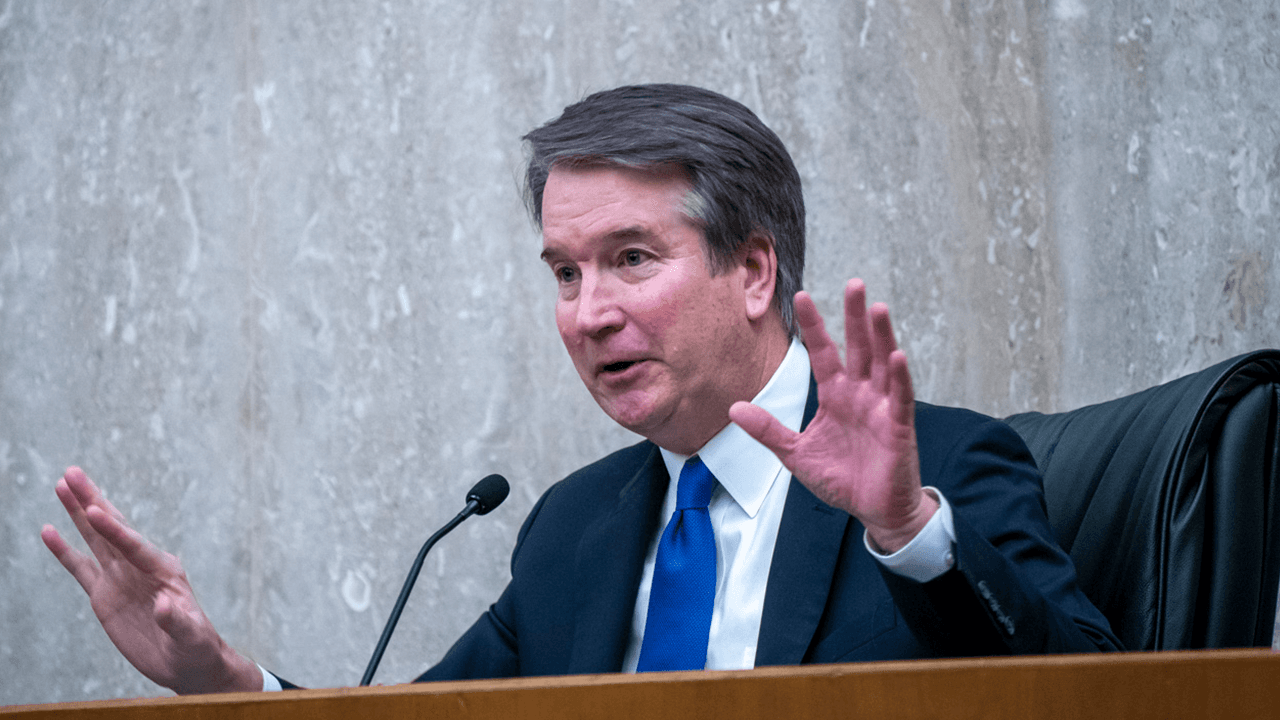
 Justice Brett Kavanaugh gestures while speaking during a Supreme Court proceeding.
Supreme Court Blocks Trump Mail Ballot Rule; Alito, Thomas Dissent
Intra-Party Split Detected
Most conservative-leaning justices (Roberts, Gorsuch, Barrett, Kavanaugh) joined the majority blocking Trump's mail voting rule, while only Alito and Thomas dissented in favor of letting it proceed; Trump publicly attacked his own appointees for ruling against him.
Left says
- •The rule would have forced states to overhaul mail voting systems in the middle of an ongoing election, with ballots already mailed to voters in some states before the ruling.
- •Election officials from both parties warned the rule was impossible to implement in time and would cause mistakes, delays, and confusion, potentially blocking eligible citizens from voting.
- •The 7-2 ruling shows a broad bipartisan-appointed majority, including Trump-nominated justices Gorsuch, Kavanaugh, and Barrett, rejected the administration's attempt to reshape election rules unilaterally.
- •Trump's furious reaction, calling his own appointees a 'shell of their original selves,' is viewed as an attack on judicial independence when courts don't rule in his favor.
Right says
- •Justice Alito's dissent emphasizes the legitimate government interest in detecting election fraud through measures like individualized ballot barcodes and voter list submissions.
- •Kavanaugh's concurrence leaves the door open, stating there is 'at least a fair prospect' the USPS rule falls within the agency's statutory authority, meaning the policy could still be implemented for future elections like 2028.
- •The dissent argues that any implementation difficulties were caused by the timing of lawsuits and lower court rulings, not by flaws in the rule itself, with USPS retaining broad authority over mail delivery.
- •Trump views the ruling as part of a pattern of judicial rulings against his administration's initiatives, including on tariffs and birthright citizenship, which he sees as inconsistent with the justices he appointed.
Common Take
High Consensus- The Supreme Court ruled 7-2 to keep the lower court's injunction in place, blocking the USPS mail ballot rule for the 2026 midterms.
- Justices Alito and Thomas dissented, while Kavanaugh wrote a separate concurrence agreeing with the majority's outcome but suggesting the rule might have merit in the future.
- The rule would have required USPS barcodes on mail ballots and advance submission of voter lists, with noncompliant ballots subject to non-delivery.
- The ruling does not resolve whether the rule is legal on the merits, leaving the door open for future litigation and potential implementation ahead of the 2028 election.
The Arguments
Left argues
Implementing the rule weeks before the election—after ballots had already been mailed in states like North Carolina—would have caused mistakes, delays, and confusion, potentially disenfranchising eligible voters, according to election officials from both parties.
Right counters
Alito's dissent argues the timing crunch was caused by the states' lawsuits and lower courts' delayed rulings, not by any inherent flaw in the rule itself, so the administration shouldn't be penalized for litigation timing it didn't control.
Right argues
The rule addressed a legitimate government interest in election integrity by enabling better fraud detection through individualized ballot barcodes and advance voter list submissions, and USPS retains broad statutory authority over mail delivery.
Left counters
Election officials from both parties said their existing systems were already secure and accurate, and the proposed fraud-detection measures were an unfunded, untested overreach that no election office had budgeted for.
Left argues
The lopsided 7-2 ruling, including three Trump-appointed justices, demonstrates that even a conservative-majority Court saw this as executive overreach into an area the Constitution reserves largely to the states, not a partisan rebuke.
Right counters
Kavanaugh's concurrence explicitly left the door open, stating there is 'at least a fair prospect' the rule is within USPS's statutory authority—meaning the ruling was about timing and implementation, not a rejection of the rule's legality or merits.
Right argues
Kavanaugh's concurrence signals the policy could still be validly implemented in future elections like 2028, meaning this is a temporary procedural setback rather than a substantive defeat for the administration's election-integrity agenda.
Left counters
Regardless of future prospects, the practical effect right now is that the rule is blocked for the 2026 midterms, and the pattern of courts repeatedly rejecting the administration's rushed, unilateral attempts to reshape policy—on tariffs, birthright citizenship, and now mail ballots—suggests a broader problem with how these initiatives are being pursued.
Left argues
Trump's attacks on his own appointees as a 'shell of their original selves' for ruling against him reveal an expectation that judges should be loyal to him personally rather than to the law, which is corrosive to judicial independence.
Right counters
Trump's frustration reflects a legitimate pattern he perceives across multiple rulings—on tariffs, birthright citizenship, and mail ballots—where justices he appointed based on assurances of a particular judicial philosophy have not consistently ruled as he expected, which is a substantive grievance about outcomes, not merely an attack on the judiciary's legitimacy.
Challenge Questions
These questions target genuine internal contradictions — meant to provoke honest reflection.
Right asks Left
“If the left's core objection is about the rushed timing rather than the substance of fraud-prevention measures like barcodes and voter list submissions, would the left support the same rule if implemented with ample lead time before 2028?”
Left asks Right
“If Kavanaugh, Alito, and Thomas all signal the rule may be within USPS's statutory authority, why did the administration attempt to implement sweeping changes to mail voting procedures with only weeks' notice before an ongoing election rather than pursuing the rule through normal rulemaking timelines well in advance?”
Outlier Report
Left Fringe
Joe Scarborough and MS NOW commentators framing this as justices 'destroying democracy' represent a vocal minority (~15-20% of the left) using maximalist rhetoric beyond the mainstream 'this was a reasonable procedural ruling' view.
Right Fringe
Figures like Mike Lindell or election-fraud-focused commentators who view any mail voting restriction pushback as proof of systemic fraud cover-up represent a smaller fringe (~15-20% of the right); most conservatives simply see this as a timing/procedural loss, not a stolen ruling.
Noise Assessment
High noise ratio — cable news and social media amplify Trump's inflammatory 'shell of their original selves' comments and Scarborough-style condemnations far beyond how most ordinary voters, who likely see this as a technical, timing-based ruling, actually feel.
Sources (7)
The court stopped an effort to undermine mail voting less than two months before the Nov. 3 midterm elections.
The Supreme Court denied Trump's emergency request, but Justice Brett Kavanaugh's concurrence signals the USPS rule may survive for 2028.
The MS NOW host slammed Supreme Court Justices Samuel Alito and Clarence Thomas as complicit in Trump’s bid to “destroy democracy.”
“These are not the people I interviewed to serve on the United States Supreme Court, they are merely a shell of their original selves.”
While Alito was concerned that the rule would be very difficult to implement so close to the election, he concluded that it was “not enough to convince me.”
The Supreme Court ruling marked the culmination of a frenzied, monthslong legal battle
“These are not the people I interviewed,” the president fumed on social media, portraying the ruling as a personal betrayal.